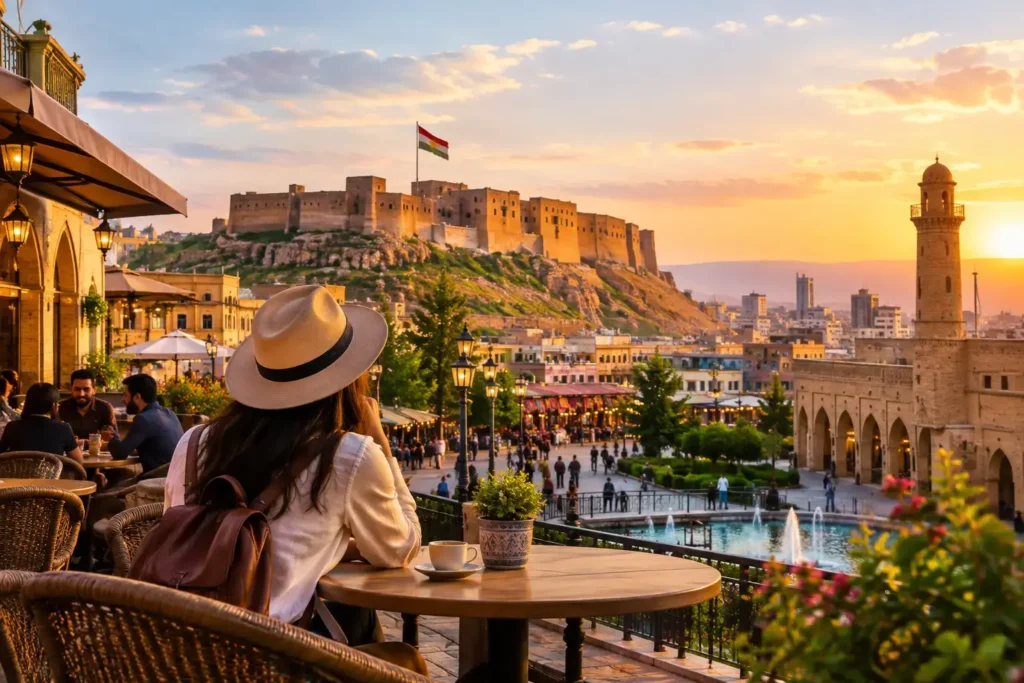
Erbil rewards travellers who slow down. From the wide, circular sweep of the city centre, the Citadel rises above markets, tea houses and family promenades, making history feel like part of everyday life rather than something kept behind glass. This Erbil city break guide is designed for a long weekend or three-night stay, balancing essential sights with the small encounters that give the city its character.
For many first-time visitors, Erbil is a practical and welcoming introduction to Iraqi Kurdistan. It has an international airport, a growing choice of comfortable hotels and a city rhythm that moves easily between ancient heritage and modern cafés, shopping streets and green public spaces. The most rewarding itinerary leaves room for both: a planned morning at a landmark, then an unhurried afternoon following the scent of grilled meat, cardamom tea or fresh bread.
Why choose Erbil for a short break?
Erbil, also known in Kurdish as Hewlêr, is one of the world’s longest continuously inhabited cities. Its historic heart is the Erbil Citadel, a UNESCO World Heritage Site whose tell has watched over the surrounding plain for millennia. Yet the appeal of a city break here is not only archaeological. Erbil is a living Kurdish capital where hospitality is offered naturally, conversations often begin over tea and visitors can experience a part of Iraq that feels both deeply rooted and forward-looking.
Three days is enough to understand the city’s main layers without rushing. It suits heritage travellers, diaspora visitors reconnecting with family history, photographers drawn to textured streetscapes and anyone seeking a destination shaped by genuine local life. If you have longer, Erbil also works well as a base for mountain towns, monasteries and countryside escapes across the Kurdistan Region.
A three-day Erbil city break itinerary
Day one: Begin at the Citadel and bazaar
Start at Erbil Citadel early, when the pale walls catch the soft morning light and the square below is still relatively quiet. The Citadel occupies a raised settlement mound, with restored lanes and traditional courtyard houses offering a sense of how the city developed over centuries. Restoration and access arrangements can change, so treat the visit as a chance to walk respectfully through a heritage site rather than expecting every building to be open.
From the Citadel, descend towards the Qaysari Bazaar. This is the right place to notice the everyday details that make Erbil memorable: piles of spices, copperware, Kurdish fabrics, sweets, dried fruit and shopkeepers greeting familiar customers. Ask before taking close photographs of people or stalls, particularly in smaller shops. A polite greeting and genuine interest will take you much further than hurried browsing.
Pause for Kurdish tea, often served in a small glass, then choose lunch nearby. A simple meal of kebab, rice, soup or dolma is a good introduction to the region’s generous table. Restaurants vary from busy, no-frills local favourites to more polished dining rooms, so choose according to the atmosphere you want rather than assuming the busiest venue is automatically the best.
In the evening, return to the Citadel area for the changing light around Shar Park and the central square. Families gather here, children play and the city feels particularly open and sociable. It is a gentle first evening that places you at the centre of Erbil’s daily life.
Day two: Kurdish culture, parks and Ankawa
Give your second day to the city beyond its most famous landmark. The Kurdish Textile Museum, located within the Citadel complex when open, provides valuable context for the weaving, embroidery and dress traditions seen across the region. It is a compact visit, but an illuminating one, especially for travellers interested in craft, identity and domestic history.
For a wider perspective on the city, spend part of the afternoon at Sami Abdulrahman Park. Its broad paths and open views make it a welcome contrast to the dense bazaar streets. It is particularly pleasant later in the day, when residents come to walk, meet friends and enjoy the cooler air. This is less about ticking off an attraction and more about seeing how Erbil relaxes.
Set aside the evening for Ankawa, Erbil’s historic Christian district. Its restaurants, bakeries and cafés reflect another important strand of the city’s social fabric. Visit with the same consideration you would bring anywhere in Erbil: dress neatly, be mindful around places of worship and avoid treating neighbourhoods as backdrops. A meal here is an opportunity to enjoy the city’s variety, not to reduce it to a quick cultural stop.
Day three: Eat well and follow your interests
On your final day, leave the schedule deliberately flexible. Return to the bazaar to buy spices, sweets or a small textile piece, take time over breakfast at your hotel or ask local staff where they would go for a favourite regional dish. Staff recommendations are often more useful than generic online lists, particularly for places whose opening hours shift with the season or family commitments.
If museums are a priority, check current opening times for Erbil’s cultural institutions before setting out. If food is your focus, consider arranging a locally led tasting experience or simply try dishes you have not encountered before. Kubba, dolma, biryani prepared in the Iraqi style, grilled meats and seasonal salads all vary by household and restaurant. The point is not to find one definitive version of Kurdish or Iraqi cooking, but to taste how generous, regional and personal it can be.
Finish with a final walk near the Citadel. At sunset, the city’s old and new skylines come into view together – a fitting image for a place where heritage is not separate from modern life.
Where to stay in Erbil
For a short visit, staying near the Citadel or central commercial districts makes sightseeing and dining straightforward. It is a sensible choice for travellers who prefer to use taxis rather than negotiate longer journeys across the city. Hotels around Ankawa can suit those who value a broader selection of cafés and restaurants nearby, while larger business-style hotels may offer more facilities, such as gyms, meeting spaces and airport transfers.
The best choice depends on your priorities. A central hotel gives you easier access to the old city; a quieter property may offer more space and a slower pace after a full day out. Before booking, confirm the location, current guest reviews, breakfast arrangements and whether the hotel can organise a reliable airport pick-up. Stay In Iraq can help travellers compare accommodation options with the practical details that matter for a comfortable first stay.
Getting around and planning with confidence
Erbil International Airport is the most convenient arrival point for international visitors. Taxis and pre-arranged hotel transfers are generally the simplest way to reach your accommodation. Within the city, taxis are widely used, but agree the fare in advance when a meter is not being used, or ask your hotel to arrange a driver for longer journeys.
Visa and entry requirements depend on your passport, route and the rules in force at the time of travel. Check current requirements with the relevant official Iraqi and Kurdistan Region authorities, as well as the embassy or consulate responsible for your nationality, before purchasing non-refundable tickets. Do the same with official travel advice from your own government, especially if you intend to travel beyond Erbil.
Carry some Iraqi dinar for markets, taxis and smaller cafés, while keeping cards available for larger hotels and modern restaurants. Cash access and card acceptance can differ between neighbourhoods and businesses. A local SIM or dependable mobile data package is useful for navigation, translation and contacting your hotel, although asking for directions remains a friendly and effective option.
Local etiquette that makes a difference
Erbil is welcoming, but respect is the best travel essential. Modest, comfortable clothing is appropriate in most settings, with more coverage advisable when visiting religious sites. Ask before photographing people, avoid public displays of affection and use your right hand when offering or receiving food and tea where practical.
Alcohol is available in some venues, but it is not central to an Erbil city break. The richer experience lies in shared meals, conversation, heritage walks and the everyday courtesy of the city. Learning a few words of Kurdish or Arabic, even a simple greeting and thank you, is warmly received.
Erbil is not a city to consume quickly. Give its streets time, accept the second cup of tea, and let a conversation in the bazaar become part of the journey. That openness is often what travellers remember long after the Citadel has disappeared from view.