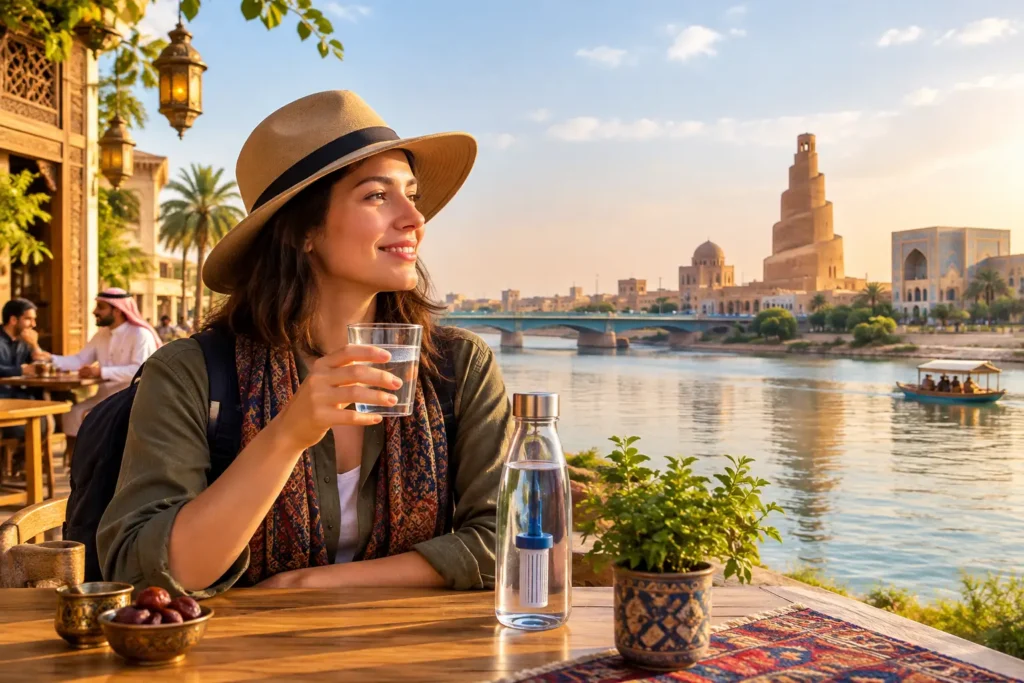
A glass of water offered with tea is one of Iraq’s everyday gestures of welcome. For visitors, the practical question is whether that water is suitable to drink. Is Iraqi tap water safe? The sensible answer is: do not rely on untreated tap water for drinking, wherever you are travelling in Iraq.
That is not a judgement on Iraqi hospitality or on the country’s remarkable cities, sacred places and landscapes. It is simply sound travel preparation. Water quality and supply conditions can differ between neighbourhoods, buildings and seasons, so visitors should make a clear distinction between water that is available from a tap and water that has been treated and stored safely for drinking.
Is Iraqi tap water safe to drink?
For most international travellers, untreated tap water should be avoided for drinking. In Baghdad, Basra, Erbil, Najaf, Karbala, Mosul and smaller towns alike, the quality reaching a particular property can be affected by local infrastructure, storage tanks, pipes and interruptions in supply. A hotel may have its own filtration system, while a nearby guesthouse may use a different arrangement.
This variation matters more than a simple city-by-city answer. Water that looks clear may still contain microorganisms that can upset an unaccustomed stomach. In some areas, mineral content and salinity can also affect taste and suitability. People who live locally may be accustomed to their household supply, use filters at home or make their own careful choices. That does not mean a visitor should assume the same water is appropriate for them.
Choose sealed bottled water or water from a clearly maintained, trusted purification and refill system for drinking. At quality hotels, ask reception whether the drinking water provided in your room or restaurant has been filtered or is bottled. It is a normal, practical question, and staff will usually be happy to advise.
What travellers should use instead
Bottled water is widely available in hotels, cafés, supermarkets, roadside shops and near major visitor sites. Check that the cap seal is intact before opening it, particularly when buying from small shops or during busy travel days. Keep a bottle with you when sightseeing, travelling between cities or visiting archaeological and religious sites, where heat and long walks can quickly leave you dehydrated.
Where a property provides treated drinking water from a dispenser or refill station, use a clean reusable bottle and ask how the water is purified. This can be a good way to reduce single-use plastic without taking unnecessary risks. Refill options are especially useful for longer stays, but they should be judged by visible cleanliness, regular maintenance and the recommendation of your accommodation host.
If you are travelling with young children, are pregnant, have a compromised immune system or are recovering from illness, take extra care. Stick to sealed bottled water or verified treated water, including when taking medication or mixing rehydration drinks.
Tea, coffee and hot drinks
Tea is central to the rhythm of Iraqi hospitality, whether shared in a Baghdad café, a family home or after a long day of exploring. Hot tea and coffee prepared with properly boiled water are generally a reassuring choice. The key point is that the water should have reached a full boil as part of preparation, rather than merely being warm.
Do not feel awkward about accepting hospitality. If you are unsure, a polite request for bottled water is easily understood. A small phrase such as “bottled water, please” or a gesture towards a sealed bottle is usually enough, and your hosts may well offer it before you ask.
Ice, juices and restaurant water
Ice deserves the same care as drinking water. At reputable hotels, established restaurants and cafés with good hygiene standards, ice is often made from treated or bottled water. Still, it is reasonable to ask if you are uncertain, especially outside larger cities or in very small eateries.
Fresh juices are one of Iraq’s simple pleasures, particularly in warm weather. Choose busy, well-kept places where ingredients are prepared fresh and equipment appears clean. If a drink includes ice and the source is unclear, ask for it without ice. The same approach applies to complimentary table water: confirm whether it is bottled or filtered before drinking.
Brushing teeth, showering and washing food
For short visits, many travellers use tap water for showering and washing hands without difficulty. Keep your mouth closed in the shower and avoid swallowing water. If you have a particularly sensitive stomach, use bottled or treated water when brushing your teeth as well.
Be thoughtful with fresh produce. Restaurants serving visitors commonly wash ingredients carefully, but food preparation practices naturally vary. Eat at places that are busy, clean and recommended by trusted local hosts or your hotel. Fruit with a peel, such as bananas, oranges and pomegranates, is an easy choice when you are travelling between destinations. For salads and herbs that are eaten raw, choose reputable establishments and use your judgement.
Good hand hygiene makes a significant difference too. Carry hand sanitiser for journeys and use soap and safe water whenever it is available. Many stomach upsets associated with travel come from a combination of unfamiliar food, heat, tiredness and hand-to-mouth contact, rather than one single meal or drink.
Why boiling is useful, but not a complete answer
Boiling water can kill many microorganisms and may be appropriate in a well-planned situation where you know the water source and have safe storage. It is not, however, a complete solution for every water-quality concern. Boiling does not remove dissolved salts, minerals, chemical contaminants or particles, and it will not improve water that has been stored in an unclean container.
For a holiday or pilgrimage, bottled or professionally purified water remains the simpler option. Travellers heading into rural areas, camping or spending long periods away from established accommodation should carry a reliable purification method suited to the conditions. A quality filter may help with some contaminants, but its capabilities vary greatly by model. Read its instructions carefully and do not assume every travel filter makes all water safe.
Practical habits for long days in Iraq
Iraq rewards unhurried exploration: the early light over ancient sites, the quiet atmosphere around sacred shrines, the call for another cup of tea from a welcoming shopkeeper. These are also the days when hydration needs attention. Carry more water than you think you will need, particularly from late spring through early autumn.
A few habits keep the matter straightforward:
- Start each day with sealed or verified treated water in your bag.
- Keep an extra bottle in the car for intercity drives and delays.
- Choose bottled water for medication, tooth brushing and rehydration mixes.
- Ask your accommodation whether room water, ice and refill dispensers are treated.
- If you develop persistent diarrhoea, fever, severe dehydration or feel unwell after returning home, seek medical advice promptly.
There is no need for water concerns to overshadow a journey through Iraq. They belong in the same sensible category as sun protection, comfortable walking shoes and travel insurance: small preparations that give you greater freedom to focus on the experience. Drink thoughtfully, accept local guidance, and leave room for the conversations, flavours and generous welcome that make travelling in Iraq so memorable.