For many visitors, choosing a Najaf or Samarra pilgrimage is not simply a question of distance or itinerary. Each city holds a distinct place in the spiritual imagination of Shia Muslims, with its own rhythm of devotion, architecture, local character and practical considerations. Both offer an encounter with Iraq that is deeply personal, profoundly historic and warmly human.
The right choice depends on what you hope to experience. Najaf is often the natural starting point for first-time pilgrims because of its central role in Shia scholarship and its connection to Imam Ali ibn Abi Talib. Samarra offers a quieter, more contemplative visit centred on the sacred legacy of the tenth and eleventh Imams. Many travellers choose to visit both, allowing time to absorb each city rather than treating either as a brief stop.
Najaf or Samarra Pilgrimage: The Core Difference
Najaf is built around the Shrine of Imam Ali, cousin and son-in-law of the Prophet Muhammad, and the first Imam in Shia Islam. For centuries, the city has been a centre of religious learning, debate and pilgrimage. Its shrine is among Iraq’s most important sacred places, drawing visitors from across the world throughout the year.
The atmosphere around the old city is active and communal. Pilgrims move through covered streets towards the shrine, families gather for prayer, and the sound of recitation carries through spaces shaped by generations of worship. Najaf feels both monumental and lived-in: a sacred city whose spiritual life is woven into everyday trade, hospitality and study.
Samarra, north of Baghdad, is associated above all with the Al-Askari Shrine, the resting place of Imam Ali al-Hadi and Imam Hasan al-Askari, the tenth and eleventh Imams. The city also holds an important place in the tradition connected to Imam al-Mahdi. A visit here can feel more inward-looking, particularly for pilgrims seeking time for reflection and prayer away from the larger crowds often found in Najaf during major religious periods.
Neither destination is more meaningful than the other. Najaf may suit visitors looking for a fuller immersion in a major pilgrimage city and a strong connection to Iraq’s religious scholarly tradition. Samarra may be especially significant for those whose devotional journey is centred on the Ahl al-Bayt and the lineage of the Imams honoured there.
Why Najaf Leaves Such a Strong Impression
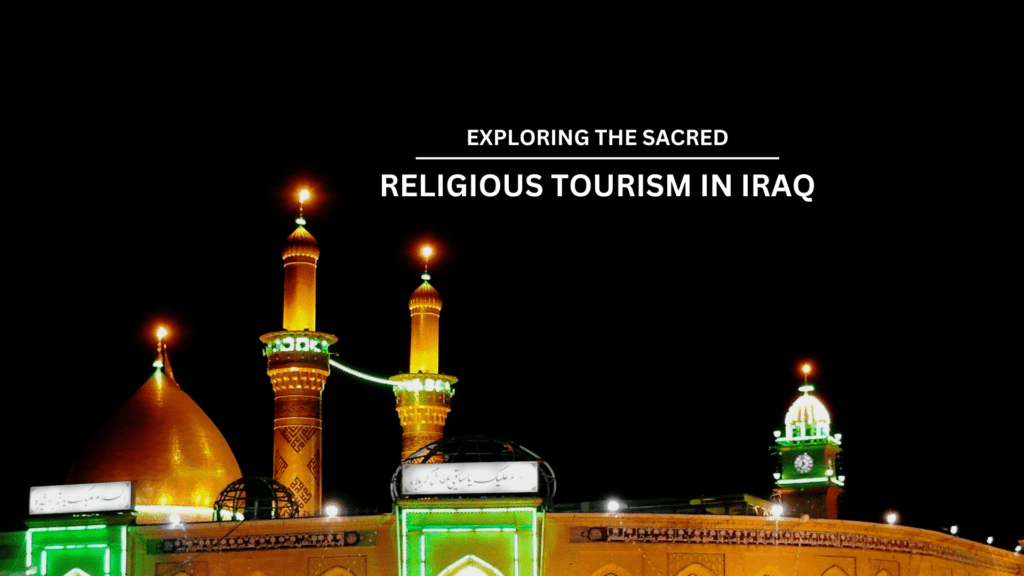
The Shrine of Imam Ali is the emotional heart of Najaf. Its golden dome and minarets are instantly recognisable, but the experience is not only visual. Entering the shrine precinct, observing worshippers at prayer and seeing people arrive from many countries gives a clear sense of the site’s enduring importance.
Visitors should allow more time than they expect. A meaningful visit is rarely rushed: there may be security procedures, busy entry points, prayer times and moments when simply sitting quietly in the courtyard is more valuable than moving on to the next sight. Modest dress is essential, and women may be asked to wear a chador or outer covering within the shrine complex. These are usually available locally, but carrying a light scarf is sensible.
Najaf also rewards travellers who look beyond the shrine. Wadi Al-Salam, one of the world’s largest cemeteries, is a place of immense religious significance and should be approached with particular restraint. It is not a conventional attraction. A respectful local guide can help visitors understand its place in the city while ensuring they observe appropriate boundaries.
The nearby city of Kufa is often included in a Najaf stay. Its mosque is associated with key moments in Imam Ali’s life, making it a natural extension of a pilgrimage itinerary. Staying two or three nights in Najaf usually creates enough space for the shrine, Kufa and unhurried time in the old streets.
Who should choose Najaf first?
Najaf is especially well suited to first-time visitors to Iraq, pilgrims travelling with family, and those who want a city where sacred heritage and practical visitor facilities are closely connected. It is also an excellent base for continuing to Karbala, another central destination for Shia pilgrimage.
That said, Najaf can be busier during religious occasions and weekends. If your priority is quiet reflection, travel outside peak dates where possible and plan shrine visits early in the day or later in the evening, while remaining flexible around local prayer schedules.
What Makes Samarra Distinct
Samarra’s sacred importance is matched by its layered history. The Al-Askari Shrine is a place of reverence, remembrance and prayer, and visitors often describe the experience as intimate despite the scale of the site. The focus here is less on fitting in a long list of activities and more on being present.
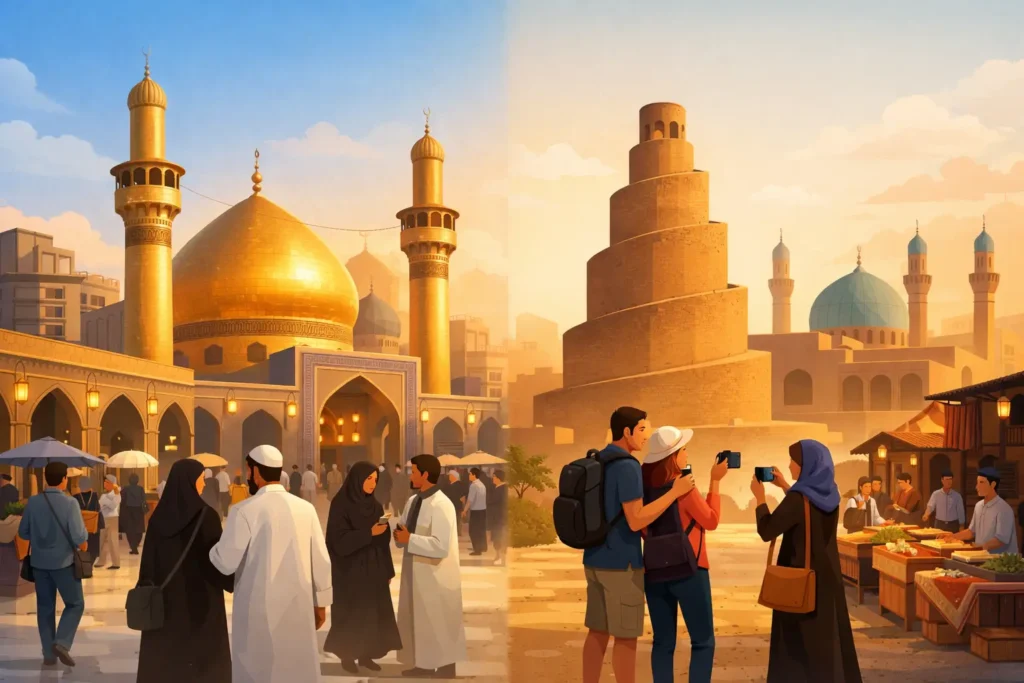
The city also preserves extraordinary Abbasid-era heritage. The Great Mosque of Samarra and its spiral Malwiya minaret are among Iraq’s most recognisable historic landmarks. For travellers with an interest in Islamic architecture, Samarra offers a rare opportunity to place pilgrimage within a wider story of urban civilisation, craftsmanship and scholarship.
A day visit can be possible from Baghdad with trusted local transport and careful planning. However, an overnight stay may be preferable for pilgrims who want to visit the shrine at a calmer pace, especially if travelling independently. Accommodation options and visitor services can be more limited than in Najaf, so it is wise to arrange transport and lodging before arrival rather than assuming last-minute availability.
Who should choose Samarra?
Samarra is ideal for pilgrims with a specific devotional connection to the Al-Askari Shrine, repeat visitors to Iraq, and cultural travellers who want to combine sacred sites with Abbasid heritage. It also fits well into a wider Baghdad itinerary.
For some international visitors, Samarra works best as part of an organised itinerary or with a knowledgeable local driver-guide. This is not about making the journey feel complicated. It simply helps with timings, shrine etiquette, entry procedures and finding the most suitable places to pause, eat and pray.
Planning Your Pilgrimage with Respect
Whether you choose Najaf, Samarra or both, preparation allows you to focus on the purpose of the journey. Check Iraq’s current entry and visa requirements through official channels before booking, as rules can vary by nationality and may change. Keep digital and printed copies of key documents, and ensure your travel plans include flexible time for local arrangements.
In sacred spaces, dress conservatively. Loose, modest clothing is appropriate for all visitors; arms and legs should be covered. Women should carry a headscarf, while men should avoid shorts and sleeveless tops. Photography rules differ between shrine areas, so always look for signs and ask permission before taking pictures. Never photograph worshippers, security personnel or private moments of prayer without clear consent.
Pilgrimage is also an opportunity to practise the hospitality Iraq is known for. You may be offered tea, food or simple directions by people who want to help. Receive these gestures with gratitude, but be mindful of religious routines and personal space. Learning a few Arabic greetings, such as salaam alaikum, can create an immediate and respectful connection.
Transport between Iraq’s principal pilgrimage cities is most comfortable when arranged in advance. Private drivers, licensed guides and organised group travel can all work well, depending on your budget and confidence. Independent travellers should avoid overloading one day with long road journeys and shrine visits. Iraq is best experienced with room for pauses, conversations and the unexpected generosity of local people.
Can You Visit Najaf and Samarra on One Trip?
Yes, and for many pilgrims this is the most rewarding option. Baghdad can provide a practical midpoint, while Najaf is often paired with Karbala and Kufa. Samarra is generally added before or after time in Baghdad. The order depends on flight arrival, available transport, religious dates and how much time you can give each destination.
A five- to seven-day journey offers a comfortable framework for Baghdad, Samarra and Najaf, with additional days if including Karbala. Shorter trips are possible, but they require firmer arrangements and fewer detours. Rather than trying to see every site, choose an itinerary that leaves space for worship and reflection.
Stay In Iraq can help travellers begin the practical side of planning, from understanding city stays to finding accommodation suited to the pace of a pilgrimage journey. The aim is not to turn sacred travel into a checklist, but to make Iraq feel more approachable for those called to visit.
Choose Najaf if you are drawn to the living energy of a great shrine city and the legacy of Imam Ali. Choose Samarra if your journey calls you to the Al-Askari Shrine and a more contemplative encounter with sacred history. If time allows, let both cities speak in their own way – and leave enough quiet in your itinerary to listen.