If you are planning Baghdad to Basra travel, the first surprise is often how straightforward the journey can feel once you understand your options. These are two of Iraq’s most important cities, connected not only by distance but by history, trade, pilgrimage and everyday movement. For travellers, the route offers something practical and something deeper – a chance to move between the political heart of the country and one of its great southern gateways.
Basra sits in a different rhythm from Baghdad. The capital is fast-moving and layered, while Basra opens into date palm landscapes, river life, port activity and a distinct southern character. That contrast is part of the appeal. Whether you are travelling for heritage, family connections, business, religious visits or simple curiosity, getting there is less about one “best” method and more about choosing the journey that suits your time, budget and comfort level.
Baghdad to Basra travel options
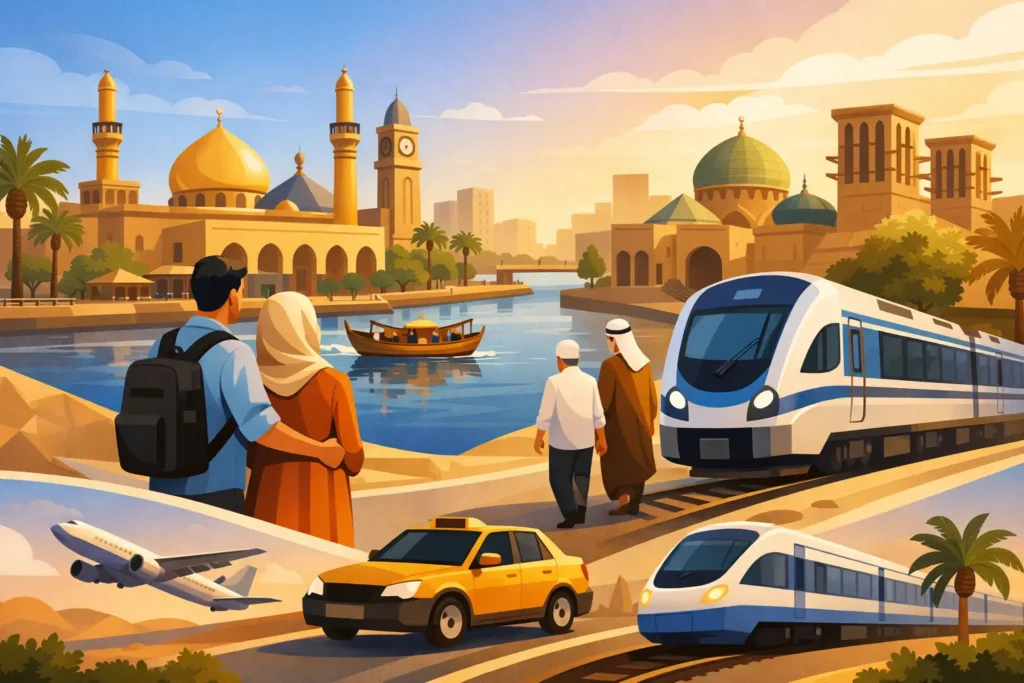
Most travellers choose between flying, taking the train, or travelling by road. Each option has genuine advantages, and none is automatically right for everyone.
Flying is the fastest and easiest if your schedule is tight. A domestic flight cuts the journey down dramatically and is usually the preferred choice for visitors who want to maximise their time in each city. If you are arriving in Iraq on a wider itinerary and only have a limited number of days, this is often the most sensible route.
The train appeals to travellers who want a more grounded experience. Rail travel between Baghdad and Basra can be memorable because it lets you watch the country change gradually rather than all at once. It is slower, of course, and services may not suit every timetable, but some travellers prefer the calmer pace and the sense of continuity that rail provides.
Road travel offers the most flexibility. A private car with a trusted driver is often the most comfortable road option, especially for international visitors unfamiliar with local transport systems. Shared transport and coaches may also be available depending on current schedules and local demand. The road journey takes longer, but it allows for more control over stops, departure times and luggage.
Flying from Baghdad to Basra
For many international travellers, flying is the least complicated form of Baghdad to Basra travel. It removes the need to navigate longer transfers and can be especially helpful during hot periods of the year, when spending less time in transit makes a noticeable difference.
The main trade-off is that flying gives you efficiency rather than texture. You move quickly from one city to another, but you do not see much of the country in between. That may be exactly what you want if your priority is convenience. It can also be a wise choice for families, older travellers, or anyone combining multiple Iraqi destinations in one trip.
Even so, domestic travel days in Iraq are best approached with a little flexibility. Timings can change, and it is sensible to leave room in your itinerary rather than planning every onward step too tightly. A calm schedule always makes travel feel easier.
Is the train worth it?
For the right traveller, yes. The train is not simply a way to reach Basra. It can be part of the experience itself.
There is something valuable about crossing Iraq over land in a way that feels measured and observant. You see towns, open stretches, working landscapes and the quieter transitions that flights erase. For photographers, writers, diaspora travellers and culturally curious visitors, that slower perspective can be rewarding.
That said, train travel depends heavily on current service reliability, departure times and your tolerance for a longer journey. If you need certainty above all else, flying is usually easier. If you value atmosphere and are prepared to travel with patience, the train may become one of the more memorable parts of your route.
Going by road between Baghdad and Basra
Travelling by road can be practical, scenic in places, and highly useful if you want to stop en route. Some travellers prefer a direct transfer from hotel to hotel rather than moving through stations or airports. Others choose the road because they are visiting holy cities or southern destinations beyond Basra and want a more flexible route.
A private driver is usually the strongest option for visitors who want comfort and local knowledge. It reduces uncertainty and allows for a more relaxed pace. If you are travelling with companions, it can also make good financial sense when the cost is shared.
The main consideration is journey length. This is not a short hop, and road travel requires stamina. During warmer months, daytime conditions can feel tiring, especially if you are not used to Iraq’s climate. Starting early, carrying water and allowing extra time all make a difference.
When to travel from Baghdad to Basra
Timing shapes the experience more than many first-time visitors expect. Southern Iraq can be particularly hot, so the cooler months are often more comfortable for overland journeys and city exploration. If you are travelling between late autumn and early spring, you are likely to find the route more pleasant overall.
Summer travel is still possible, but it needs more careful planning. Flights become even more attractive then, simply because they reduce time spent in transit. If you do travel by road in hotter weather, early departures are helpful and lighter schedules are kinder.
Religious dates, public holidays and peak movement periods can also affect transport demand. If your journey overlaps with major pilgrimage seasons or national holiday travel, plan earlier than usual and keep your arrangements flexible.
What to expect on arrival in Basra
Basra rewards travellers who arrive with curiosity rather than fixed expectations. It is a city of waterways, commerce, old stories and strong local identity. The atmosphere is different from Baghdad, and that difference is exactly why the route matters.
You may notice a more maritime sensibility, a southern warmth in both climate and hospitality, and a pace that shifts depending on where you stay. Some visitors come for family or business, others for heritage, food, riverfront character or onward travel in the south. Whatever your reason, Basra often feels richer when you give it more than a rushed overnight stop.
If possible, book accommodation in advance, especially if you are arriving late. Knowing where you are staying removes friction from the journey and lets you settle into the city with confidence. Platforms such as Stay In Iraq can help travellers compare options more easily while building a wider itinerary.
Practical tips for Baghdad to Basra travel
The best journeys here are usually the ones planned with realism. Keep printed and digital copies of your passport and travel details, carry cash for smaller expenses, and dress appropriately for the season. If you are visiting religious sites during the wider trip, pack modest clothing that suits those settings.
It is also wise to confirm timings close to departure, particularly for domestic transport. Iraq is increasingly accessible, but travel still works best when approached with some flexibility and local awareness. That does not mean difficulty. It simply means travelling well.
If you do not speak Arabic, arranging support in advance can make the route smoother, especially for road transfers or station navigation. Many travellers find that even a little preparation creates a very different experience – one that feels welcoming rather than uncertain.
Which option is best?
If speed matters most, fly. If the journey itself matters and you have time, consider the train. If you want flexibility, privacy or a route shaped around other stops, go by road with a trusted driver.
The right answer depends on what kind of traveller you are. A short-stay visitor trying to cover Baghdad, Najaf and Basra in one week has different needs from a diaspora traveller revisiting family roots, or a photographer looking to move slowly through the country. Iraq rarely rewards copy-and-paste itineraries. It rewards thoughtful ones.
That is what makes Baghdad to Basra travel more interesting than it first appears. It is not only a transfer between two major cities. It is a movement through different textures of Iraqi life, from the capital’s intensity to the south’s riverine identity and unmistakable hospitality.
If you leave a little room for the journey itself, Basra tends to feel less like an end point and more like the next chapter of understanding Iraq properly.