A warm welcome in Iraq often begins before a word is spoken. The way you greet someone, dress for the setting, or accept a cup of tea can shape an entire interaction. For anyone researching Iraq customs for tourists, that is good news. Most visitors find that local etiquette is not complicated, but it does matter, and small signs of respect are usually met with remarkable generosity.
Iraq is one of those destinations where culture is not staged for visitors. It is lived openly in homes, shrines, markets, hotels and city streets. That makes travel here deeply rewarding, but it also means travellers should arrive with some awareness of how daily life works. Customs can vary between Baghdad, Basra, Najaf, Erbil, Mosul and smaller towns, and religious settings naturally call for more care than a modern café or business hotel. Still, a few principles will carry you well almost everywhere.
Iraq customs for tourists start with respect
The most useful thing to understand is that Iraqi social life places high value on courtesy, modesty and hospitality. People may be informal and relaxed in conversation, but the underlying code is respectful. Visitors do not need to act stiffly or perform expertise. They simply need to show consideration.
Greetings are a good example. A handshake is common, especially between men, but do not assume everyone will greet in exactly the same way. Some women may prefer not to shake hands with men, particularly in more conservative or religious environments. The easiest approach is to pause and follow the other person’s lead. A hand over the heart, a smile and a verbal greeting are always polite.
You may also notice that conversations often begin with more warmth and more personal interest than in Britain. Asking where you are from, whether you are enjoying Iraq, or whether you have eaten is often part of building rapport, not prying. A brief, friendly response goes a long way.
Dress modestly, but read the setting
When travellers ask about what to wear in Iraq, the honest answer is that it depends on where you are going. In religious cities and shrine areas, expectations are stricter. In parts of larger cities, especially in international hotels or more modern urban spaces, dress can be more flexible. But modest clothing is the safest and most respectful default.
For men, lightweight trousers and shirts with sleeves are usually appropriate. Shorts may attract attention and are best avoided outside private leisure settings. For women, loose-fitting clothes that cover arms and legs are a sensible choice in most places. In major shrine sites, women are typically expected to cover their hair, and sometimes more fully depending on the location.
This is less about formality than social awareness. Iraq is welcoming to foreign visitors, but travellers who dress with cultural sensitivity usually find interactions smoother and more comfortable. If you are unsure, it is better to be slightly more covered than too casual.
Visiting mosques and shrines
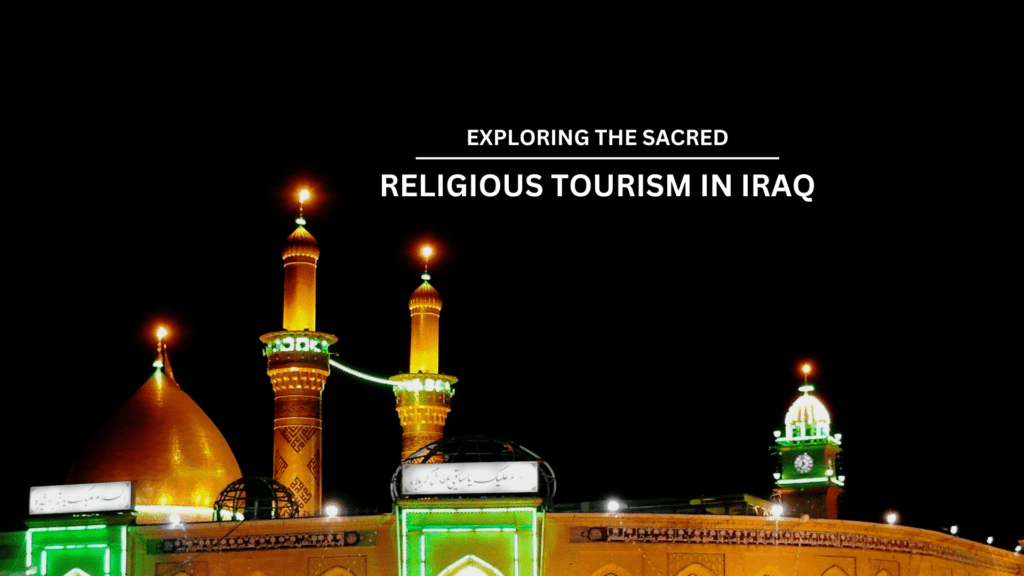
Religious tourism is one of Iraq’s most meaningful travel experiences, whether you are visiting for pilgrimage or cultural interest. These spaces deserve extra attention. Shoes are removed before entering prayer areas, clothing should be modest, and voices should remain low. Photography may be restricted in certain places, especially inside shrines or near worshippers.
Women may need a headscarf or an abaya-style covering in some holy sites. Men should avoid sleeveless tops or overly casual clothing. If you are visiting with a guide or host, follow their advice closely. If not, watch what local visitors are doing and mirror that behaviour respectfully.
Hospitality is generous, and refusing everything can seem cold
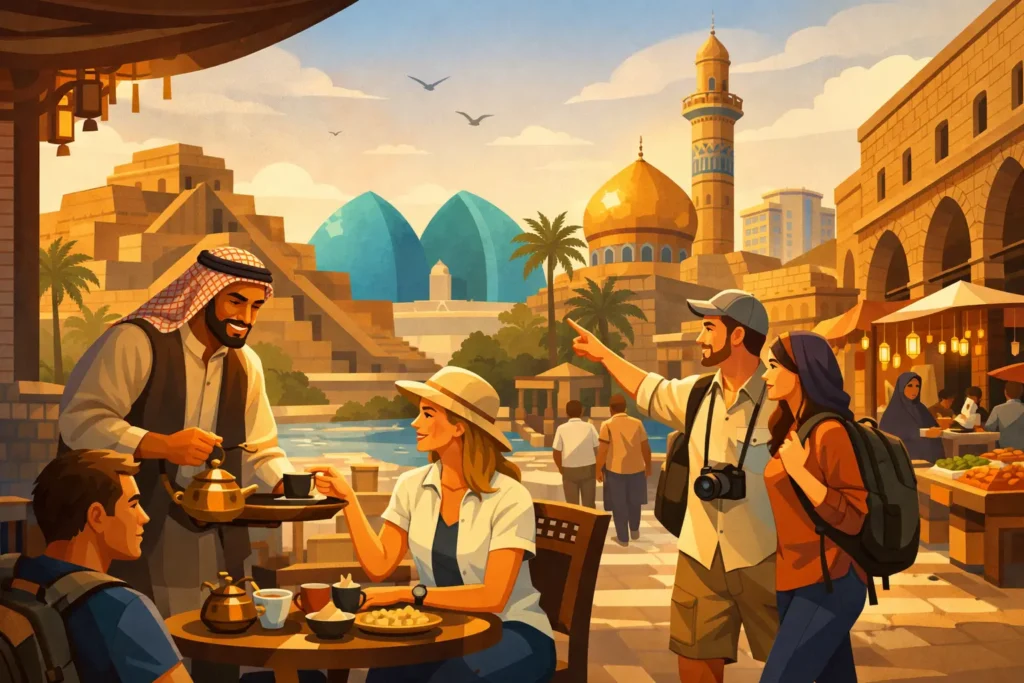
One of the most memorable parts of travelling in Iraq is the hospitality. You may be invited for tea within minutes of meeting someone, offered fruit in a shop, or encouraged to sit and talk when you only meant to ask directions. This is not unusual. Generosity is woven into social life here.
That does not mean you must accept every invitation. Practical caution and personal comfort still matter, especially when travelling independently. But declining too abruptly can feel impolite. A warm thank you, a hand over the heart, and a gentle explanation are better than a flat no.
If you do accept tea or food, even briefly, it is usually appreciated. Hosts often insist more than once, and this can be part of politeness rather than pressure. The balance is simple – be gracious, but do not feel obliged to overcommit yourself.
Table manners and eating etiquette
Meals are often social and generous. In some settings, food may be shared from common dishes, particularly in more traditional environments. Follow your host’s lead. Eating with the right hand is standard when food is taken by hand, and the left hand is generally used less in dining customs.
If you are a guest, praising the food is always welcome. Iraqis are proud of their cuisine, and rightly so. You do not need dramatic compliments, just genuine appreciation. If you have dietary restrictions, explain them politely and simply.
Photography requires judgement
Iraq offers extraordinary visual experiences, from Abbasid architecture and shrine courtyards to riverside streets and old bazaars. But photographing people requires sensitivity. In many places, especially around families, women, religious figures or children, it is best to ask before taking close photos.
Some people will happily agree. Others may prefer privacy. Neither response should be taken personally. In conservative settings, taking photos without permission can feel intrusive, even if your intention is innocent.
The same goes for religious ceremonies. A camera should never interrupt prayer or moments of mourning and devotion. If in doubt, lower the phone and observe first. You will usually know from the atmosphere whether photography is welcome.
Public behaviour and social boundaries
Public life in Iraq tends to be more socially conservative than in Britain. Loud drunken behaviour, very revealing clothing, and overt public displays of affection are likely to feel out of place. This is not about travellers being judged harshly at every moment. It is about recognising the tone of the environment.
Couples should keep public affection discreet. Solo travellers, especially women, may receive curiosity rather than hostility, but confidence and modest presentation usually help. In busy streets and markets, people may take interest in foreign visitors. Most of the time, that interest is friendly.
Language also matters. A few Arabic phrases, or Kurdish in the Kurdistan Region, can create instant goodwill. Even a basic greeting shows effort. You are not expected to speak fluently, only to engage with humility.
Ramadan and religious occasions
If you visit during Ramadan, some routines will shift. Many people fast from dawn to sunset, and although international visitors are not generally expected to do the same, it is respectful not to eat, drink or smoke openly in front of fasting people in conservative public settings.
After sunset, the atmosphere often changes completely. Families gather, cafés become lively, and streets can feel festive and communal. For travellers, this can be a beautiful time to experience local rhythm, provided you remain patient with altered opening hours and transport patterns.
Other religious periods, particularly in holy cities, can bring larger crowds and more intense devotional activity. These times can be powerful to witness, but they also call for extra awareness around dress, movement and photography.
Practical etiquette that travellers often miss
A few small habits can make a noticeable difference. Using the right hand when giving or receiving something is considered polite. Pointing the sole of your shoe towards someone, particularly when seated, can come across badly. Raising your voice in frustration rarely helps and may be remembered more than the issue itself.
Punctuality can vary by context. Business meetings and organised tours may run on schedule, while social timings can be looser. Patience is useful. So is flexibility.
Money matters also have a cultural side. In markets, bargaining may happen, but it should stay friendly. Aggressive haggling over small amounts can feel mean-spirited, especially in places where hospitality has already been extended.
The real spirit behind Iraq customs for tourists
The deeper point behind Iraq customs for tourists is not memorising a list of rules. It is understanding that Iraq is a place where dignity, faith, family and welcome still shape public life in visible ways. Travellers who arrive with curiosity and consideration are often surprised by how quickly formality turns into warmth.
You do not need to be perfect. Locals generally understand that visitors are learning, and genuine effort is usually appreciated more than flawless etiquette. If you make a mistake, a polite apology and a respectful attitude will solve most things.
Iraq rewards travellers who pay attention. Not only to monuments and history, but to the everyday gestures that make the country memorable – the offered tea, the careful greeting, the invitation to sit a little longer. If you travel with that spirit, the customs will not feel like barriers at all. They will feel like part of the welcome.