Samarra is not the kind of place travellers usually stumble into by accident. It is a city people seek out for a reason – for its Abbasid history, its sacred importance, and the striking silhouette of the Malwiya Minaret rising above the plain. So, can tourists visit Samarra? Yes, tourists can visit Samarra, but it is a destination where preparation, timing and local guidance matter more than they do in some other Iraqi cities.
For travellers drawn to Iraq’s deeper historical landscape, Samarra can be one of the most rewarding stops in the country. It offers a different rhythm from Baghdad, Najaf or Erbil. The experience is quieter, more focused, and often more meaningful for visitors who care about heritage, architecture and religious history. At the same time, Samarra is not typically approached as a completely casual day out. Access conditions, security procedures and local arrangements can vary, which means informed planning is essential.
Can tourists visit Samarra independently?
The short answer is sometimes, but not always comfortably. In practice, many international visitors find Samarra easier to visit as part of an organised trip, a private guided journey, or with trusted local travel support. That does not mean the city is closed to tourists. It means that logistics can be more sensitive than in Iraq’s more straightforward visitor circuits.
Some travellers are able to visit Samarra on a day trip, often from Baghdad. Others may need extra coordination depending on current local procedures, nationality, route and the purpose of travel. Conditions can change, and that is why it is unwise to rely on assumptions or old forum posts. A journey that worked smoothly for one traveller six months ago may now require different arrangements.
For most first-time visitors to Iraq, especially those unfamiliar with moving between cities, Samarra is best approached with up-to-date local advice. That is not a sign that travel is impossible. It is simply the practical reality of responsible trip planning in a destination where details matter.
Why Samarra matters to travellers
Samarra is one of Iraq’s most historically important cities. It served as the capital of the Abbasid Caliphate in the ninth century and became the setting for one of the Islamic world’s great urban experiments. Its archaeological and architectural significance extends far beyond Iraq, and for many travellers that alone makes it worth the effort.
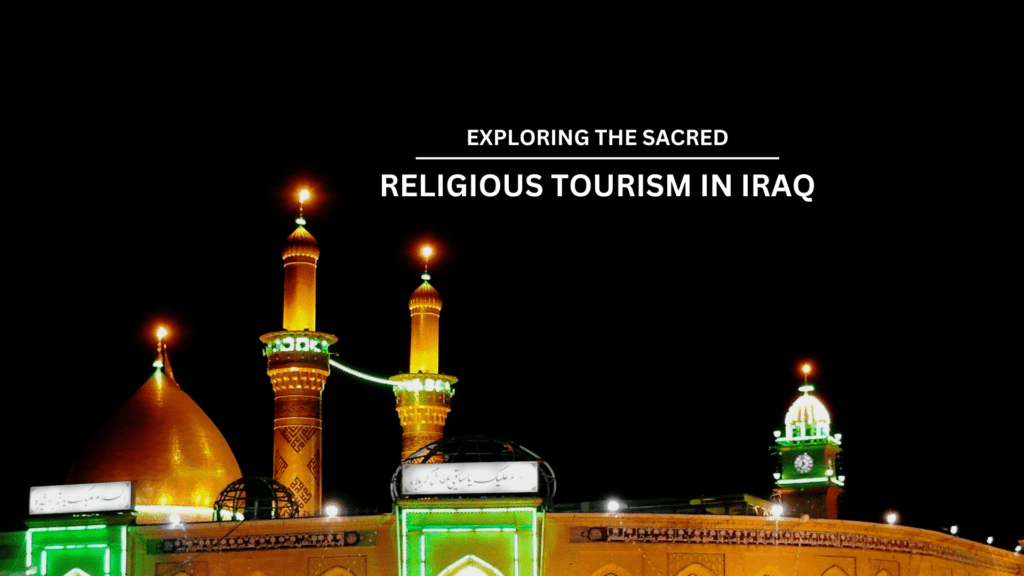
The city is also a place of major religious importance. The Al-Askari Shrine holds deep meaning for many Muslim visitors, especially Shia pilgrims, and should always be approached with respect and awareness of local customs. Samarra is therefore not only a heritage destination but a living spiritual city. Visitors who understand that balance tend to have a better experience.
What makes Samarra memorable is that it does not feel staged for tourism. Its importance is real, local and enduring. That gives the city a gravity that many seasoned travellers appreciate.
Key sites visitors hope to see
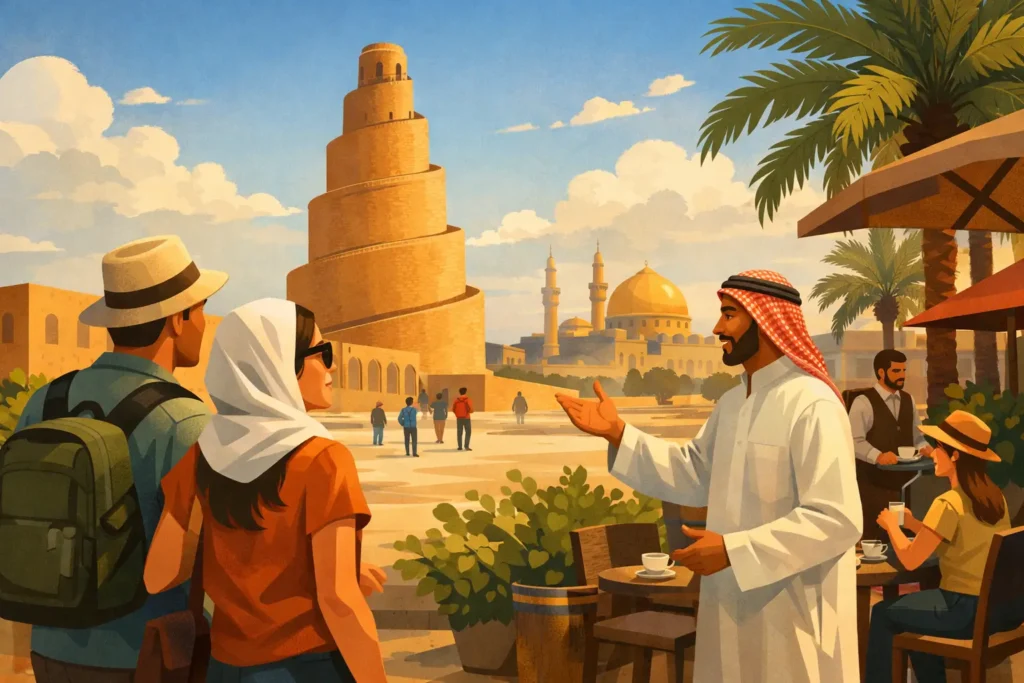
The landmark most international travellers recognise is the Great Mosque of Samarra and its spiral Malwiya Minaret, one of the most distinctive monuments in Iraq. Even for visitors familiar with Islamic architecture elsewhere, the scale and form of the structure feel unusual. It is one of those places that is instantly recognisable in photographs but far more impressive in person.
The Al-Askari Shrine is another major reason people travel to Samarra. For religious visitors, this may be the centre of the journey. For non-pilgrim tourists, it remains a place of extraordinary significance, but behaviour, dress and timing should reflect its sacred status.
Depending on access, interests and current arrangements, travellers may also be interested in the broader archaeological landscape of Abbasid Samarra. This is where having a knowledgeable guide adds real value, because the story of the city is much richer than a single monument or viewpoint.
What to know before planning a visit
The biggest mistake travellers make with Samarra is assuming that a famous historical city automatically functions like a conventional tourist destination. Samarra is visitable, but it rewards visitors who plan carefully.
First, check the current entry and movement conditions through a reliable local source before you set out. This matters whether you are travelling from Baghdad or including Samarra in a wider Iraq itinerary. Travel permissions, checkpoint procedures or preferred routes can change.
Second, think about the purpose of your visit. A heritage-focused visit, a pilgrimage, and a photography-led trip may all require slightly different pacing and expectations. If your main aim is to appreciate the architecture and history, a guided day trip is often enough. If your visit is devotional, you may want longer to spend in and around the shrine areas.
Third, allow for flexibility. Iraq often rewards travellers who can adapt calmly rather than insist on a rigid timetable. If timing shifts or a route changes, that does not necessarily mean the trip is failing. It usually means local realities are being managed in a sensible way.
Safety, access and realistic expectations
Travellers naturally want a clear yes-or-no answer about safety, but Samarra is better understood through context. Like many meaningful destinations in Iraq, it should be approached with awareness rather than anxiety. Visitors do go, including international travellers, but the right approach is to seek current local guidance, travel respectfully and avoid improvising unnecessarily.
It is also worth recognising that the travel experience in Samarra may feel more controlled than in cities where tourism infrastructure is broader. You may encounter checkpoints, restricted areas or site-specific rules. For some travellers, especially those used to highly independent backpacking, that can feel limiting. For others, it provides reassurance and structure.
The trade-off is simple. Samarra offers exceptional historical and spiritual value, but it asks for more planning in return. Most visitors who arrive with realistic expectations find that worthwhile.
Is a day trip from Baghdad possible?
Yes, for many travellers a day trip from Baghdad is the most practical option. It reduces the need to manage overnight logistics and allows visitors to experience Samarra’s main highlights with support from someone familiar with the route and local procedures.
That said, whether a day trip is the best choice depends on your interests. If you want a focused heritage visit centred on the Great Mosque and the Malwiya, a day trip can work well. If your visit has a religious purpose or you prefer a slower, more immersive pace, you may want to explore whether a longer stay is feasible.
Cultural etiquette in Samarra
Samarra deserves the same cultural sensitivity travellers should bring anywhere in Iraq, but the city’s religious significance makes that especially important. Modest dress is the baseline. For shrine visits, more conservative clothing is appropriate, and women may be expected to cover their hair in certain settings.
Photography should never be assumed. In sacred spaces, around worshippers, or near security points, always ask first or follow local guidance. A respectful visitor is usually met with warmth in Iraq, and Samarra is no exception. Courtesy travels well here.
It also helps to approach the city with curiosity rather than performance. This is not a backdrop for collecting dramatic images. It is a place with living meaning for the people who visit, pray and work there every day.
Who should consider visiting Samarra?
Samarra is especially well suited to travellers who value depth over convenience. If you are interested in Abbasid history, Islamic architecture, archaeology or religious heritage, it can be one of the most compelling stops in Iraq.
It may be less suited to visitors looking for an easy, open-ended urban break with lots of cafes, museums and spontaneous sightseeing packed closely together. Samarra’s appeal is more focused. You go there for significance, not for variety.
For photographers and writers, the city can be deeply rewarding, but only if approached with patience and respect. For pilgrims, it can be profoundly meaningful. For general cultural travellers, it often becomes one of those places remembered not because it was easy, but because it felt important.
Can tourists visit Samarra and should they?
Yes, tourists can visit Samarra, and for the right traveller they absolutely should. The more useful question is not only whether Samarra is open to visitors, but whether you are prepared to visit it in the right way. If you are willing to plan carefully, listen to local advice and approach the city with respect, Samarra can offer one of the most powerful encounters with Iraq’s historical and spiritual landscape.
For many visitors, the value of Samarra lies precisely in the fact that it still feels serious, rooted and authentic. It asks something of the traveller – patience, humility, preparation – and gives back a sense of connection that is increasingly rare in modern travel. If that is the kind of journey you are looking for, Samarra deserves a place on your itinerary.