
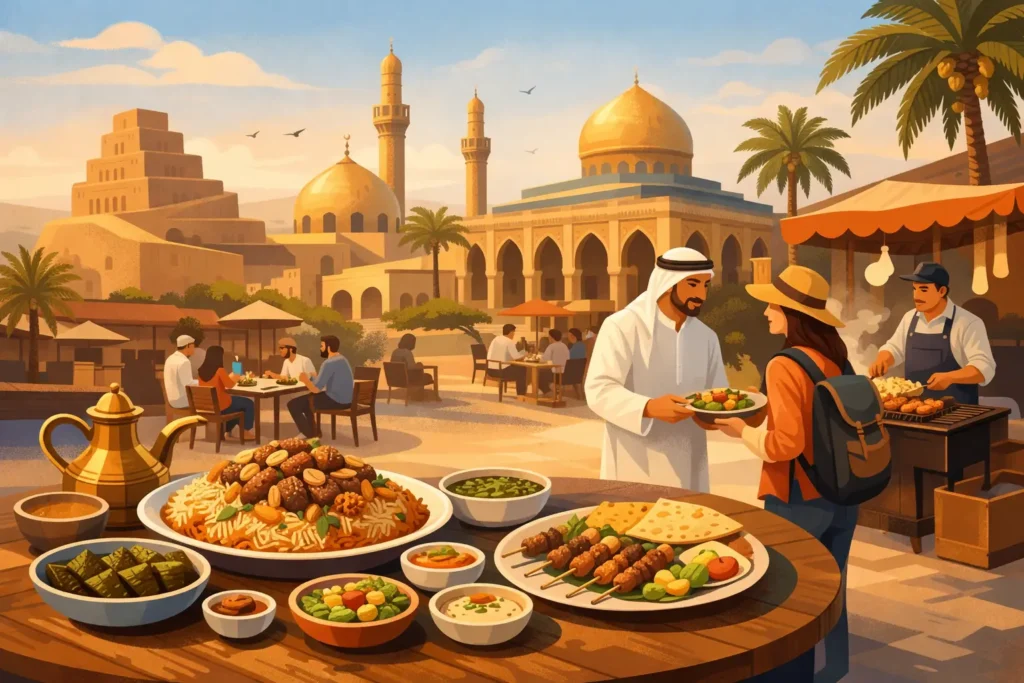
The first clue that Iraq rewards curious travellers often arrives before a landmark does – at the table. If you are searching for the best Iraqi dishes for travellers, start with this simple truth: Iraqi food is generous, layered and deeply tied to place. A meal here is rarely just fuel between sites. It is part of how you understand Baghdad, Basra, Najaf, Erbil and smaller towns where hospitality still shapes everyday life.
For first-time visitors, Iraqi cuisine can feel familiar in parts and completely distinctive in others. Rice, grilled meats, herbs, bread and slow-cooked stews appear across the country, but the combinations, textures and rituals are unmistakably Iraqi. Some dishes are ideal for a quick lunch between shrine visits or museum stops. Others deserve an unhurried evening by the river, shared with family-style plates and plenty of conversation.
Best Iraqi dishes for travellers who want a real introduction
If you only have a few days in Iraq, choose dishes that show different sides of the country – river cooking, stuffed vegetables, breakfast culture, street food and sweets. That gives you a better sense of Iraqi life than ordering grilled kebab at every meal, tempting though that may be.
Masgouf
Masgouf is the dish many travellers hear about first, and for good reason. Traditionally made with carp from the Tigris or Euphrates, the fish is butterflied, seasoned with salt, tamarind and spices, then cooked slowly over an open fire. The result is smoky, tender and slightly tangy rather than heavily spiced.
This is not fast food. Good masgouf takes time, so it suits an evening meal when you can sit outdoors and enjoy the pace of it. In Baghdad, it is especially associated with riverfront dining. If you are travelling as a pair or group, sharing one large fish makes sense, as portions are often generous.
Dolma Iraqi style
Visitors may know dolma from elsewhere, but Iraqi dolma is very much its own experience. Vine leaves, onions, peppers, tomatoes and sometimes aubergines are stuffed with rice, herbs and often minced meat, then cooked together in a pot until everything turns rich and fragrant.
Iraqi dolma is softer, deeper and more tomato-led than some travellers expect. It is a dish of patience and home cooking, though many restaurants serve excellent versions. If you want food that immediately conveys warmth and care, this is one of the best choices on the table.
Quzi
Quzi is one of Iraq’s great celebratory dishes. It usually features slow-cooked lamb served over spiced rice with nuts and raisins, sometimes with vegetables or a crisp pastry element depending on the region and setting. The contrast between savoury meat, aromatic rice and sweet dried fruit gives it a special-occasion feel.
For travellers, quzi works well as a dinner order when you want something distinctly Iraqi but approachable. It is rich, so it may be better after a long day of walking than as a quick midday meal in the heat.
Tashreeb
Tashreeb is one of those dishes that tells you a lot about Iraqi comfort food. Bread is placed at the bottom of the bowl and soaked with broth from meat and vegetables, often lamb, chickpeas and potatoes. The bread softens and absorbs the flavour, becoming part soup, part stew, part main meal.
It is satisfying without being showy. Travellers who enjoy eating what locals eat at home should make room for tashreeb, especially in cooler weather or after long overland journeys. It can look humble, but the flavour is anything but.
Street food and breakfast favourites worth trying
Not every memorable meal in Iraq needs a full restaurant setting. Some of the best Iraqi dishes for travellers are easiest to understand in the morning market, at a bakery counter or from a busy local shop where turnover is high and regulars know exactly what they came for.
Kahi with qaymar
This is one of Iraq’s classic breakfasts, especially loved in Baghdad. Kahi is a flaky layered pastry, while qaymar is a rich clotted cream, usually served with honey or date syrup. It is indulgent, slightly messy and completely worth the early start.
If you are used to lighter breakfasts, share a portion first. But if your idea of travel includes understanding local routines through food, this dish is essential. It pairs beautifully with hot tea and a slow morning.
Falafel and samoon
Falafel may be known across the region, but in Iraq it often becomes its own practical traveller meal when stuffed into fresh samoon bread with salad, pickles and sauce. Samoon, the distinctive diamond-shaped Iraqi bread, is worth noticing in its own right – light, chewy and ideal for sandwiches.
This is one of the easiest dishes for visitors who want something affordable, filling and widely available. It is also a good vegetarian option, though menus vary and it is always sensible to ask how things are prepared.
Kubba
Kubba comes in several forms across Iraq. At its simplest, think of a shell made from bulgur or rice mixture filled with minced meat, onions and spices, then fried, baked or simmered depending on the style. Some versions are crisp and portable, others are softer and more substantial.
For travellers, kubba is useful because it suits different situations. Fried kubba works as a snack while exploring a city centre. Soup-style kubba is more of a sit-down meal. If you see regional variations, try them – this is one area where local differences matter.
Bagila bil dihin
A traditional breakfast dish made with broad beans, sometimes topped with eggs and served with bread, bagila bil dihin is earthy, comforting and popular with people who need a proper start to the day. It is not delicate food, but that is part of its appeal.
If you have an active day planned – walking old quarters, visiting shrines, or taking a road trip between cities – this kind of breakfast carries you well. It also offers a glimpse into everyday Iraqi eating beyond the dishes most commonly photographed.
Regional flavours that make Iraq memorable
One of the pleasures of travelling through Iraq is that food changes with the landscape and local culture. You will notice differences in spice, preferred meats, side dishes and even dining rhythm from one city to another.
Biryani Iraqi style
Iraqi biryani is not the same as South Asian biryani, and it is worth approaching it on its own terms. The rice is often bright with vegetables, vermicelli, raisins, nuts and warming spices, creating a colourful, aromatic dish that feels festive and balanced rather than intensely hot.
It is a good option for travellers who want a rice-based meal with plenty of texture. Because it is less challenging than some unfamiliar dishes, it can also be a comfortable entry point on the first day or two of a trip.
Kebab and grilled meats
Iraqi kebab deserves its popularity. Typically made with finely minced lamb, seasoned simply and grilled over charcoal, it is juicy, smoky and often served with onions, tomatoes, pickles and warm bread. Sometimes the simplest dishes reveal the strongest kitchen confidence.
That said, not every kebab experience is equal. Busy local places usually deliver better freshness and flavour than empty dining rooms. For travellers, this is one of the easiest meals to order confidently, especially when language is limited.
Pacha
Pacha is a traditional dish made from sheep’s head, trotters and stomach, slow-cooked until tender. It has a long history and many devoted fans. For adventurous eaters, it can be one of the most memorable meals in Iraq.
It is not for everyone, and that is perfectly fine. This is where travel food should be honest rather than performative. If you are genuinely curious, try it in a respected specialist place and go with local guidance. If not, Iraq offers plenty of other deeply authentic dishes without forcing the point.
Sweets and drinks to finish properly
Iraqi hospitality often continues after the main course. Tea is more than a drink here – it is part of the rhythm of welcome.
Kleicha
Kleicha is perhaps Iraq’s best-known biscuit or pastry, filled with dates, walnuts or sweet spiced mixtures. It is especially associated with celebrations and family gatherings, but travellers can find it more widely too. The date-filled version is a particularly good introduction, given the importance of dates in Iraq’s food culture.
Tea and dates
Small glasses of strong, sweet Iraqi tea appear everywhere. Paired with dates, they create one of the simplest and most telling food experiences in the country. You do not need a formal meal to appreciate Iraqi generosity. Sometimes tea offered in a shop, guesthouse or family setting says just as much.
How to order well and eat respectfully
The best approach is to order with curiosity and a little flexibility. Iraqi portions are often generous, so sharing makes sense, especially if you want to try several dishes. Lunch may be your moment for quicker foods such as falafel, kubba or kebab, while evening suits masgouf, quzi or a long meal with multiple plates.
It also helps to read the room. Some venues are family-focused and relaxed, while others are more functional and fast-moving. Dress modestly, be patient at busy local places, and do not rush the social side of dining. In Iraq, being welcomed to eat is often part of a wider culture of care.
If you have dietary requirements, ask politely and clearly. Vegetarian travellers can eat well, but options depend on the city and the restaurant. Those wanting the most local experience should not hesitate to ask what the house speciality is. People are often pleased to guide visitors towards dishes they feel represent their city well.
Food will not explain all of Iraq, but it opens doors quickly. The right meal can turn a first evening into a lasting memory, and a simple breakfast can make a city feel immediately familiar. Travel here with an appetite, and Iraq will answer with generosity.