Some places change how you understand history the moment you stand on their soil. That is exactly what happens at the top Mesopotamian sites in Iraq, where the first cities, early writing systems, monumental temples and royal capitals all emerged within landscapes that still feel deeply alive today.
For travellers drawn to heritage, archaeology and cultural depth, Iraq offers something few destinations can match – not a museum version of the ancient world, but the real geography of civilisation itself. These sites are not simply old ruins. They are places where urban life, kingship, law, ritual and literature were shaped in ways that still influence the world.
If you are planning a heritage-focused journey, the best approach is to see these sites as part of a wider story rather than isolated stops. Southern Iraq reveals the rise of Sumerian city life. Central Iraq introduces imperial power and sacred architecture. Together, they form one of the most important travel routes anywhere for anyone interested in human history.
Why the top Mesopotamian sites in Iraq matter
Mesopotamia is often described as the cradle of civilisation, but that phrase can feel abstract until you visit Iraq in person. Here, the achievements usually mentioned in textbooks become tangible: city planning, record keeping, temple economies, legal traditions and organised states all took shape across this land between the Tigris and Euphrates.
What makes Iraq especially compelling is continuity. These ancient sites exist within a modern country known for generous hospitality, strong local identity and deep pride in heritage. For travellers, that means the experience is not only archaeological. It is also human. You are seeing ancient foundations within a living cultural landscape.
That said, expectations matter. Some sites are highly monumental and visually dramatic. Others require more imagination, context and patience. If you prefer polished visitor infrastructure, a few locations may feel understated. If you value authenticity and historical significance above spectacle, the reward is immense.
Babylon
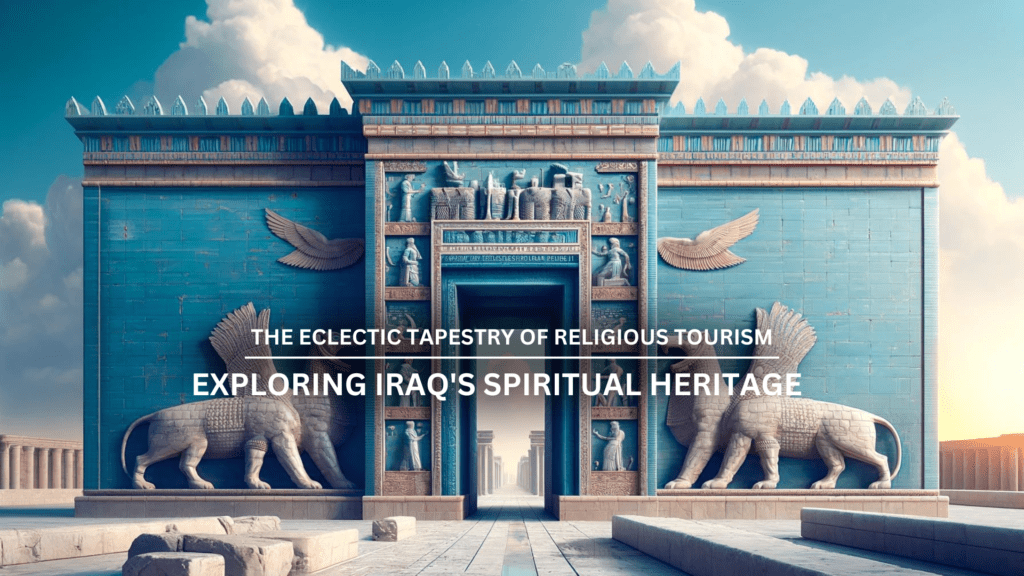
Babylon is the Mesopotamian name most travellers recognise first, and for good reason. Located south of Baghdad near Hillah, it became one of the great cities of the ancient world, especially under Nebuchadnezzar II. Even now, its scale helps visitors grasp the ambition of Mesopotamian urban life.
Walking through Babylon, you begin to understand it not just as a legendary place but as a planned royal capital with ceremonial, religious and administrative importance. The processional route, city walls and surviving architectural traces speak to a city designed to impress. For many first-time visitors to Iraq, Babylon offers the most immediate sense of ancient grandeur.
It is also a site where interpretation matters. Parts of Babylon have seen reconstruction, which can help some travellers visualise the past but may feel less purely archaeological to others. That trade-off is worth knowing in advance. If you arrive expecting untouched ruins, you may need to adjust your lens. If you arrive wanting to understand how ancient power was staged in space and architecture, Babylon is unforgettable.
Ur
Near Nasiriyah in southern Iraq, Ur is one of the essential stops on any serious Mesopotamian itinerary. This was one of the most important Sumerian cities, and its great ziggurat remains among the most striking ancient structures in the country.
The power of Ur lies partly in its clarity. The ziggurat still rises with an authority that bridges millennia, giving visitors a direct visual encounter with monumental sacred architecture. Unlike sites where only low mounds remain, Ur offers form, scale and atmosphere all at once.
But Ur is significant beyond the famous structure. This was a major urban centre tied to trade, religion and kingship. It also carries spiritual resonance for many visitors because of long-standing associations with the life of Prophet Ibrahim, known in the Christian and Jewish traditions as Abraham. That makes Ur especially meaningful for travellers interested in both archaeology and sacred history.
Uruk
If Babylon represents imperial fame, Uruk represents beginnings. Often associated with the earliest development of large-scale urban life, Uruk is one of the most historically important archaeological sites on earth. This was the city linked to the Epic of Gilgamesh and to the rise of early writing and administration.
Uruk asks a little more from the visitor. It is not always as immediately photogenic as Ur or Babylon, and its significance can be easier to appreciate if you come prepared with historical context. Yet for travellers who care about firsts – first cities, first bureaucracies, first written records – few places compare.
There is something powerful about standing in a place where so many systems we now take for granted first began to take shape. Uruk rewards curiosity rather than quick sightseeing. It is best suited to travellers who want depth, not just landmarks.
Nippur
Nippur may not have the name recognition of Babylon or Ur, but it was one of the most important religious centres in ancient Mesopotamia. Dedicated to the god Enlil, it held a status that extended beyond a single kingdom or dynasty.
That wider spiritual importance is what makes Nippur so compelling. In Mesopotamian history, political power often shifted between cities, but sacred legitimacy mattered just as much. Nippur helps travellers understand that ancient Iraq was shaped not only by armies and rulers, but by belief, ritual and divine authority.
For visitors, Nippur is often a site of interpretation and reflection rather than visual drama. If you enjoy reading a landscape and imagining the networks of pilgrims, priests and rulers who once passed through it, it offers real depth. It may be less suitable for travellers seeking the most immediately monumental stop.
Nimrud
In northern Iraq, Nimrud introduces a different Mesopotamian chapter – the Neo-Assyrian world. Once a major Assyrian capital, it was known for palaces, carved reliefs and colossal guardian figures that projected royal power with extraordinary confidence.
Nimrud matters because it expands the story beyond Sumer and Babylon. Mesopotamian civilisation was never a single city or one uninterrupted culture. It evolved across centuries through different centres, languages and imperial visions. At Nimrud, that shift becomes clear.
The experience of visiting depends on current site access and conditions, so practical planning is essential. But for travellers building a broader understanding of ancient Iraq, Nimrud adds vital northern perspective and highlights the sophistication of Assyrian art and statecraft.
Nineveh
Near modern Mosul, Nineveh was another great Assyrian capital and one of the most storied cities of the ancient Near East. Its scale was immense, and its historical and religious associations have made it significant to multiple traditions.
For heritage travellers, Nineveh offers a sense of ancient urban magnitude within a region now welcoming increasing cultural interest. Visiting the wider Mosul area can also be part of a richer journey through northern Iraq, where history is layered rather than confined to a single era.
As with several major archaeological landscapes, not every part of Nineveh presents itself in an immediately dramatic way. Some visitors are moved most by context – by knowing what stood here, what was governed here, and how influential the city once was. That is often the key to appreciating Mesopotamian travel in Iraq more generally: substance over theatrical presentation.
Ashur
Ashur, or Assur, was both an ancient city and the spiritual heart of Assyria. Located on the Tigris, it carries a quieter presence than some better-known capitals, but its importance is profound. This was the city that gave the Assyrian civilisation its name and ideological centre.
What makes Ashur especially rewarding is its combination of political and sacred meaning. It helps connect royal ambition with religious identity, showing how cities in ancient Iraq were never merely administrative hubs. They were expressions of cosmic order, memory and legitimacy.
For thoughtful travellers, Ashur can be one of the most resonant stops of all. It is less about spectacle and more about historical weight.
Hatra
Strictly speaking, Hatra belongs to a later period than the earliest Mesopotamian cities, but it deserves inclusion in many heritage itineraries through Iraq because it shows how northern Iraqi urban culture continued to evolve after the classical Mesopotamian age. Its monumental architecture and desert setting give it a distinctive character.
Hatra is often one of the most visually impressive archaeological sites in Iraq. The scale of its temples and walls can appeal even to travellers with limited background in ancient history. While purists may separate it from Sumerian or Babylonian heritage, most visitors will find that it enriches the story rather than distracting from it.
Planning a trip to Mesopotamian Iraq
The top Mesopotamian sites in Iraq are spread across different regions, so route planning matters. Babylon can be combined relatively easily with Baghdad and central Iraq. Ur, Uruk and nearby southern sites work best as part of a southern itinerary based around Nasiriyah. Northern sites such as Nineveh, Nimrud and Ashur require separate planning and should be approached with up-to-date local guidance.
Travel times, permissions, seasonal heat and site facilities can vary. Some travellers will want a specialist guide to help interpret what they are seeing, especially at less visually obvious locations. Others may prefer to pair ancient sites with city experiences, museums and time with local communities. That combination often creates the richest journey.
If this is your first visit, resist the urge to do everything too quickly. Mesopotamian Iraq is best experienced with space to absorb it. A ziggurat at sunrise, a conversation over tea, an afternoon spent understanding why one city mattered more than another – this is the kind of travel that stays with you.
Iraq does not ask visitors to admire history from a distance. It invites them to stand inside it, listen carefully and travel with respect.