At Arbaeen, the road between Najaf and Karbala becomes more than a route. It becomes a shared act of remembrance, service and human connection. This Arbaeen journey example follows a first-time pilgrim walking from Najaf to Karbala over several days, showing what the experience can feel like and how to approach it with respect.
Arbaeen marks forty days after the martyrdom of Imam Husayn, the grandson of the Prophet Muhammad. For many Shia Muslims, reaching the shrine of Imam Husayn in Karbala is a deeply personal expression of faith, grief, loyalty and hope. Travellers also come from different religious and cultural backgrounds to witness one of the world’s largest annual gatherings, provided they understand that this is, above all, a sacred pilgrimage rather than a conventional walking holiday.
The journey is physically demanding, emotionally powerful and shaped by extraordinary Iraqi generosity. No two experiences are identical: some pilgrims walk in a day or two, while others take a slower pace; some travel with family groups, while others arrive alone. The following example offers a realistic framework rather than a fixed itinerary.
An Arbaeen journey example: Najaf to Karbala
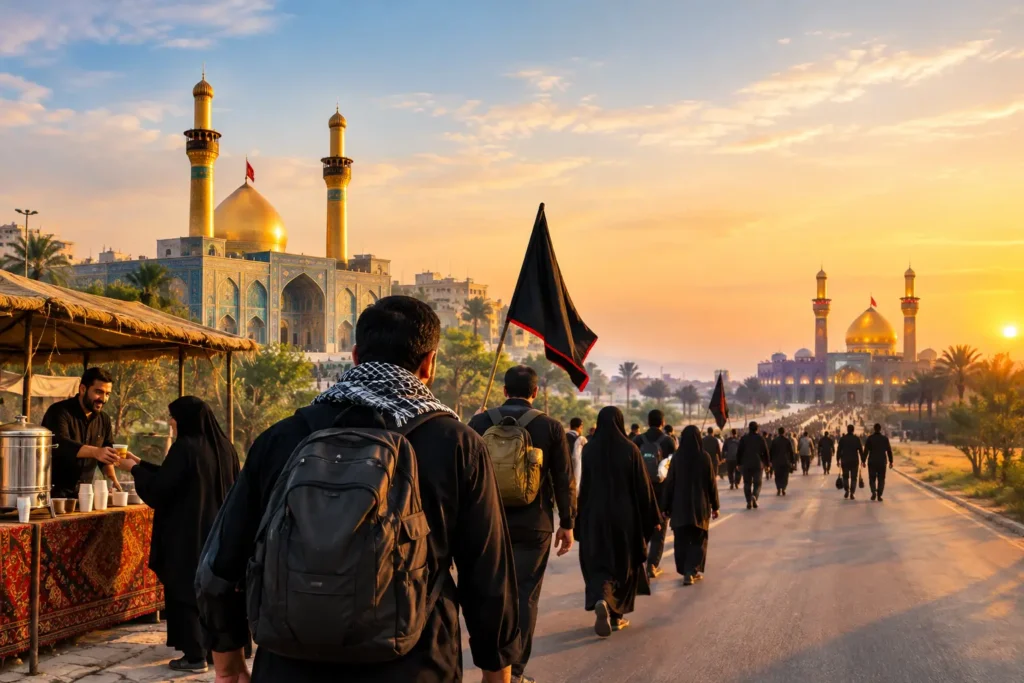
The traditional walk begins in Najaf, home to the Shrine of Imam Ali. The road to Karbala is commonly described as roughly 80 kilometres, although the distance walked can vary according to where you begin, where you stay and which routes are open that year. Along the way, numbered roadside markers help pilgrims gauge their progress.
Day one: Arriving in Najaf with intention
A thoughtful journey starts before the first step. A pilgrim may arrive in Najaf a day early, settle into accommodation, visit the shrine if appropriate to their plans, and buy practical essentials such as a refillable water bottle, comfortable walking socks and any personal medication.
This is also the moment to adjust expectations. The streets will be busy, mobile signals may be inconsistent, and journeys that look simple on a map can take longer during the pilgrimage period. Agreeing a meeting point with companions, saving key addresses offline and keeping identification secure are small decisions that make a meaningful difference.
Many visitors choose modest, loose clothing suited to warm daytime conditions and cooler evenings. Comfortable, already worn-in trainers are usually more valuable than new footwear. Religious etiquette matters too: dress respectfully, be patient in crowded spaces, and follow guidance from shrine staff, volunteers and local organisers.
Day two: Joining the road north
Leaving Najaf, the rhythm of the pilgrimage becomes clear. Families, elderly pilgrims, students and visitors from across Iraq and the wider world move in the same direction. Some walk quietly, some recite prayers or poetry, and some simply absorb the atmosphere. There is no requirement to walk at another person’s pace.
The defining feature of the road is the mawkib, a volunteer-run service point. Local households, charities, community groups and friends set up tents or buildings to offer water, tea, meals, fruit, rest areas and, in some cases, basic overnight space. This hospitality is offered in remembrance of Imam Husayn and his family. Receive it with gratitude, avoid waste and remember that volunteers are often serving many thousands of people.
For a first-time international visitor, this can be the moment when Iraq feels most immediate. Conversations may begin with a welcome, a cup of tea or a question about where you are from. A few Arabic phrases are appreciated, but warmth often communicates more than perfect language. Ask before taking photographs, particularly around prayer, rest areas, families and anyone who appears vulnerable or tired.
Day three: Finding a sustainable pace
By the second full day of walking, feet and energy levels begin to set the agenda. A sensible pilgrim takes regular breaks, drinks water steadily and deals with hot spots on their feet before they become blisters. It is better to arrive later in Karbala with strength and comfort than to push through pain for the sake of a timetable.
A typical day might include walking in the cooler early hours, resting over the warmest part of the afternoon and continuing later if conditions feel manageable. This depends on the weather, crowd levels, age, mobility and personal health. Those with medical conditions, limited mobility or concerns about walking the full route should consider joining only part of the walk and arranging suitable transport where available.
Overnight arrangements range from organised accommodation in the cities to simple rest spaces offered by mawkibs. Standards vary widely, and privacy can be limited. Carry a light sleeping layer, hand sanitiser, tissues, a portable charger and a small torch. Keep luggage minimal: the road is generous, but a heavy bag becomes a burden surprisingly quickly.
Day four: The final approach to Karbala
As Karbala draws closer, the road becomes denser and the emotion of the pilgrimage deepens. Many walkers have been travelling for days, sometimes from far beyond Najaf. The final kilometres can feel slow, not because of the distance alone but because the crowds require patience and awareness.
This is not the time to force a rigid plan. Follow official crowd-management instructions, stay with your group where possible and choose a calm meeting point in case you become separated. Families with children and travellers who are not used to large religious gatherings should allow additional time and avoid trying to cover too much in one day.
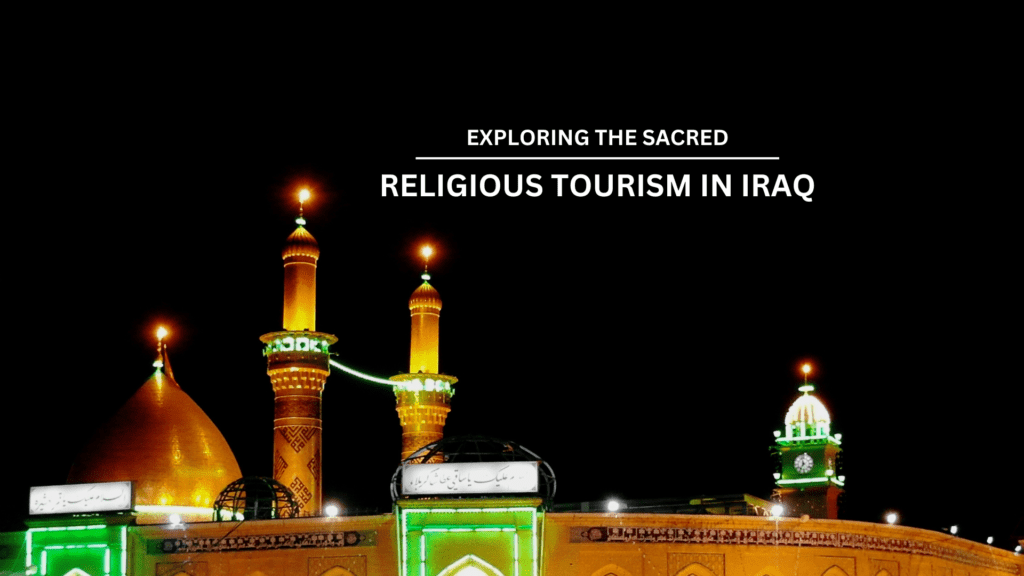
Arriving in Karbala is often described by pilgrims as a moment of release. The city welcomes an immense number of visitors, and the atmosphere combines devotion, mourning and service. For many, seeing the shrines of Imam Husayn and his brother Abbas is the spiritual heart of the journey. For others, simply reaching the city after sharing the road with millions leaves a lasting impression.
Day five: Making space for reflection
A visit to the shrines should be approached with humility and patience. Entry procedures, opening arrangements and crowd flows can change during Arbaeen, so follow instructions on the ground rather than relying on assumptions. Non-Muslim visitors and Muslim visitors unfamiliar with local practice should observe respectfully, dress modestly and ask trusted local hosts or guides when unsure.
It can be tempting to fill every hour with activity, but leaving time to rest is sensible. Karbala during Arbaeen is intense. A quiet meal, a conversation with fellow pilgrims or a pause away from the busiest streets can help you process the scale of what you have experienced.
Preparing for the journey with care
An Arbaeen walk is supported by community service, yet pilgrims still need to take responsibility for their own preparation. Check current entry requirements, travel documentation and official pilgrimage arrangements before booking. These can change, particularly around major religious dates, and travellers should rely on current guidance from the relevant authorities.
Book accommodation in Najaf and Karbala as early as possible if you need a private room or a predictable base. During Arbaeen, availability is under exceptional pressure. Flexible travellers may find more options, but should not assume that last-minute arrangements will suit their needs, especially when travelling with children, older relatives or accessibility requirements.
A small day bag should contain the essentials: identification and copies stored separately, cash in modest amounts, water, medication, a power bank, basic blister care and modest spare clothing. International cards may not work everywhere, so planning payment needs in advance is wise. Keep valuables discreet and carry only what you can comfortably manage.
Transport deserves equal attention. Najaf and Karbala are connected by road, but pilgrimage traffic can affect journey times considerably. Build generous margins into airport transfers, intercity travel and departure plans. If you are continuing elsewhere in Iraq after Arbaeen, schedule a recovery day rather than expecting to move at ordinary tourist pace immediately afterwards.
What this journey teaches travellers about Iraq
The most memorable part of an Arbaeen journey is rarely the number of kilometres completed. It is the collective care visible along the road: a stranger offering food, a volunteer tending to tired feet, or a family making room for visitors they have never met. These gestures are not staged for travellers. They are part of a living tradition of service.
For visitors considering Iraq, Arbaeen also reveals a country that is deeply connected to faith, hospitality and community. It asks travellers to be guests rather than spectators. That distinction matters. Respect for the pilgrimage, patience with its practical challenges and openness to local customs will shape the experience far more than any checklist.
Whether you walk the full route from Najaf or join for only a few kilometres, approach Arbaeen with preparation and humility. The road to Karbala offers no ordinary itinerary, but it can offer a rare chance to understand Iraq through the generosity of the people walking beside you.