On a Friday morning, Mutanabbi Street fills with the small rituals that make Baghdad feel immediate: books passed between hands, tea poured into glass cups, painters displaying their work and long conversations continuing beside the Tigris. A Baghdad cultural guide should begin here, not with a checklist of monuments, because this is a city understood through people as much as places.
Baghdad is often introduced as a historic capital, and rightly so. Yet its appeal for travellers lies equally in its living culture: family meals that stretch through an afternoon, sacred spaces that welcome pilgrims, bookshops that preserve a love of language, and neighbourhoods where hospitality is offered with refreshing ease. Visiting with curiosity and good manners opens doors that no itinerary can guarantee.
A Baghdad cultural guide begins with the river
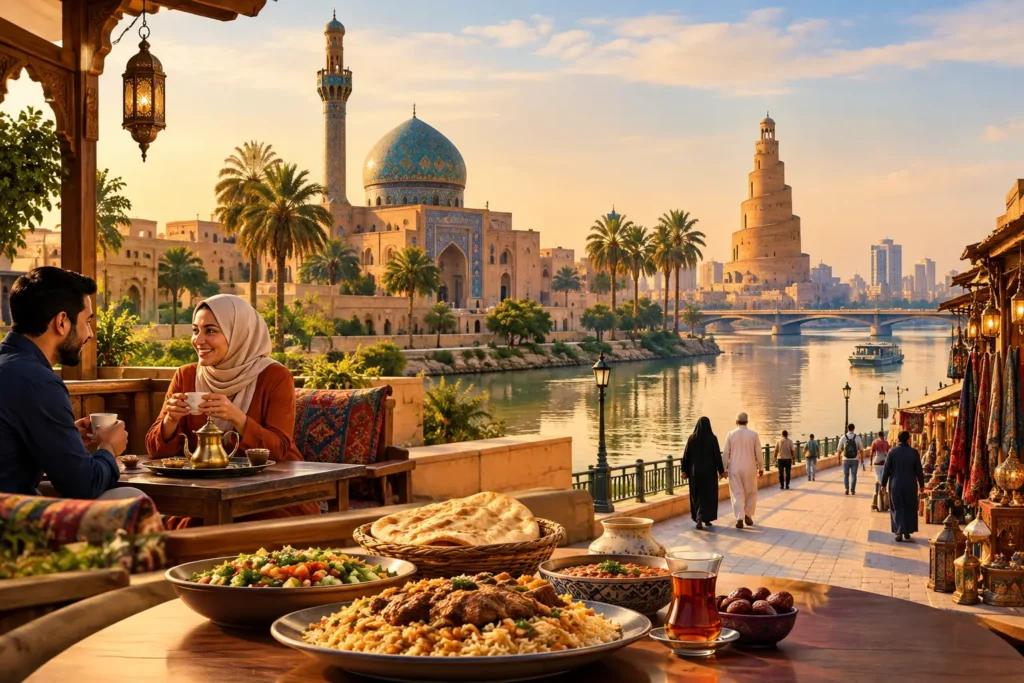
The Tigris is not simply a landmark on a map. It is a reference point for the city’s memory, geography and daily rhythm. Spend time along Abu Nuwas Street or choose a riverside café when local conditions and opening hours allow. The pleasure is often unhurried: watching boats move across the water, sharing tea and seeing how Baghdad residents make room for conversation in a busy capital.
Crossing between the Karkh and Rusafa sides of the city also gives visitors a better sense of Baghdad’s scale. There is no single version of the capital. One district may feel commercial and fast-moving, while another is shaped by shrines, older lanes, government buildings, university life or family-owned shops. Allow time between stops rather than treating the city as a collection of sights to rush through.
The river has witnessed Baghdad’s changing fortunes since the Abbasid period, when the city became a centre of scholarship, trade and literature. That history is present without being frozen behind glass. It appears in the city’s confidence with poetry, debate, craftsmanship and food.
Books, scholarship and the Abbasid inheritance
Mutanabbi Street is Baghdad’s best-known cultural gathering place and deserves more than a quick photograph. Named after the celebrated Arabic poet Al-Mutanabbi, it is especially lively on Fridays, when booksellers, readers, artists and families gather. Browse patiently, ask before photographing people or book displays, and accept that the most rewarding part may be the conversation rather than a purchase.
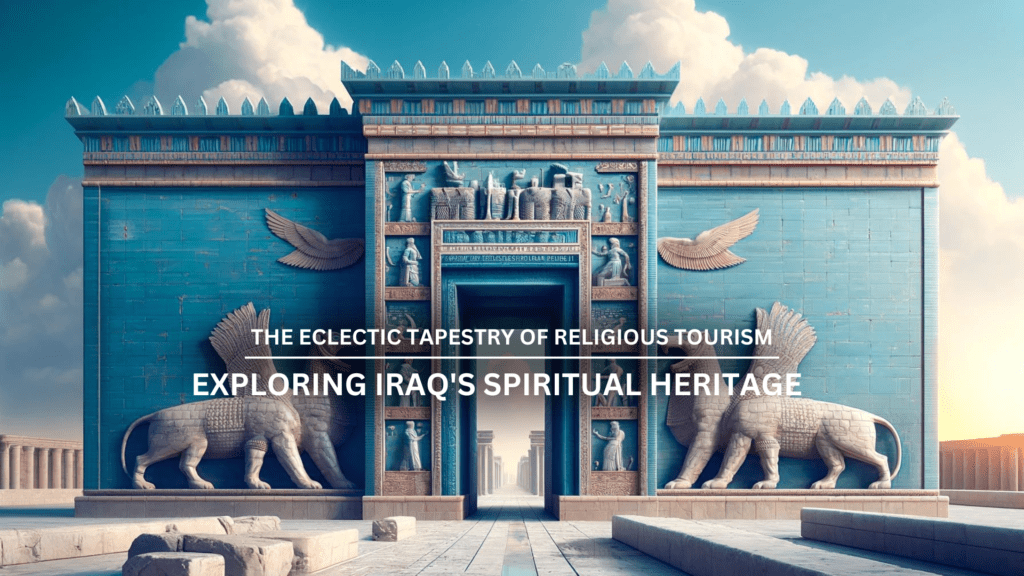
Nearby, the Qishla complex and its clock tower recall Baghdad’s later urban history, while the Abbasid Palace offers a striking encounter with brickwork, arches and ornamental detail. Al-Mustansiriyah, founded in the thirteenth century, speaks to the city’s long tradition of organised learning. These places reward visitors who slow down and notice craft: carved patterns, shaded courtyards and the way architecture creates relief from the heat.
For a wider view of Iraq’s ancient civilisations, the Iraq Museum is an essential cultural stop when it is open to visitors. Its collections connect Baghdad to the much older histories of Mesopotamia, from early cities and writing to the empires that shaped the region. Check current access arrangements before setting out, as museum schedules can change.
Faith as a living part of the city
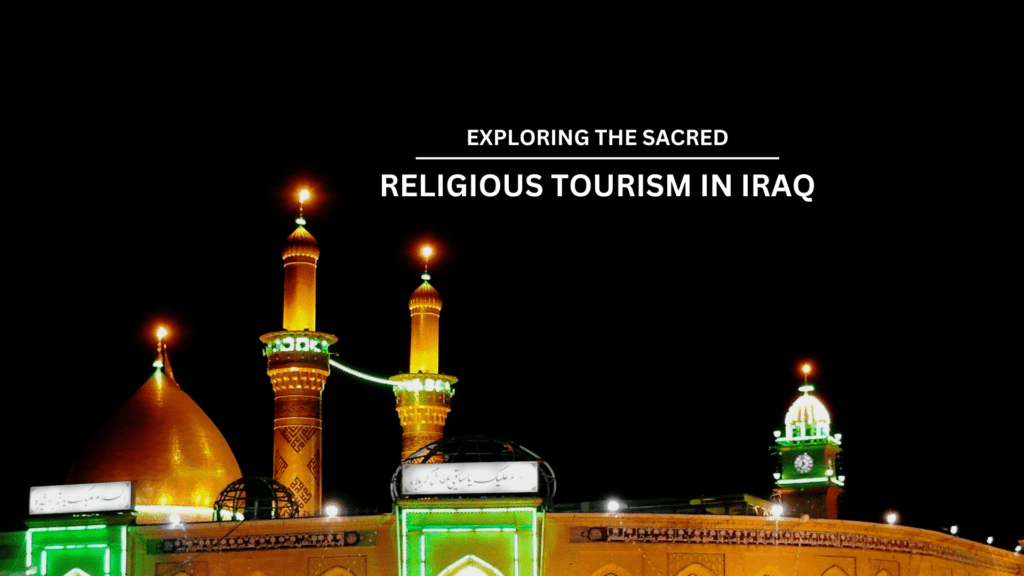
Baghdad’s religious heritage is not a separate tourist attraction. It is woven into the city’s daily life, its calendar and the journeys of visitors from across Iraq and beyond. The shrine complex in Al-Kadhimiya is among the capital’s most important places of pilgrimage and a remarkable example of sacred architecture, with gilded domes, intricate tilework and an atmosphere of deep devotion.
Non-pilgrim visitors can be welcomed, but respect must guide the visit. Dress modestly, follow instructions at entrances, be prepared for security checks and avoid taking photographs where they are restricted. Women may be asked to cover their hair in shrine settings. At busy times, particularly during major religious occasions, the experience can be intense and movement may be slower. A local guide can help first-time visitors understand practical etiquette without treating worship as a spectacle.
Baghdad also carries a rich Islamic intellectual legacy. Its mosques, shrines and historic districts are reminders that faith in the city has inspired architecture, charitable traditions, study and community life across centuries. Listen more than you explain, and ask respectful questions when an opportunity arises.
Eat Baghdad slowly
Baghdadi food is one of the most direct ways to understand local generosity. The classic meal to seek out is masgouf, freshwater fish traditionally cooked slowly beside a wood fire and served with bread, salad, pickles and sharp flavours such as amba. It is often ordered for a group, making it a meal that naturally encourages sharing.
Breakfast has its own pleasures. Fresh bread, eggs, cheese, honey, kaymak and sweet tea can turn a simple morning into a social occasion. Later in the day, try kubba, dolma, biryani Iraqi-style or a plate of grilled meat, depending on the restaurant and season. Each family and cook may have a preferred method, so avoid searching for one definitive version of any dish.
Cafés matter as much as restaurants. Tea is an invitation to pause, and coffee may lead to a conversation with a waiter, shopkeeper or neighbouring table. If you are offered food or drink, accepting when comfortable is a gracious response. If you need to decline, do so warmly and clearly. Hospitality is generous, but respect works both ways.
Markets and craft with care
Baghdad’s markets offer colour, scent and useful insight into everyday life. In older commercial areas, you may find spices, textiles, metalwork, prayer beads, perfume, sweets and household goods side by side. Bargaining can be expected in some settings, but it should remain friendly. Start by asking the price, make a reasonable counteroffer and leave the exchange on good terms if it does not suit you.
For meaningful purchases, choose items with a clear local connection: hand-worked copper, calligraphy, books, textiles or regional sweets to share. Be cautious with anything that appears old or archaeological. Cultural heritage belongs in its proper context, and travellers should not buy artefacts or objects of uncertain origin.
Photography requires similar care. Markets are visually compelling, but people are not scenery. Ask permission for close portraits, be particularly considerate around religious spaces and do not photograph security personnel or sensitive sites. A brief question and a smile will usually take you further than a long lens.
The social etiquette that makes a difference
Baghdad is warm and sociable, yet it remains a capital with conservative customs in many settings. Modest clothing is the simplest choice for both men and women, especially when visiting shrines, older neighbourhoods and family-oriented venues. Loose, lightweight layers work well in the heat while showing consideration for local norms.
Greetings matter. A polite salam, patience during introductions and an interest in someone’s city are often appreciated. In more formal or traditional settings, wait to see whether a handshake is offered, particularly when greeting someone of another gender. Use your right hand when giving or receiving food, money or a business card where practical.
The best cultural encounters tend to come from leaving space in the day. A driver may recommend a family restaurant, a bookseller may point out a favourite poet, or a hotel host may suggest the best time to visit a nearby district. These recommendations are valuable, though travellers should still make their own judgement about timings, transport and comfort.
Plan with confidence, not assumptions
Baghdad is increasingly practical for well-prepared visitors, but good planning remains part of travelling responsibly. Arrange accommodation through reputable providers, confirm airport transfers or trusted local transport in advance, and keep your hotel’s contact details available offline. Travel times can vary considerably, so avoid scheduling important visits too tightly.
Visa rules depend on nationality and can change, so check official requirements before booking. Carry identification in line with local requirements and ask your accommodation for current advice on neighbourhood access, opening times and appropriate transport. During religious holidays and major gatherings, hotels and roads may be busier, while the city’s cultural energy can be especially memorable.
A local guide is not essential for every traveller, but it can transform a first visit. The right guide adds context, assists with language and etiquette, and helps you spend less time working out logistics. Independent travellers may prefer to combine guided cultural visits with free time for cafés, markets and riverside walks.
Baghdad does not ask visitors to admire it from a distance. Sit for tea, read a few lines of poetry, share a meal and let the city reveal itself at the pace of a real conversation.