Basra is shaped by water. Along the Shatt al-Arab, where the Tigris and Euphrates meet before continuing towards the Gulf, the city reveals a calmer, more intimate side of southern Iraq. This Basra waterfront travel guide is for travellers who want more than a quick photograph: it is for those who want to understand the river as a meeting place, a source of livelihoods and a backdrop to everyday hospitality.
The waterfront is not a single polished attraction with one entrance and one timetable. It is a living urban landscape of promenades, cafés, gardens, boats, family gatherings and changing views. Approach it with time to spare, modest expectations about infrastructure, and an openness to conversation. Basra rewards visitors who slow down.
Why the Shatt al-Arab matters
The Shatt al-Arab is central to Basra’s identity. Its palm-lined banks and waterways have supported trade, agriculture and travel for centuries, helping make Basra one of Iraq’s most important historic port cities. For heritage-minded travellers, the river offers a useful way to read the city: the movement of small boats, the date palms, and the broad waterway all point to Basra’s long connection with the Gulf and the wider world.
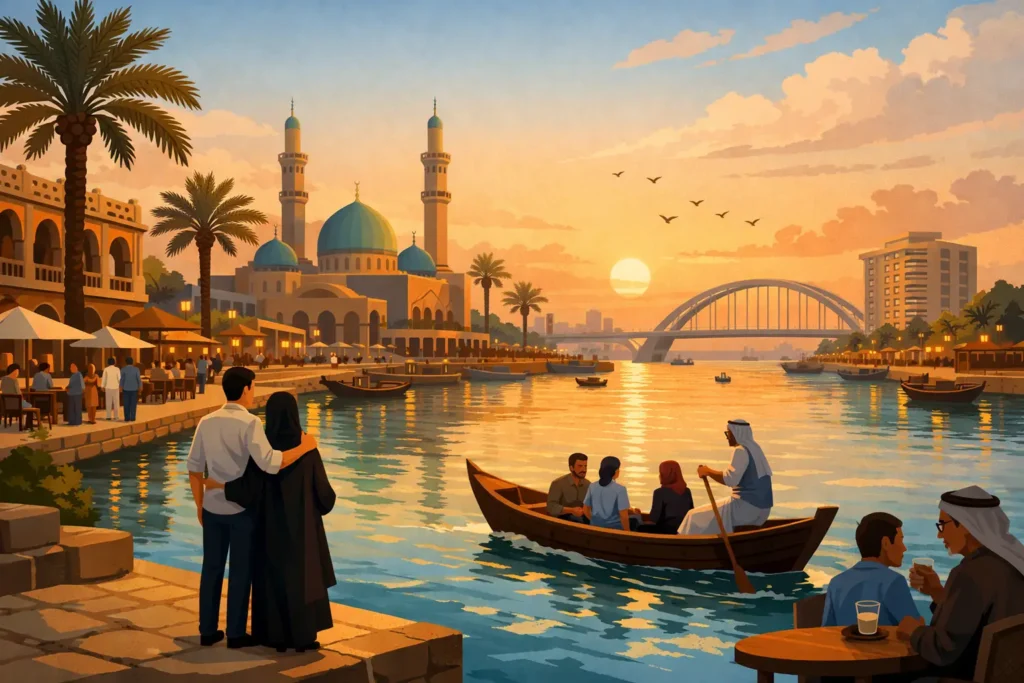
For many local residents, however, the appeal is simpler. The riverfront is where people come to take the evening air, share tea, eat with relatives and watch the light soften over the water. Visiting at this unhurried pace is one of the most authentic experiences available in the city.
Where to spend time on Basra’s waterfront
Basra Corniche
The Corniche is the most straightforward place to begin. This riverside stretch gives first-time visitors an accessible introduction to the Shatt al-Arab and is especially pleasant in the late afternoon and evening. Families, groups of friends and couples often gather here when the day’s heat eases.
Walk slowly rather than treating the Corniche as a sight to tick off. Pause for a tea or fresh juice, observe the river traffic and notice how the promenade changes after sunset. It is an ideal first outing after checking into your accommodation, particularly if you have arrived from Baghdad or travelled a long distance overland.
The atmosphere can vary by day, season and weather. Weekends and public holidays are livelier, while a weekday evening may feel more relaxed. Facilities and opening hours at nearby cafés can also change, so ask your hotel or local host for the best current suggestion.
Riverside cafés and local food
Basra’s waterfront is best enjoyed with a table facing the river, even if the view is partly framed by traffic and city life. Order Iraqi tea, often served very sweet in a small glass, and take the opportunity to try local dishes where available. Fresh fish is an obvious regional speciality, and masgouf-style grilled fish may appear on menus, though preparation and availability depend on the venue.
Do not assume that every riverside restaurant is aimed at tourists. Many are places where Basrawis bring their families, which is part of their appeal. Choose a busy venue with local diners, ask politely what is recommended that day, and allow time for a leisurely meal. Service may follow the rhythm of a social evening rather than a tightly timed dining schedule.
Boat views and the river itself
A short boat outing can offer a memorable perspective on Basra, but arrangements are usually best made locally through a trusted hotel, guide or host. Water conditions, weather and available services can change, so avoid relying on old online information or informal promises made without clear details.
If you do arrange a trip, agree the route, duration and price beforehand. Check that the boat is appropriate for passengers and follow the operator’s safety guidance. For some travellers, watching the boats from shore is enough; for others, a gentle journey at sunset becomes the highlight of their stay. It depends on your comfort level and the practical conditions on the day.
The best time to visit the waterfront
Basra’s climate should shape your plans. From late autumn to early spring, daylight walks and riverside meals are generally more comfortable. During warmer months, plan waterfront time for early morning or, more realistically, the period after sunset. Midday heat can be intense, and sightseeing is far more enjoyable when you work with the local rhythm rather than against it.
Sunset is particularly rewarding. The city begins to gather by the river, lights appear along the banks, and the temperature becomes more manageable. Photographers should arrive before golden hour, but should remember that people are not scenery. Ask before taking close portraits, especially of families, women and workers.
A respectful way to experience Basra’s river life
Basra is welcoming, and a few courteous habits go a long way. Dress modestly in public spaces, particularly when visiting family-oriented areas. Lightweight, loose-fitting clothing is practical in the heat, while covered shoulders and knees are a respectful baseline for all travellers.
Public displays of affection are best kept discreet. If you are invited into a conversation or offered tea, respond warmly but do not feel obliged to overstay. A few Arabic greetings can help create an easy connection: salam alaikum for hello and shukran for thank you are always appreciated.
Photography deserves special care. Wide river views and architectural details are usually uncomplicated, but seek permission before photographing individuals, private boats or restaurant staff. Near official buildings or sensitive infrastructure, put the camera away if there is any uncertainty. A respectful question is better than an awkward moment.
Practical planning for a waterfront visit
Stay somewhere that makes evening outings easy, whether that is near the city centre or with reliable transport arranged through your accommodation. Basra is spread out, and the practical value of a well-located hotel is often greater than it first appears. Ask about current driving times to the Corniche, as traffic can affect plans.
Taxis and private drivers are generally the simplest way to reach the waterfront, particularly after dark. Agree the fare before setting off if the vehicle is not using a clearly established booking arrangement. Keep the name and address of your accommodation saved in Arabic as well as English, and carry a local SIM or ensure your host can be contacted if needed.
Bring drinking water, sunscreen, sunglasses and cash in Iraqi dinar for small purchases. Card acceptance is growing in parts of Iraq but should not be assumed at every café or vendor. For evening visits, a light layer may be useful in the cooler months, while comfortable shoes make the promenade easier to enjoy.
International visitors should confirm visa requirements and entry procedures through official channels before travelling. Conditions can differ by nationality and may change. The same principle applies to local transport and accommodation: up-to-date advice from your hotel, a reputable local operator or Stay In Iraq will be more useful than a guide written months earlier.
Pairing the waterfront with Basra’s wider story
The riverfront works best as part of a wider Basra itinerary. Spend the morning learning about the city’s cultural heritage, then return to the Shatt al-Arab in the evening when it becomes a social space. Travellers with more time can also explore the wider Basra area with a knowledgeable local guide, including landscapes and communities shaped by the region’s waterways and date-palm traditions.
Avoid trying to rush everything into a single afternoon. Basra is not defined only by headline landmarks. Its character appears in quieter moments: a glass of tea by the water, the call of a passing boat, the warm welcome of a café owner, and the feeling that the river remains part of daily life rather than a monument to it.
Give the Shatt al-Arab an evening of its own. Arrive without a packed schedule, choose a place to sit, and let Basra introduce itself at the pace of the river.