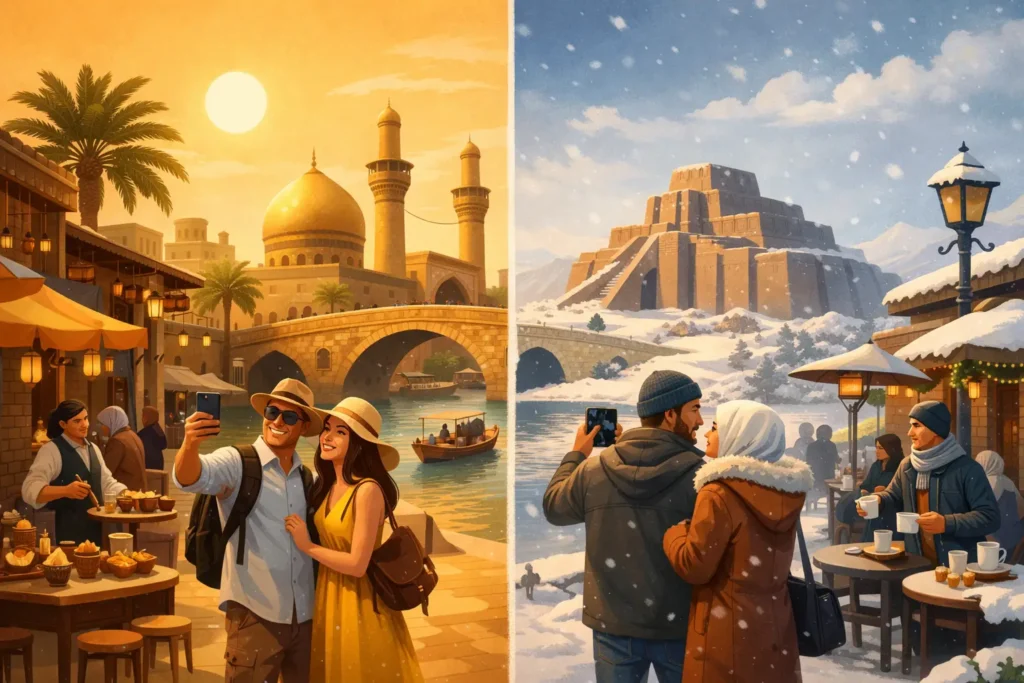
A dawn walk through Baghdad in July can feel like stepping into an oven before breakfast. In January, the same city may call for a warm layer, a rainproof jacket and a long, unhurried tea indoors. That contrast is at the heart of summer vs winter Iraq travel: neither season is simply better, but each creates a very different kind of journey.
For many first-time visitors, spring and autumn offer the easiest balance. Yet summer and winter can be deeply rewarding when chosen with purpose. The right decision depends on whether you are travelling for ancient sites, religious pilgrimage, family connections, photography, mountain landscapes or the pleasure of experiencing Iraqi hospitality at a slower pace.
Summer vs winter Iraq travel at a glance
Summer in Iraq generally runs from June to August, with hot conditions often extending well into September. In Baghdad, Najaf, Karbala, Basra and the southern plains, daytime temperatures can regularly exceed 40°C, and midday sightseeing becomes impractical for many travellers. The atmosphere is dry in much of the country, although Basra’s southern heat can also feel humid.
Winter, from December to February, is cooler and more variable. Baghdad and central Iraq can be pleasantly crisp by day, while evenings are cold enough for a proper coat. Rain is more likely, especially in northern areas, and the Kurdistan Region may see snow in higher locations. Southern Iraq remains milder than the north, but wet or muddy ground can affect walks around archaeological landscapes and marsh areas.
The essential trade-off is straightforward. Summer offers long, reliable daylight and major religious travel periods, but demands careful heat management. Winter makes city walks and outdoor heritage visits more comfortable, but asks travellers to prepare for shorter days, rain and colder nights.
Why summer can still be a meaningful time to visit Iraq
The heat changes the rhythm of travel rather than ending it. Iraqis have long adapted daily life around the summer climate: early mornings, shaded afternoons, later dinners and evenings that become social once the sun has lowered. Visitors who follow that rhythm often find the season more manageable than expected.
Religious travel and shared purpose
Summer can coincide with important dates in the Islamic calendar, although these move each year against the Gregorian calendar. Karbala and Najaf may welcome large numbers of pilgrims around significant observances, including the period leading to Arbaeen when it falls in the warmer months. This is not the time for a quiet, flexible itinerary, but it can be profoundly meaningful for pilgrims and respectful cultural visitors who understand the purpose of the journey.
Accommodation and transport need to be arranged well ahead during major pilgrimage periods. Cities can be exceptionally busy, and the most useful mindset is patience. The experience is shaped by collective generosity, devotion and the extraordinary culture of service that visitors encounter along pilgrimage routes.
A better fit for slow, indoor-led itineraries
Summer suits travellers who are happy to structure their days intelligently. Museums, shrines, covered bazaars, family visits and long lunches can fill the hottest hours. Historic areas such as Baghdad’s old quarters, the museums and book markets of the capital, and the spiritual centres of Najaf and Karbala are best approached early in the morning or later in the afternoon.
This can also be a strong season for diaspora travellers whose visit is centred on relatives rather than a packed checklist. The reward is time: lingering conversations, home-cooked meals and evenings spent outside when the air finally softens.
What summer requires
Heat is the practical consideration that shapes everything. Choose accommodation with reliable air conditioning, carry water throughout the day, use sun protection and avoid treating noon as sightseeing time. Light, loose clothing that remains culturally respectful is more useful than trying to dress as though you were on a Mediterranean beach.
Plan fewer sites per day than you might elsewhere. A pre-dawn departure for Babylon, a morning in the holy cities or an evening on the Tigris will usually be more memorable than pressing on through the fiercest heat. Travellers with health concerns should seek personal medical advice before committing to a summer itinerary.
What winter brings to an Iraq journey
Winter reveals a quieter, softer side of Iraq. The light is kinder for photography, pavements and archaeological sites are easier to explore during the day, and a bowl of soup or glass of sweet tea feels especially welcome after time outdoors. For travellers drawn to heritage, food and city life, this is often the more comfortable of the two seasons.
Better conditions for history and city walking
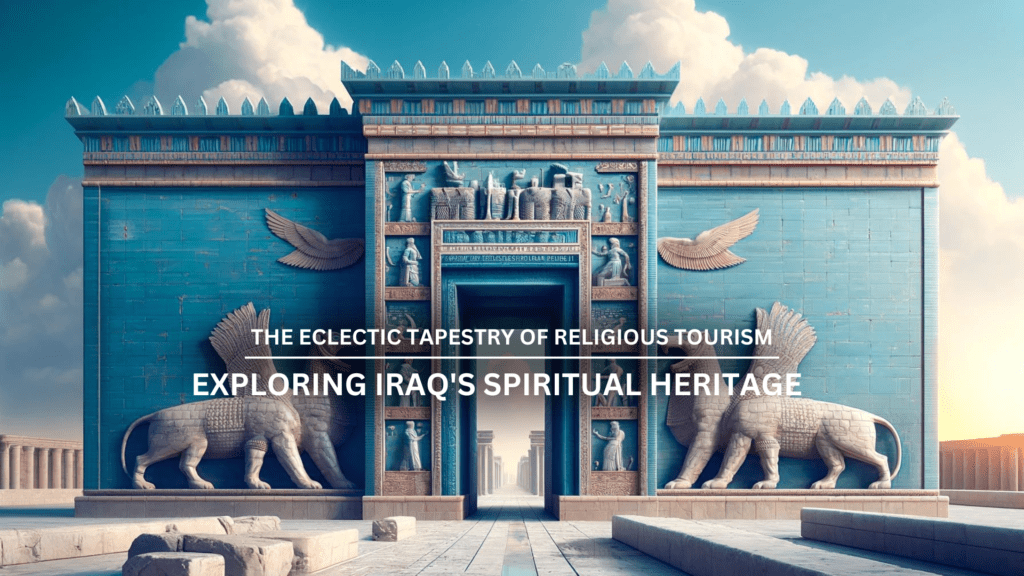
The great appeal of winter is mobility. Exploring the ruins of Babylon, the ziggurat at Ur, old Baghdad streets or the historic fabric of Mosul is generally less physically demanding when temperatures are moderate. You can spend longer listening to a guide, studying brickwork and inscriptions, or simply taking in the scale of a site without rushing back into shade.
Winter also rewards travellers who enjoy a more reflective pace. Iraq’s significance as the Cradle of Civilisation is not confined to headline monuments. It is present in riverside streets, markets, libraries, craft traditions and the conversations that give places their meaning. Cooler weather creates more room for those unscripted moments.
The north feels distinctly seasonal
For the Kurdistan Region, winter can be particularly appealing to visitors who want mountain scenery and a different climate from the plains. Higher areas may be cold or snowy, while towns and cities can be damp and chilly. This is a beautiful period for atmosphere, but not always for fast-moving road trips.
Build flexibility into any northern itinerary. Rain, fog and winter conditions can lengthen journeys, especially outside major cities. Pack layers, sturdy footwear and a waterproof outer layer rather than relying on one heavy coat. A warm indoor base, with local advice on day-to-day conditions, makes a great deal of difference.
The limitations of winter travel
Winter is not uniformly mild. Nights can be surprisingly cold across central and southern Iraq, and rain can make unpaved areas less convenient. Archaeological sites are often open landscapes with little shelter, so a waterproof jacket and footwear with grip are sensible.
Shorter daylight also means tighter planning. Start early, allow generous time for travel between cities and avoid building an itinerary that depends on arriving at a site just before closing. If your priority is the southern marshes, ask local operators about seasonal water levels and access conditions before finalising plans.
Choosing the season for your travel style
Choose summer if your trip is tied to a particular religious occasion, a family gathering or a fixed school holiday, and you are comfortable organising your days around the heat. It also works for travellers who value the energy of evening life and do not mind replacing long daytime walks with indoor cultural experiences and rest.
Choose winter if you want to cover more ground on foot, photograph heritage sites in gentler light or combine Baghdad and the south with the Kurdistan Region. It is usually the easier season for a first visit built around archaeology, city exploration and a balanced itinerary.
For pilgrims, the calendar matters more than temperature alone. Major religious dates can transform accommodation availability, road conditions and the pace of cities. Check the relevant dates well before booking, and approach sacred spaces with modest dress, patience and respect for local guidance.
Practical planning for either season
The best Iraq itineraries are realistic. Rather than attempting Baghdad, Babylon, Najaf, Karbala, Basra, Ur, the marshes and the north in a few rushed days, choose a route that gives each place time to breathe. Domestic distances and traffic can make an ambitious map look easier than it feels on the ground.
Before travelling, confirm current entry requirements with the appropriate official authorities, as visa rules can change depending on nationality and point of entry. Book accommodation that suits the season: air conditioning and a reliable location matter in summer, while heating, hot water and easy transport access are especially welcome in winter. Stay In Iraq can help travellers compare places to stay as they shape a route around their priorities.
Pack according to the itinerary, not only the forecast. In summer, bring a refillable water bottle, breathable layers, sunglasses and sun protection. In winter, add a waterproof jacket, warm mid-layer and shoes that can handle rain. For both seasons, modest clothing is appropriate for religious sites and helps visitors feel comfortable in a range of local settings.
The most rewarding time to visit Iraq is the one that lets you travel attentively. Start early in summer, slow down when winter rain arrives, accept a cup of tea when it is offered, and leave space for the conversations that turn an itinerary into a genuine connection with the country.