
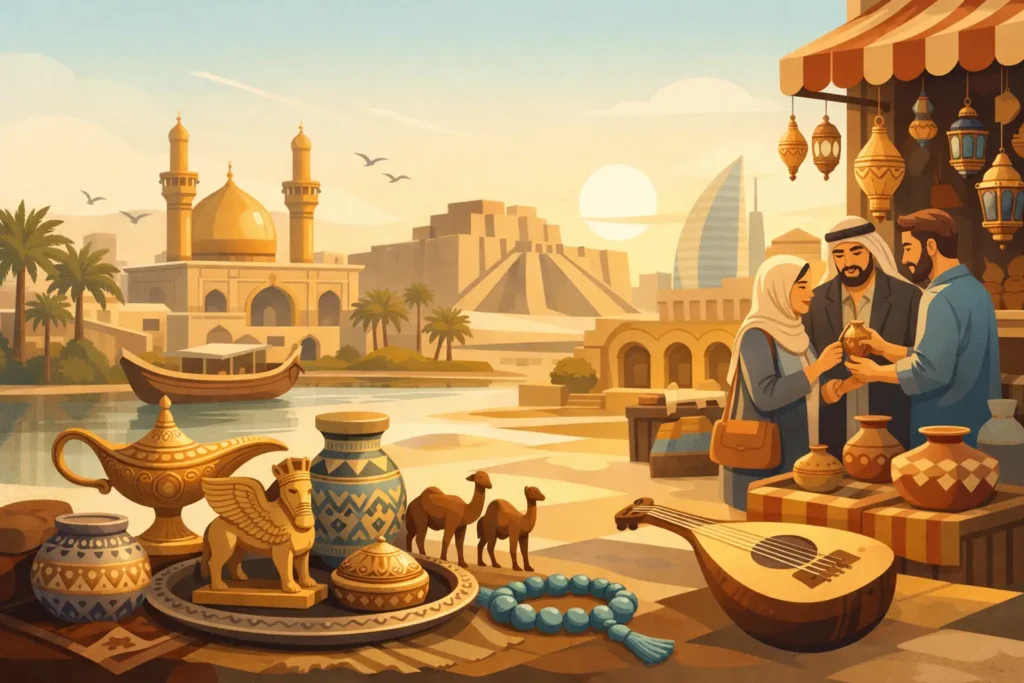
A hand-hammered tray catching the afternoon light in Baghdad, a packet of Basra dates shared over tea, or a small book chosen from a long-established bookshop can hold far more meaning than a generic keepsake. The best Iraqi souvenirs to buy are connected to the country’s living craft traditions, generous food culture, spiritual heritage and everyday creativity. Choose thoughtfully and you will take home a piece of Iraq that has a real story behind it.
What makes an Iraqi souvenir meaningful?
Iraq is often introduced through its ancient civilisations, and that history certainly matters. Yet the most memorable purchases are often made by craftspeople, sellers, artists and food producers working today. A good souvenir is not simply decorative. It might remind you of a conversation in a market, an evening of Iraqi hospitality, a pilgrimage, or a morning spent walking through one of the country’s historic quarters.
Prices, quality and availability vary between cities, so it is worth taking your time. Ask who made an item, where its materials came from and whether it can travel safely. This creates a better exchange with the seller and helps you distinguish handmade work from mass-produced imports.
12 best Iraqi souvenirs to buy
1. Handwoven kilims and rugs
A woven kilim is one of the most enduring souvenirs from Iraq. These flat-woven rugs can feature geometric motifs, warm earth colours and regional patterns that work equally well as a wall hanging, table covering or small floor rug. Kurdish areas in northern Iraq are particularly associated with textile traditions, though woven pieces are sold in markets across the country.
For travellers with limited luggage space, a smaller kilim is the sensible choice. Check the reverse side for a clear weave, ask whether the dyes are natural or synthetic, and confirm the dimensions before agreeing on a price.
2. Copper and brassware
Decorative trays, coffee pots, bowls and lanterns make striking gifts, especially when they have been hand-engraved or hammered. Iraq’s metalworking heritage can be seen in the detailed floral, geometric and calligraphic designs sold in traditional markets.
Brassware is beautiful but can be heavy. A small dish or coffee cup set is easier to pack than a large tray. Wrap it carefully in clothing, or ask the shopkeeper to package it securely for the journey home.
3. Iraqi dates and date products
Dates are central to Iraqi food culture, and they are among the most generous souvenirs to share once you return home. Basra is especially renowned for its date palms, while markets in many cities sell varieties ranging from soft, caramel-like dates to firmer, richly flavoured types.
Look for sealed boxes if you are flying, and check your destination’s food-import rules before purchasing. Date syrup, date-filled sweets and date paste are also excellent choices, although jars and bottles may need to go into checked luggage.
4. Iraqi sweets and spices
A carefully chosen box of Iraqi confectionery brings the flavours of the journey home. Depending on the city and season, you may find baklava, sesame sweets, nougat-style treats, halva and biscuits scented with cardamom or rosewater. Spice blends, dried limes and cardamom also make useful gifts for anyone who enjoys cooking.
Buy food from busy, reputable shops where stock is fresh and packaging is clear. Delicate sweets are best placed in a rigid container inside your luggage, rather than squeezed between clothes.
5. Arabic calligraphy and contemporary art
A framed calligraphic piece, small canvas or print can be a meaningful reminder of Iraq’s visual culture. Arabic calligraphy has a deep artistic presence across the country, from architectural inscriptions to contemporary studio work. You may find pieces featuring poetry, blessings or abstract letterforms.
If you do not read Arabic, ask for a translation before buying. This is both practical and respectful, particularly when the work includes religious text. For easier travel, choose an unframed print and have it rolled in a protective tube.
6. Handmade pottery and ceramics
Ceramic bowls, cups, tiles and decorative vessels bring colour and texture to a home. Handmade pottery is never completely uniform, which is part of its appeal. Look for a piece with a finish you genuinely like rather than searching for a supposedly perfect version.
Ceramics demand careful packing, and this is one occasion when a small item is usually wiser. Ask whether glazes are food-safe if you plan to use a bowl or cup at home rather than display it.
7. Traditional textiles and scarves
Scarves, embroidered cushions, woven table runners and fabric accessories are practical, light and easy to carry. They can reflect regional colours and craft methods without requiring the space or cost of a larger rug. A well-made scarf is also a particularly good gift for friends and family.
When buying clothing or textiles, keep local customs in mind. Choose items because you appreciate their workmanship and cultural context, not as costume. Sellers are often happy to explain how a garment or fabric would traditionally be worn or used.
8. Prayer beads and devotional items
For religious visitors, prayer beads, known as misbaha, can be a personal and meaningful purchase. You may find beads made from wood, stone, glass or other materials in and around Iraq’s revered religious cities, including Najaf and Karbala.
These items should be chosen and handled with the respect their purpose deserves. If you are buying a devotional object as a gift, consider whether the recipient will value and use it appropriately. Avoid treating sacred items as novelty souvenirs.
9. Books from Baghdad and beyond
A book can be one of the lightest ways to carry Iraq’s intellectual life home. Baghdad’s historic bookselling culture remains an important part of its character, and bookshops may offer Arabic literature, poetry, art books, local history and bilingual editions.
Even if you do not read Arabic, a beautifully produced book of photography, architecture or art can be worthwhile. Look through it before buying, as print quality and editions vary. For readers of Arabic, poetry by Iraqi writers makes an especially personal choice.
10. Mesopotamian-inspired crafts
Many shops sell contemporary pieces inspired by the visual legacy of Mesopotamia: cylinder seals, winged bulls, cuneiform tablets and other ancient motifs. A well-made replica can be a thoughtful reminder of the extraordinary archaeological heritage associated with Iraq.
Choose clearly labelled reproductions made for visitors, rather than anything presented as old or excavated. Never buy artefacts, fragments or objects of uncertain origin. Cultural heritage belongs to more than a suitcase, and legitimate modern craft is the better, safer purchase.
11. Wooden boxes and homeware
Small wooden boxes, trays and decorative objects can make useful keepsakes, particularly when they feature inlay work or carved detailing. Their appeal is practical as well as visual: a box can hold jewellery, letters or other mementoes from your travels.
Inspect hinges, joins and lids before purchasing. Natural wood can react to changes in temperature and humidity, so avoid forcing an ill-fitting lid and keep the piece protected during transit.
12. Local coffee and tea accessories
Iraqi hospitality is often experienced over tea or coffee, making related gifts especially evocative. This could be locally roasted coffee, cardamom, small serving glasses, a sugar bowl or a modest metal coffee pot. Rather than buying a large matching set, consider selecting one useful piece that will become part of your routine at home.
Food and drink purchases are best made near the end of your trip, when you know how much luggage space remains. If you are visiting several cities, leaving room for a final market visit can prevent rushed decisions early on.
Where to shop for Iraqi souvenirs
Traditional souqs remain the most rewarding places to browse, because they bring together food sellers, metalworkers, textile shops and everyday household goods. In Baghdad, older market districts and bookshop areas offer a strong mix of craft and culture. Najaf and Karbala are natural places to look for devotional items, while Erbil and Sulaymaniyah can be particularly rewarding for textiles, crafts and regional food products. Basra is a fitting place to seek dates and date-based gifts.
It is also worth asking your hotel host, guide or a trusted local where they buy gifts for their own family. Their recommendation may lead you to a workshop or specialist shop that is not obvious from the main street. Stay In Iraq can help travellers build an itinerary with room for these slower, local encounters.
Shop with care and confidence
Bargaining is common in some markets, but it should feel like a friendly conversation, not a contest. Begin with a greeting, show genuine interest, and be prepared to walk away politely if the price does not suit your budget. In fixed-price shops, do not assume negotiation is expected.
Carry enough cash for smaller purchases, but keep notes organised and confirm the total before money changes hands. For expensive rugs, artworks or metalwork, request a receipt and ask about packaging. If the item is fragile, oversized or made from natural materials, check airline and customs requirements before committing.
The souvenir you reach for most often may not be the grandest object in the market. It may be the packet of dates offered to guests, the book that prompts a new conversation, or the small brass dish that recalls the welcome you received in Iraq.