
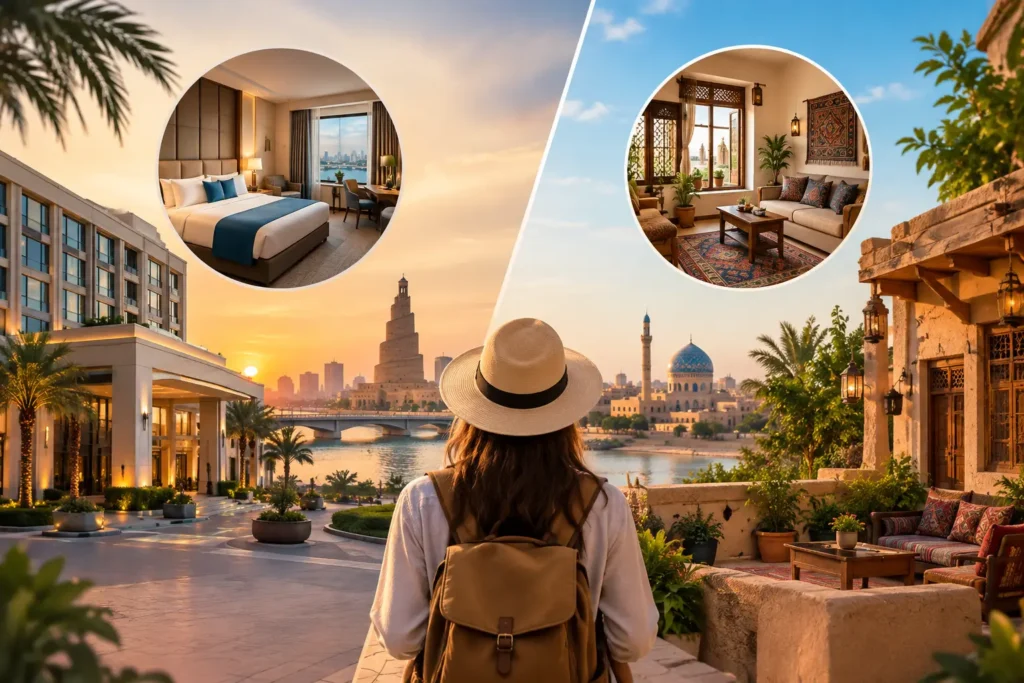
A room overlooking the Tigris, a family home near a revered shrine, or a familiar hotel base after a long day among ancient sites: where you stay shapes how Iraq feels. The question of hotel booking versus home rentals is not simply about price. It is about the pace of your journey, the support you need and the kind of connection you hope to make with a country whose welcome is often one of the trip’s most lasting memories.
For first-time visitors, hotels can bring reassuring structure. For diaspora travellers, families and independent explorers, a home rental may offer the space and local rhythm that turns a visit into a return. Neither is automatically better. The right choice depends on your itinerary, confidence with local logistics and expectations of comfort and privacy.
Hotel booking versus home rentals: the real difference
Hotels are designed to make the practical side of travel easier. A reception desk, daily housekeeping, on-site staff and clear check-in arrangements can reduce friction when you are arriving late, moving between cities or managing a tightly planned itinerary. This can be particularly valuable for travellers visiting Baghdad, Erbil, Najaf, Karbala or Basra for the first time.
Home rentals offer a different kind of value. Rather than stepping into a standardised room, you may stay in a residential neighbourhood, prepare your own breakfast, gather with relatives or enjoy a larger living space between excursions. For longer stays, this sense of independence can be both more comfortable and more economical.
The distinction is not always absolute. Some flat-style stays provide attentive hosts and hotel-like services, while smaller hotels can feel deeply personal. Focus less on the label and more on what is clearly offered: location, access, facilities, host communication and support if plans change.
When a hotel is the sensible choice
A hotel is often the most straightforward option for a short visit or a multi-city journey. If you are arriving in Iraq for a few days to see Baghdad’s museums, walk the old streets of Mosul, visit Babylon or continue south towards the marshlands, a hotel can provide a dependable base without asking you to manage a household alongside a busy schedule.
Practical support when you need it
Reception teams can assist with local transport arrangements, directions, luggage storage and basic questions about the surrounding area. This does not replace careful planning, but it can be reassuring when your flight time changes or you need help communicating a destination to a driver.
Hotels are also useful for travellers who prefer predictable routines. Daily cleaning, breakfast options and a staffed building can make a difference after early departures, long road journeys or emotionally significant religious visits. Pilgrims travelling during major visitation periods may especially value a clear check-in process and a location close to their intended sites.
A better fit for brief, structured itineraries
If your priority is to spend daylight hours exploring and return to a comfortable room at night, a hotel is likely to suit you. It can also be the more convenient choice for solo travellers who do not need a kitchen or extra space, and for business visitors whose plans may change at short notice.
That said, hotel quality and services vary by city and property. Read the practical details rather than assuming every stay offers the same standard. Check whether breakfast, airport transfers, Wi-Fi, parking and multilingual support are actually included, and confirm the precise location before booking.
When a home rental adds more to the journey
A home rental tends to shine when time, space and everyday life matter as much as sightseeing. This could mean a week in Erbil while exploring the Kurdistan Region, a family visit in Baghdad, or a slower stay near the holy cities where rest and flexibility are as valuable as proximity.
Space for families, groups and longer stays
For several people travelling together, booking separate hotel rooms can quickly become expensive and fragmented. A house or flat may allow everyone to share meals, plan the next day around one table and spend time together without meeting only in a lobby. Parents may appreciate separate bedrooms; older relatives may value a calmer environment and the ability to follow familiar routines.
Longer stays are another strong reason to consider a rental. A kitchen, washing machine and living area can make a two-week trip feel considerably easier than a standard hotel room. They can also be useful for diaspora visitors balancing family commitments with independent time to revisit neighbourhoods, markets and places of personal significance.
A more local sense of place
The strongest argument for a home rental is not that it is more ‘authentic’ by default. Authenticity depends on respect, curiosity and the people you meet, not only on your address. Yet staying in a residential area can offer a gentler introduction to daily Iraqi life: the morning bakery, greetings from neighbours, the rhythm of family shops and the scent of tea carried through an open doorway.
A thoughtful host may share practical recommendations that guidebooks cannot always provide, such as the best time to visit a nearby market or the easiest place to find a taxi. Treat this hospitality with appreciation, but do not expect a host to be available at all hours or to act as a tour guide unless that support has been clearly agreed.
What to check before you book either option
Accommodation planning in Iraq benefits from a little more attention than simply choosing the lowest nightly rate. The most attractive listing is not always the best fit if its location adds hours to your daily travel or its facilities do not suit your group.
First, consider the neighbourhood in relation to your plans. A centrally located hotel may save time for a short city break, while a rental near family or a particular shrine may be more meaningful for a longer stay. Ask for a clear address or landmark, and think about how you will travel to and from major sites.
Next, look carefully at sleeping arrangements. A listing described as suitable for six guests may include sofa beds or shared rooms. For families, women travelling together or pilgrims seeking proper rest, these details matter. Confirm air conditioning or heating according to the season, reliable electricity arrangements where relevant, bathroom access, lift availability and any mobility considerations.
Communication is equally important. Whether dealing with a hotel or host, clear and courteous messages before arrival are a positive sign. Confirm check-in time, payment method, identification requirements, cancellation terms and whether someone can help if you arrive after dark. Keep expectations realistic: standards can vary, but transparent information gives you the best foundation for a comfortable stay.
Budget is more than the nightly rate
Hotels may appear more expensive at first, but the rate can include breakfast, cleaning, staff support and sometimes transport assistance. A rental may offer better value for a group, especially when the cost is shared, but it could involve separate cleaning fees, deposits or the cost of groceries and transport.
Think about the total cost of your stay rather than one headline figure. A less expensive property far from your daily destinations can become costly in time and taxi fares. Equally, a well-located rental with cooking facilities may be an excellent choice for a family staying several nights.
There is also value that cannot be neatly priced. The confidence of having a reception desk, the pleasure of preparing a meal for relatives, a quiet place to reflect after a pilgrimage, or the chance to wake in a neighbourhood that feels familiar can all shape what a stay is worth to you.
Choosing for the way you want to travel
Choose a hotel if you want a simple, supported base, particularly for a short first trip, a packed itinerary or frequent movement between cities. Choose a home rental if you need more space, are staying longer, travelling with family or want to settle into one place at your own pace.
Many journeys can even combine both. You might begin in a hotel while learning the rhythm of a new city, then move into a rental for a longer family stay. Or you may use hotels between destinations and reserve a home for the part of the trip where connection and comfort matter most.
As Iraq’s accommodation options continue to grow, platforms such as Stay In Iraq can help travellers compare stays with the wider journey in mind, not just the booking screen. Choose the place that gives you room to be present – for the history beneath your feet, the spiritual meaning of your visit and the generosity waiting in everyday encounters.