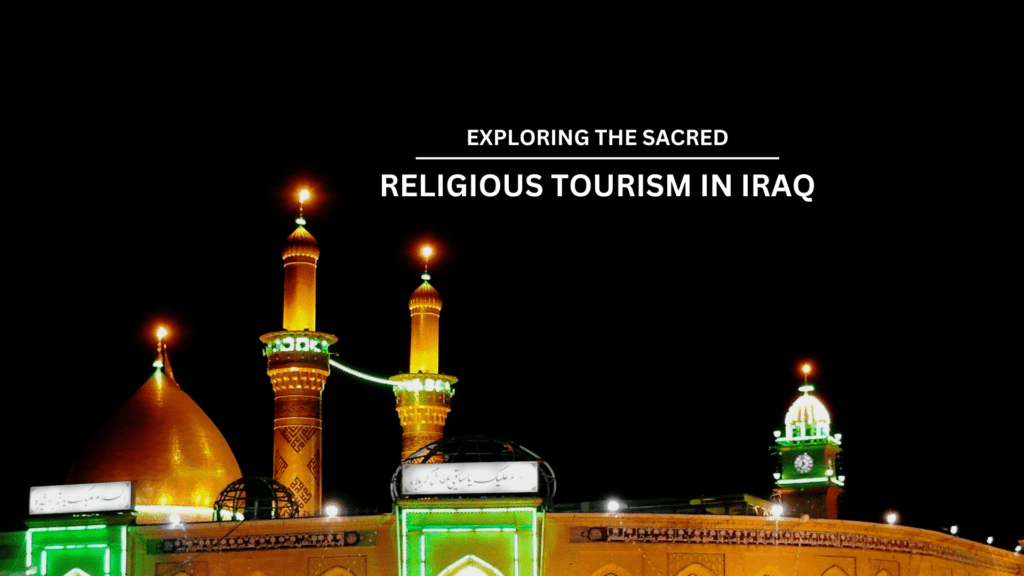
Some trips to Iraq are built around a clear purpose. You may be visiting Najaf or Karbala for pilgrimage, planning a heritage-focused route through Baghdad and Mosul, or returning as part of the diaspora to reconnect with family and place. In each case, one early decision shapes the rest of the journey – hotel or home rental Iraq.
The right choice affects how you rest, how easily you move around, how much privacy you have, and how connected you feel to the neighbourhood around you. There is no universal answer, because Iraq is not one uniform destination. A short city stay in Baghdad calls for something different from a week in Erbil, a family visit in Basra, or a slower cultural trip across several cities.
Hotel or home rental Iraq: what changes the decision?
The usual travel advice is too simple here. It is easy to say hotels offer convenience and home rentals offer flexibility, but in Iraq the better option often depends on why you are travelling, who you are travelling with, and how familiar you are with the country.
For first-time international visitors, a hotel often provides reassurance. A staffed reception, easier check-in, help with local directions, and a more predictable standard can remove a lot of friction. If your trip is short and your schedule is fixed, that reliability matters.
A home rental can be a better fit when the trip is longer or more personal. If you want space to work, cook, host relatives, or settle into a neighbourhood at your own pace, a rental can make Iraq feel less like a stopover and more like a lived experience. That is especially useful for families, groups, and diaspora travellers who want a stronger sense of home.
When a hotel makes more sense in Iraq
Hotels are usually the stronger option when simplicity matters most. If you are arriving late, moving between cities quickly, or staying only a few nights, a hotel tends to reduce decision-making. You check in, leave your bags, and begin your visit without needing to think about household basics, keys, or local arrangements.
This can be especially helpful in major travel hubs such as Baghdad, Erbil, Najaf and Basra, where travellers often need central access, transport support, and a base that feels straightforward from the moment they arrive. Business travellers, journalists, solo visitors, and first-time tourists often prefer this level of structure.
Hotels also work well for pilgrims and religious visitors on tighter itineraries. If your main goal is proximity to a shrine, easier transfers, or dependable services such as breakfast and daily housekeeping, a hotel can keep the focus on the purpose of the journey rather than the logistics of the stay.
That said, not every hotel offers the same experience. Some are designed for convenience rather than character. Others may be centrally located but noisier than expected. A hotel can be efficient, but it may not always feel personal.
The strengths of hotel stays
The main advantages are consistency and support. Staff can often assist with practical matters, from arranging transport to helping with local guidance. That support can be valuable if you are unfamiliar with the city or travelling without Arabic or Kurdish.
Hotels can also offer a clearer sense of professional oversight. For travellers who value formal check-in procedures, visible service teams, and a more conventional hospitality setup, that is reassuring.
The trade-offs of booking a hotel
Space is the obvious compromise. Even a very comfortable room can feel limiting on a longer stay, particularly for couples, families, or anyone carrying specialist equipment for photography or content work.
Price can also shift depending on the city and season. In some cases, a hotel room in a prime area may cost more than a well-kept rental with significantly more room to live in.
When a home rental is the better choice
A home rental suits travellers who want more than a place to sleep. It gives you room to settle, unpack properly, and move through the day with more independence. If you are staying a week or more, travelling with children, or simply prefer privacy, that extra space quickly becomes practical rather than luxurious.
In Iraq, home rentals can also offer something hotels cannot always provide – a closer connection to everyday life. You may stay on a residential street, shop locally, hear the rhythm of the neighbourhood, and experience hospitality in a more direct and human way. For culturally curious travellers, that can become one of the most memorable parts of the trip.
This option is often particularly appealing for diaspora families, repeat visitors, and small groups. Instead of booking multiple hotel rooms, one home can create a shared base with a kitchen, sitting area, and space to spend time together.
What makes a rental especially useful
Flexibility is the main benefit. You can often cook simple meals, do laundry, work in comfort, and keep your own schedule without hotel routines around you. For longer stays, that can make daily life easier and more affordable.
There is also a different kind of privacy. Some travellers value the calm of entering a private home rather than a lobby. Others simply want more room to pray, rest, or spend time with visiting relatives.
The trade-offs of a home rental
The same independence that makes rentals attractive can also create more responsibility. Check-in may need closer coordination. Support may depend on the host rather than a staffed desk. Quality can vary more than in a formal hotel environment.
This does not make rentals risky by default, but it does mean travellers should look carefully at details. Location, cleanliness, host communication, and practical basics matter more when there is no full-time hospitality team on site.
Hotel or home rental Iraq for different types of traveller
The best choice often becomes clearer when you think in terms of trip style rather than accommodation type.
If you are a first-time visitor coming to Iraq for a short cultural itinerary, a hotel is often the easier starting point. It reduces uncertainty and gives you a stable base while you learn the rhythm of the city.
If you are travelling for pilgrimage with elderly relatives or family members, it depends on your priorities. A hotel near key religious sites may save energy and time. But for a longer stay with family routines, a home rental may offer more comfort and breathing room.
If you are part of the Iraqi diaspora returning for family visits, a rental often feels more natural. It can support longer stays, flexible plans, and the emotional texture of reconnecting with place.
If you are a photographer, writer, or independent explorer spending more time in one city, a home rental can provide a stronger sense of local life. But if you are moving quickly between destinations, a hotel keeps things simpler.
What to check before you book
Whether you choose a hotel or a rental, the most useful questions are practical. Is the property in the right area for your trip? Does the host or hotel communicate clearly? Are transport options straightforward? Is the accommodation suitable for your arrival time, length of stay, and travel style?
For hotels, pay attention to location, reception availability, and whether the tone of the property matches your needs. A business-focused hotel may not suit a family stay, while a pilgrimage-centred location may be ideal for one traveller and too busy for another.
For rentals, look closely at how the stay is managed. Clear instructions, responsive communication, and honest property details matter. Photos alone are never enough. You want a stay that feels cared for, not just advertised.
It also helps to think beyond price. A cheaper room far from your plans can cost you more in time and transport. A larger rental may seem expensive at first glance, but if several people are travelling together, it can be better value.
The real question is how you want to experience Iraq
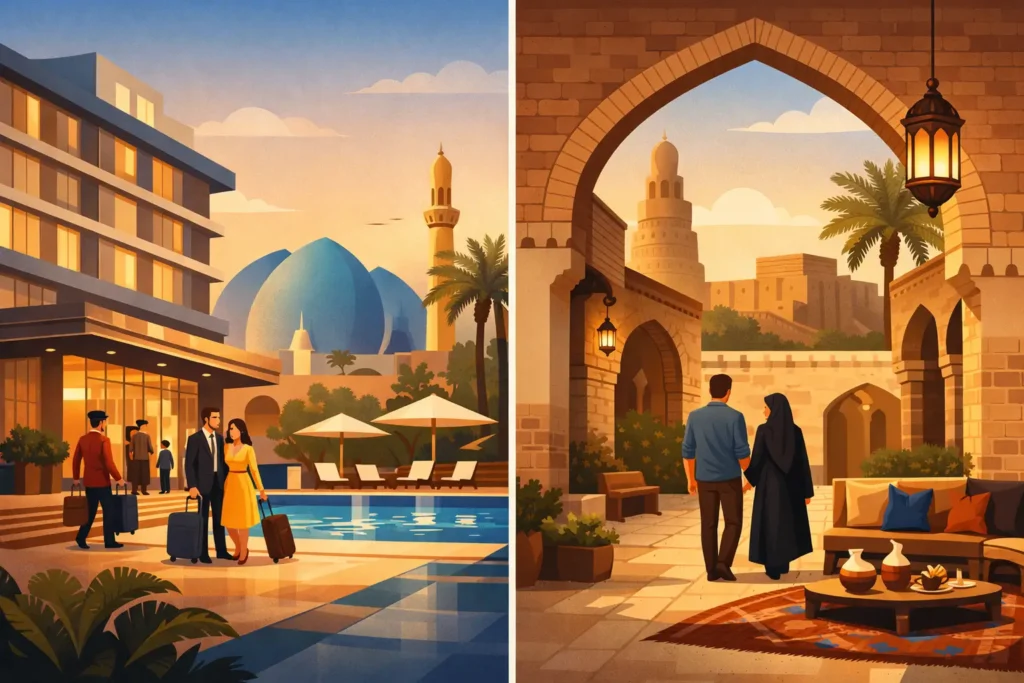
Accommodation shapes atmosphere. A hotel can give you ease, structure, and support. A home rental can give you space, privacy, and a deeper sense of place. Neither is automatically better. The right one depends on whether your trip is brief or extended, practical or personal, tightly scheduled or open-ended.
Iraq rewards travellers who plan with intention. If you choose a stay that matches the purpose of your visit, the country becomes easier to move through and easier to appreciate – not as a distant idea, but as a real, welcoming destination made up of cities, communities, and meaningful encounters.
Book the place that helps you travel with confidence, and the rest of the journey tends to open up from there.