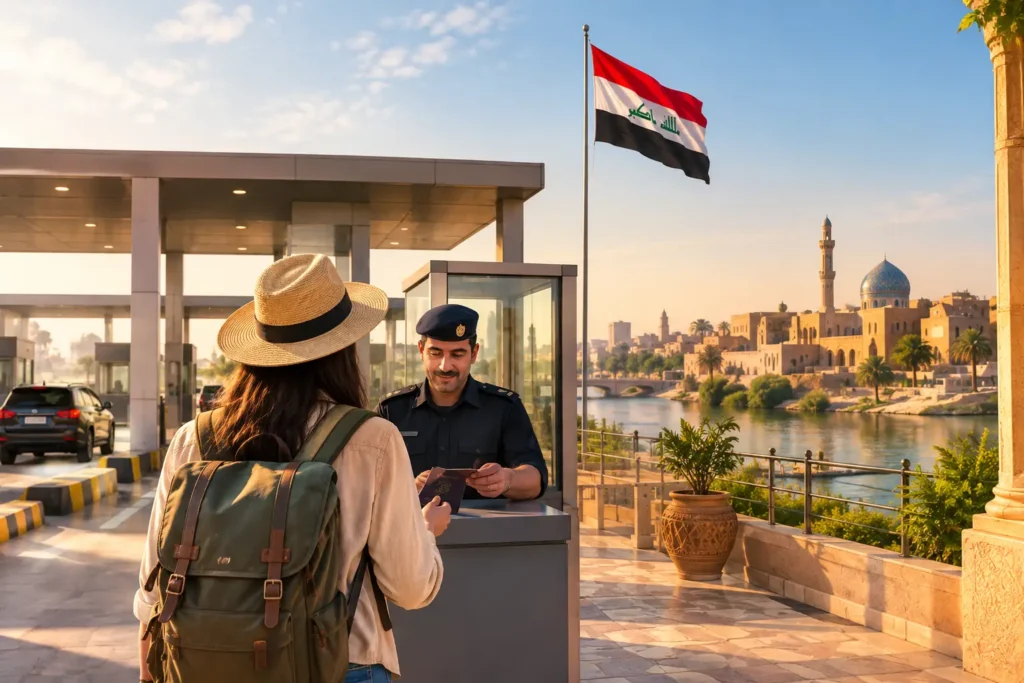
A first arrival in Iraq is often remembered in small, human details: the welcome from a driver, the first cup of tea, or the sight of a city beginning to unfold beyond the road. Iraq border crossings are part of that first chapter, and choosing the right one can make the difference between a well-paced journey and an unnecessarily complicated day.
For many international visitors, flying into Baghdad, Najaf, Basra or Erbil is the most straightforward option. Yet land entry can be a practical and meaningful choice for travellers arriving from neighbouring countries, pilgrims joining organised journeys, or diaspora visitors building a wider regional itinerary. The key is to treat the border as a carefully planned travel connection, not a detail to decide at the last minute.
Choosing Iraq border crossings for your itinerary
The best entry point depends on where you are coming from, where you want to go first and what permission you hold to enter Iraq. A traveller focused on Baghdad, Babylon, Karbala and Najaf may find an airport arrival the simplest beginning. Someone travelling overland from Jordan, Türkiye or Iran may consider a land crossing if it fits their onward transport and documentation.
Land routes can offer a memorable sense of arrival. They also require more preparation than an airport transfer. Border opening times, traveller eligibility, vehicle rules and transport availability can change, sometimes with limited notice. A crossing that is familiar to local commuters, commercial traffic or pilgrims may not be equally suitable for every nationality or every independent traveller.
Among the names travellers may encounter are Trebil on the Jordanian route, Ibrahim Khalil on the Türkiye route into the Kurdistan Region, and crossing points on the Iranian frontier used by visitors travelling towards religious cities. These names are useful for research, but a name alone is not confirmation that a particular traveller can use that route on a particular date. Always confirm the current position before committing to tickets, accommodation or onward transport.
Air arrival versus land arrival
Airport arrival usually offers clearer procedures for first-time visitors. Airlines review documents before departure, airport facilities are easier to navigate, and transfers to hotels can be arranged in advance. This is often the right choice for travellers with limited time, substantial luggage or a first visit centred on Iraq’s major cities.
A land crossing can make sense when it shortens a regional route or supports a pilgrimage itinerary. It may also suit experienced overland travellers who have arranged a reliable driver or host on the Iraqi side. The trade-off is flexibility: queues can be longer, public transport can be limited, and the process may involve separate stops for immigration, customs and local transport.
Neither option is inherently better. The right choice is the one that matches your documents, confidence level and plans for the first 24 hours in the country.
Entry permission and route are separate questions
One of the most common planning mistakes is assuming that a visa or entry permission automatically works at every point of entry. Iraq’s entry arrangements can differ according to nationality, purpose of visit, arrival point and the authority responsible for the area you are entering.
This matters particularly when combining the Kurdistan Region with federal Iraq. Do not assume that permission issued or accepted for one part of the country will automatically cover onward travel to another. If your route includes Erbil, Duhok, Baghdad, Najaf, Basra or other destinations across different administrative areas, confirm your full itinerary before departure rather than trying to resolve it at a checkpoint.
Your airline, the Iraqi embassy or consulate responsible for your country, and official border or immigration authorities should be the final sources for entry requirements. If you are travelling with a tour organiser for a religious visit, ask them to confirm not only the visa process but also the exact border point, transport plan and contact arrangements on arrival.
Before travelling, keep the following together in both printed and digital form:
- Your passport, with the validity required by the relevant authorities.
- Your visa, approval or other entry documentation where required.
- Confirmed accommodation details and the address of your first stay.
- Contact details for your driver, host, guide or local organiser.
- Evidence of onward or return travel if requested by your carrier or immigration officials.
A printed copy remains worthwhile. Mobile signal, battery life and roaming arrangements are not things to depend on while standing at a border desk.
What to expect at Iraq’s border crossings
Patience is one of the most useful things to carry. Procedures may involve several desks, short waits and requests for documents in a different order from what you expect. Keep your answers clear and consistent, especially when explaining where you will stay, how long you intend to visit and whether you are travelling independently or with a group.
Dress should be modest and practical, particularly at crossings used by families and religious visitors. Respectful behaviour goes a long way: follow instructions, keep documents accessible, and avoid photographing immigration buildings, officials, queues or security infrastructure. A border is not the place to capture content for social media.
Travellers arriving during major religious occasions should allow considerably more time. These periods bring extraordinary energy and generosity, with communities welcoming visitors travelling towards Iraq’s sacred cities. They can also bring high demand for transport, accommodation and mobile connectivity. Organised arrangements are especially valuable if you are unfamiliar with the route.
If you are travelling with prescribed medication, carry it in clearly labelled original packaging and bring supporting documentation where appropriate. Customs rules can vary, so it is sensible to check restrictions before packing rather than relying on assumptions from another country.
Plan the first journey beyond the border
The border itself is only one stage. The most important practical question is often how you will reach your first hotel, shrine, city centre or family home afterwards. Do not presume that taxis, card payments or English-speaking assistance will be readily available at every land crossing.
Arrange onward transport in advance where possible. A trusted local driver, hotel transfer or tour representative gives you a named contact, a clear meeting point and a plan if your arrival is delayed. Share your expected route with someone you trust, especially if you are arriving after dark or continuing to another city the same day.
Carry enough Iraqi dinar for immediate needs, while recognising that exchange facilities and card acceptance differ by location. Keep a charged phone, an offline map and your accommodation address written in English and, where possible, Arabic. If you are entering through the Kurdistan Region, Kurdish may also be widely used locally.
It is wise to book your first night’s accommodation before arrival, even if you prefer spontaneous travel later. After a long flight or a border journey, knowing exactly where you are sleeping creates space to settle in, enjoy your first meal and begin the trip with confidence.
Build flexibility into an overland plan
Overland travel rewards preparation, but it also asks for flexibility. Avoid designing an itinerary where a delayed crossing causes you to miss a domestic flight, a hotel check-in or a pre-booked site visit on the same day. Give yourself a buffer, particularly when moving between countries or travelling during busy religious and holiday periods.
Check the route shortly before departure and again on the day you travel. Confirm that the crossing is operating for your nationality and travel purpose, that your driver can meet you on the Iraqi side, and that there are no changes to entry procedures. This is not unnecessary caution. It is simply good travel practice in a country where distances, regional arrangements and peak visitor periods can shape the pace of a journey.
For travellers who want Iraq to feel accessible without losing its depth, thoughtful planning is part of the experience. A well-chosen entry point lets the country meet you as it should: through its living history, generous hospitality and the people ready to welcome you beyond the border.