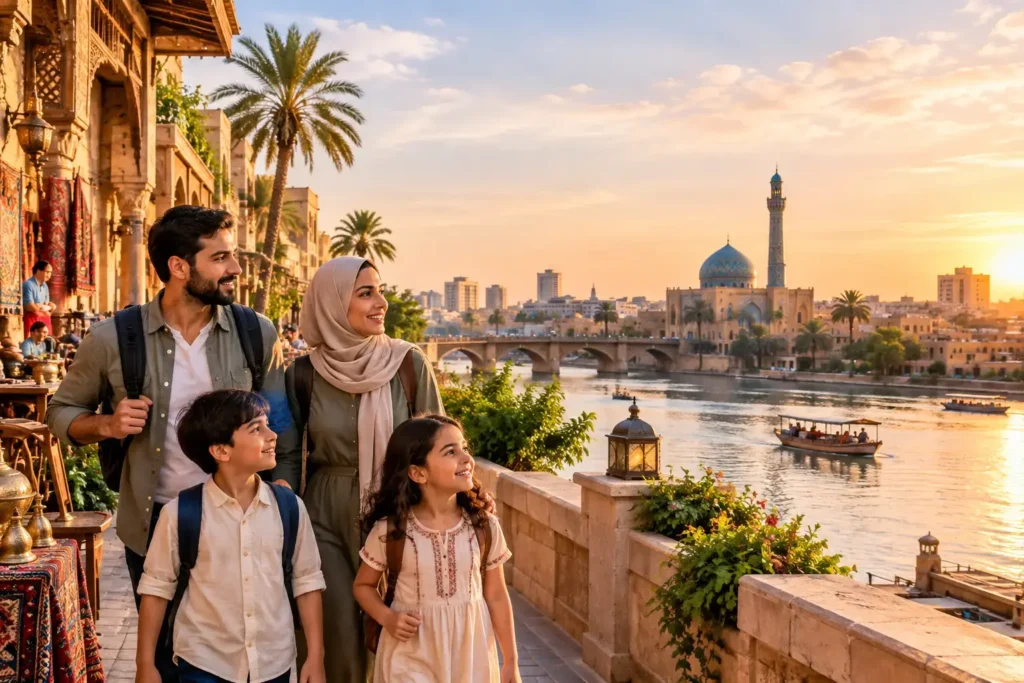
The first invitation many visitors remember in Iraq is not to a landmark, but to sit down for tea. For travellers arriving with parents, adult children, cousins or close friends, this Iraqi family travel guide begins there: Iraq is a destination best experienced at a human pace, with room for conversation, shared meals and moments of quiet reflection.
A family trip here can bring ancient history, spiritual significance and everyday warmth into the same itinerary. It also benefits from thoughtful planning. Distances are considerable, weather can shape the day, and customs vary between cities and sacred sites. The reward is a journey that feels less like ticking off attractions and more like being welcomed into a living culture.
Why Iraq suits meaningful family travel
Iraq offers experiences that naturally bring generations together. A grandparent may recognise places long held in family memory; a history-minded traveller can stand close to the landscapes of Mesopotamia; and younger adults may find the markets, architecture and generosity of local encounters unexpectedly moving.
Baghdad, Najaf, Karbala, Basra, Erbil, Mosul and the marshlands each offer a different rhythm. Some families will centre a trip on religious visits and time for prayer. Others will be drawn to museums, old quarters, archaeological landscapes and food. Many will combine both, allowing enough unplanned time to enjoy a café, a riverside walk or a host’s recommendation.
The best itinerary depends on the group. A fast route across several cities may suit confident, independent adults, while multigenerational groups often have a better experience by choosing two or three bases and staying longer in each. Iraq rewards patience. A little space in the schedule makes travel more comfortable and leaves room for the hospitality travellers often encounter.
Plan an Iraqi family travel guide around pace, not pins
Choose a season that works for everyone
Spring and autumn are generally the most comfortable periods for city walks and longer journeys. Summer heat can be intense, especially in southern Iraq, so early starts, air-conditioned transport and a lighter afternoon schedule become essential. Winter can be cool and wet in some areas, while the Kurdistan Region may be significantly colder than Baghdad or Basra.
When travelling with older relatives or children, avoid building a plan around midday sightseeing. Begin early, rest during the hottest hours and reserve evenings for relaxed meals or promenades. This is not a compromise on the experience. Evening life, family gatherings and the changing light over historic streets can be among the most memorable parts of a visit.
Build in rest days and single-city days
It is tempting to move every night when a country holds so much history. Yet a day in Baghdad without a long transfer, or two nights near a religious city, can transform the trip. It allows time to learn the local layout, return to a favourite restaurant and adjust calmly if plans change.
For families combining the south with the Kurdistan Region, consider internal flight options or a private driver for longer routes where appropriate. Travel times vary with road conditions, stops and local arrangements, so treat estimates as flexible rather than fixed. A reputable local operator or accommodation team can help shape realistic departure times for your group.
Check entry requirements before booking
Visa and entry arrangements can depend on nationality, point of arrival and the part of Iraq being visited. Requirements can change, so each traveller should confirm current official guidance with the relevant Iraqi diplomatic mission or authorised immigration source before paying for flights or accommodation. Make sure passports have sufficient validity and carry printed copies of key bookings and travel documents.
If your family includes travellers with different passports, do not assume that one person’s eligibility applies to everyone. Checking early is particularly useful for diaspora families travelling with relatives from several countries.
Where families should stay
The right accommodation is less about finding the most luxurious address and more about finding a dependable base. Look for a location that reduces daily transfers, clear room configurations, reliable air conditioning or heating for the season, and staff who can assist with taxis, drivers or local directions.
In larger cities, a well-located hotel can make early departures and evening returns easier. Families who need adjoining rooms, accessible layouts or an extra bed should request this directly before arrival rather than relying on availability at check-in. If you are travelling during a major religious occasion or public holiday, reserve earlier than usual, as demand can rise quickly.
Stay In Iraq can help travellers compare accommodation options as part of a wider trip plan, but it remains wise to confirm practical details that matter to your own group: lift access, breakfast times, parking, quiet rooms and the distance to the places you hope to visit.
Moving around with confidence
For a family group, pre-arranged transport is often the simplest choice, particularly on arrival or when travelling between cities. A local driver can remove the pressure of navigation, parking and finding the right entrance at busy sites. Agree the route, timings, vehicle size and payment expectations in advance.
Within cities, use taxis recommended by your hotel or a trusted local contact where possible. Keep your accommodation address saved in Arabic as well as English, and carry a local SIM or reliable data access for communication. It is also sensible to keep water, tissues, sun protection and small notes of local currency close at hand during day trips.
Road journeys are part of the experience, but they should not dominate it. If a route looks demanding for a parent or young child, choose a closer alternative rather than forcing the day. Iraq’s depth lies in its details: a shrine courtyard, a bookseller’s street, a date-palm-lined view or a slow lunch can be as meaningful as a long list of stops.
Respectful visits to religious and cultural places
Iraq holds places of profound importance to Muslims, Christians, Yazidis and other communities. Visitors are welcome when they arrive with respect, appropriate clothing and an awareness that many sites are active places of worship, not simply historical attractions.
Modest dress is a sound default, especially at shrines and mosques. Women may be asked to cover their hair at certain religious sites, and all visitors may need to remove shoes before entering prayer areas. Carrying a light scarf and wearing easily removable shoes can make the day simpler. Photography rules differ, so ask before taking pictures, particularly near worshippers, security points or inside sacred spaces.
Families travelling during Arbaeen, Ramadan, Ashura or other major religious periods should expect fuller streets, altered opening hours and a more devotional atmosphere. These dates can offer a powerful cultural experience, but they require earlier bookings, patience and a flexible plan. Travellers who prefer quieter visits may choose different dates.
Eating well and sharing the table
Food is one of the easiest ways for a family to feel at home in Iraq. Meals are often generous and designed for sharing: grilled meats, rice dishes, fresh bread, masgouf fish in Baghdad, aromatic stews, stuffed vegetables, dates and endless tea. Ask your host or server what is local to the city rather than ordering only familiar dishes.
For dietary needs, explain them clearly and politely in advance, especially where allergies are concerned. Families with young children may want to keep familiar snacks for longer drives, while still making space for bakery stops and simple grilled dishes. Bottled water is widely available, and good hydration matters in warm weather.
Accepting a small offer of tea or fruit, when practical, is often a gracious way to reciprocate the welcome extended to visitors. There is no need to overperform cultural knowledge. Courtesy, curiosity and a sincere thank you go a long way.
A practical approach to safety and communication
Iraq is best approached with the same informed preparation you would give any unfamiliar destination, alongside respect for local advice. Monitor official travel guidance for your nationality, share your itinerary with family at home, use established accommodation and transport providers, and ask locals about the best times and routes for planned visits.
Keep clothing and behaviour considerate, especially in religious settings and smaller communities. Avoid photographing people without permission, and be discreet with public displays of affection. Learning a few Arabic greetings can help, while Kurdish is widely spoken in the Kurdistan Region. English may be understood in hotels and tourism-facing settings, but not everywhere.
Most importantly, allow Iraq to be more personal than the assumptions that may have reached you before departure. A carefully planned family visit creates space not only for the country’s extraordinary heritage, but for the generosity, faith and daily life that give it meaning. Leave a little room in your itinerary for an invitation you did not expect – it may become the story your family carries home.