Ask someone who has actually spent time in Iraq what surprised them most, and the answer is rarely a monument. It is usually the feeling of being welcomed. If you are wondering what is Iraq really like, the shortest honest answer is this: it is far warmer, more layered and more human than most outsiders expect.
That does not mean Iraq is a simple destination. It is not a place for careless travel or vague planning. But for travellers drawn to history, faith, architecture, archaeology and genuine cultural exchange, Iraq can feel deeply rewarding from the moment they arrive. The country carries the weight of ancient civilisation, yet daily life is defined just as much by tea, family, conversation, crowded markets and proud local identity.
What is Iraq really like beyond the headlines?
Iraq is a country of contrast, but not in the clichéd sense. It is ancient and modern at once. One morning might begin at a shrine, a church, a marshland guesthouse or an archaeological site older than many civilisations. By evening, you may be in a lively café, a smart hotel lobby or a family-run restaurant serving grilled fish, rice and fresh bread.
For many visitors, the first major adjustment is realising that Iraq is not experienced as a single mood or story. Baghdad feels different from Basra. Najaf and Karbala have a different rhythm from Erbil, Mosul or the southern marshes. Religious cities offer one kind of experience, while heritage routes and urban centres offer another. What links them is a strong sense of place and an unusually direct form of hospitality.
People are often curious about visitors in a generous way. Travellers are frequently invited to sit, drink tea and talk. In many places, particularly if you are travelling independently, your presence will be noticed – but often with warmth rather than suspicion. That human contact is one of Iraq’s great strengths as a destination.
The atmosphere on the ground
The atmosphere in Iraq is shaped less by tourism infrastructure than by local life. This can be refreshing if you prefer places that still feel real rather than polished for outsiders. Streets are active, social and often busy. Shops stay lively late into the evening, and public spaces can feel especially animated after sunset.
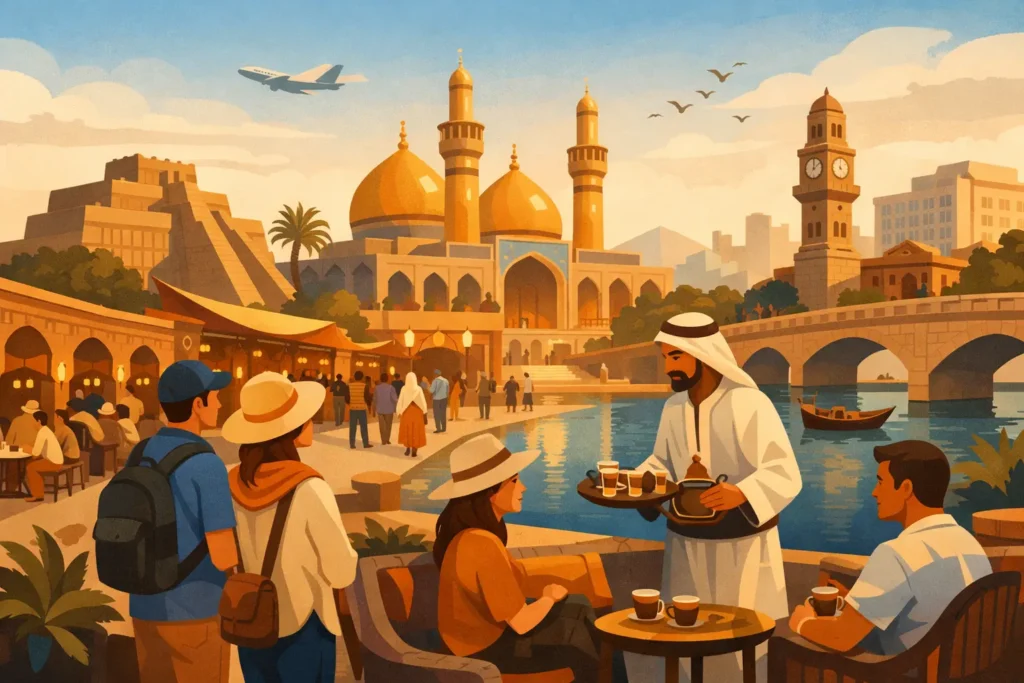
In cities, you will notice a strong street culture. Tea houses, bakeries, kebab restaurants, book markets and riverside areas all play a role in daily life. Hospitality is not treated as a sales technique. It is part of social behaviour. That matters, because it changes how travel feels. You are not simply observing Iraq. In many cases, you are being received by it.
At the same time, travellers should expect complexity. Traffic can be intense. Timings are not always precise. Infrastructure varies between regions. English is spoken in some hotels, tourism settings and among younger Iraqis, but not everywhere. A smooth trip usually comes from preparation, patience and a willingness to adapt rather than expecting everything to work exactly as it would in Western Europe.
Is Iraq welcoming to foreign visitors?
In many cases, yes – strikingly so. Iraqis are often proud when foreigners take an interest in their country beyond old assumptions. Visitors who arrive respectfully, dress appropriately and show cultural curiosity are usually met with openness.
This is particularly true in places with religious significance, historical depth or strong local identity. Pilgrims, diaspora travellers, heritage enthusiasts and photographers often find that conversations begin quickly. People may ask where you are from, why you came, and whether you are enjoying Iraq. These exchanges are rarely superficial. Iraq is a place where travel can still feel personal.
That said, welcoming does not mean identical norms everywhere. Social expectations differ by city, region and setting. Conservative dress is advisable in many places, especially at shrines and in traditional areas. Public behaviour should be modest and respectful. Travellers who approach Iraq with humility usually find that doors open easily.
Safety and reality: a balanced view
Any honest answer to what is Iraq really like must include the practical question many travellers ask quietly before they book: is it safe enough to visit?
The sensible answer is that it depends on where you are going, how you are travelling and how well you prepare. Iraq should not be treated casually, but neither should it be reduced to fear-based assumptions. Many visitors travel successfully by following current advice, using trusted local knowledge, choosing reliable transport and accommodation, and planning their route with care.
Some areas are far more established for visitors than others. Religious travel routes, key cities and certain heritage destinations are increasingly accessible, especially when travellers organise their trip properly. Conditions can change, and first-time visitors often benefit from local support, particularly if they want to move between multiple regions.
Confidence in Iraq comes less from pretending there are no challenges and more from understanding them clearly. Good planning makes a significant difference.
What are the cities and regions like?
Baghdad is often the city people are most curious about. It can feel intense, historic, sociable and surprisingly creative all at once. The Tigris runs through the city not just geographically but emotionally. Baghdad’s appeal lies in its lived texture – old streets, booksellers, riverside scenes, neighbourhood food and the sense that history is still being carried forward rather than displayed behind glass.
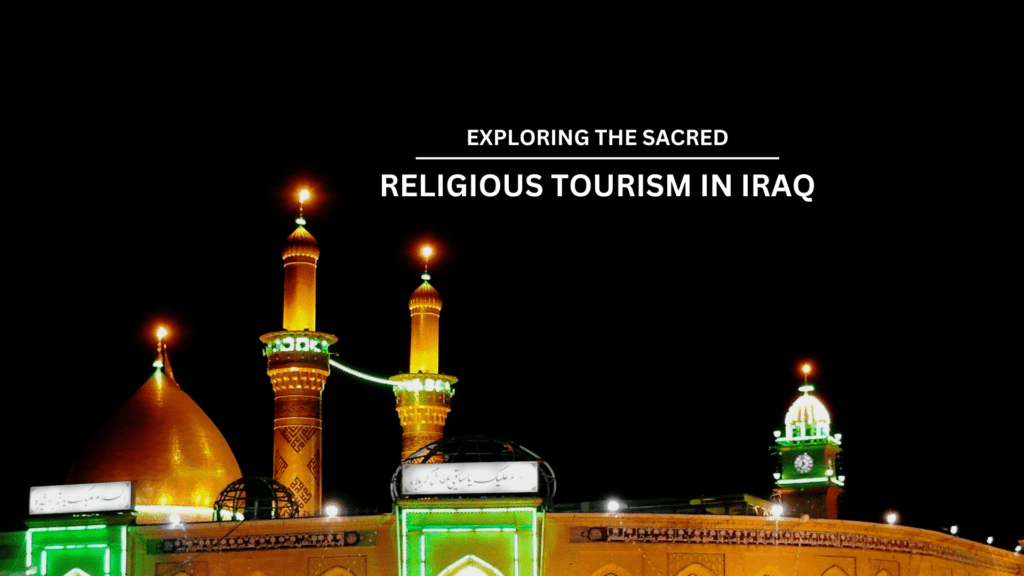
Najaf and Karbala offer a different experience, shaped by spirituality, pilgrimage and devotion. For many Muslim travellers, these cities carry profound emotional significance. Even for non-pilgrims, there is something powerful in witnessing the scale of faith, movement and reverence that defines them.
Basra brings another face of Iraq, with its southern character, waterways, trading history and Gulf-facing identity. The marshes nearby reveal a slower, more elemental landscape, where reed houses, waterways and birdlife create one of the country’s most distinctive experiences.
In the north, travellers often notice a different pace and urban feel, especially in parts of the Kurdistan Region. This can make it an appealing entry point for some visitors. Yet Iraq’s wider appeal lies in seeing more than one side of the country. No single city explains Iraq on its own.
Food, faith and everyday culture
Iraq is rich in sensory detail. The food is generous and satisfying rather than theatrical. You will find grilled meats, fragrant rice, masgouf, stews, soups, fresh herbs, pickles, dates and excellent bread. Meals often feel communal, and refusing hospitality too quickly can seem abrupt. Tea is everywhere, and it is more than a drink – it is a pause, a welcome and sometimes the beginning of a conversation that lasts far longer than expected.
Faith is also part of the public atmosphere. The call to prayer, shrine courtyards, religious gatherings and expressions of devotion are woven into everyday life. This does not mean every traveller will experience Iraq primarily through religion, but many will find that spirituality is visible in ways that feel natural rather than staged.
Cultural respect matters. Modest dress, courtesy in sacred spaces and sensitivity when taking photographs all help create better encounters. Iraq rewards travellers who observe before they assume.
What surprises most first-time visitors?
Usually, it is the gap between expectation and reality. Many first-time visitors expect a country that feels closed, tense or difficult to connect with. What they often find instead is warmth, humour, pride and an eagerness to be understood on more honest terms.
Another surprise is how emotionally affecting Iraq can be. This is not only because of its ancient sites or sacred cities, but because travel here often feels direct and unfiltered. Encounters are less scripted than in heavily touristed destinations. Moments can feel more spontaneous, whether that means an invitation to share lunch, a conversation with a shopkeeper, or standing somewhere of enormous historical significance with very few other foreign visitors around.
That emotional depth is part of Iraq’s appeal. It is not a destination you simply tick off. For many people, it stays with them.
So, what is Iraq really like?
It is welcoming, proud, spiritual, historically extraordinary and more accessible than many imagine – provided you travel with care. It can be intense, moving and occasionally demanding. It asks more of visitors than a conventional city break, but it gives back something far rarer: perspective, connection and a sense of having encountered a place on its own terms.
For travellers who want polished ease above all else, Iraq may not be the obvious choice. For those who value meaning, hospitality and depth, it can be one of the most memorable journeys they ever make. If you approach it with respect and preparation, Iraq often answers curiosity with generosity.