
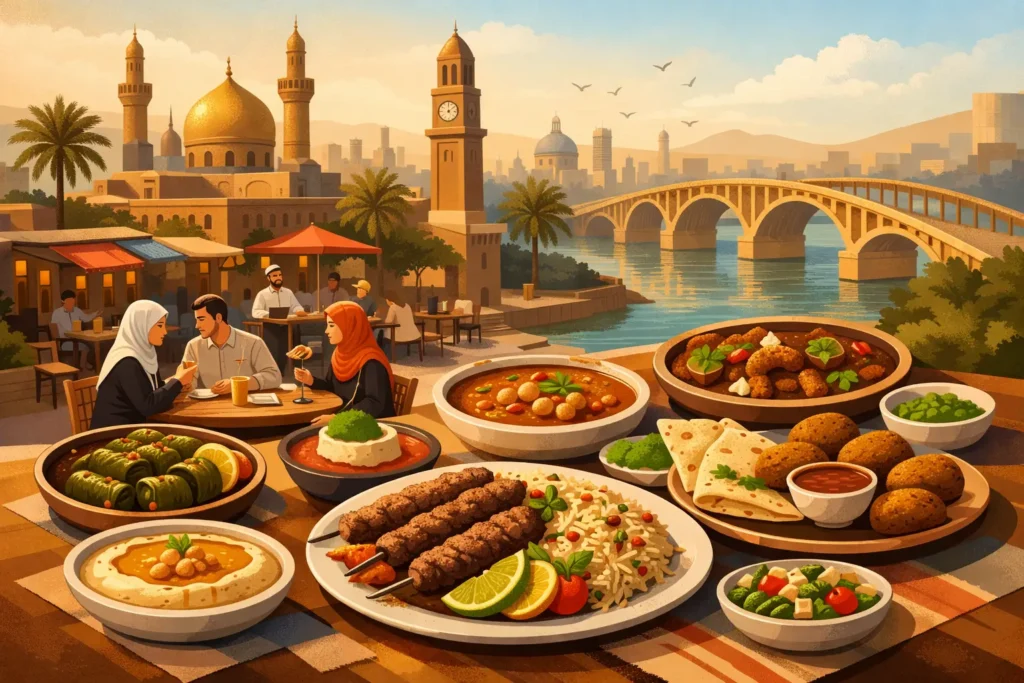
Baghdad reveals itself at the table. The scent of charcoal-grilled fish near the Tigris, a tray of stuffed vegetables shared among friends, and a small glass of sweet tea can tell you as much about the city as any museum. If you are deciding what to eat in Baghdad, begin with an appetite for generosity: Iraqi meals are often made to be shared, lingered over and discussed.
The capital’s food reflects Iraq’s deep agricultural traditions, its river landscape and its role as a meeting point for families from across the country. Some dishes are everyday favourites; others are reserved for a long lunch, a weekend gathering or a special guest. The most rewarding approach is to try a mixture of grilled food, slow-cooked comfort dishes, breakfast staples and sweets.
What to Eat in Baghdad: Start with Masgouf
Masgouf is Baghdad’s signature dish and the meal many Iraqis will hope you try before leaving. A whole freshwater fish, traditionally carp, is opened and fixed to stakes beside a wood fire. It cooks slowly facing the flames rather than directly above them, giving the flesh a gentle smokiness while keeping it moist. It is commonly seasoned simply, allowing the fish and fire to do the work.
Masgouf is not usually a hurried plate of food. It is a social occasion, often enjoyed with bread, fresh herbs, onions, pickles and tangy amba, a mango pickle sauce loved across Iraq. Along the Tigris, choosing a fish and waiting as it cooks can become part of the experience. Portions can be generous, so it is best ordered for the table rather than approached as a solo meal.
The hearty dishes that define a Baghdad table
Quzi
Quzi, sometimes written as qoozi, is one of Iraq’s great celebratory rice dishes. Tender lamb is served with fragrant rice, often enriched with nuts and raisins, while the meal may include vegetables or a crisp flatbread layer beneath. The contrast of savoury meat, aromatic rice and occasional sweetness makes it especially memorable.
You may encounter quzi at family celebrations, large restaurants or as a special Friday lunch. Recipes vary between households, and that variation is part of its appeal. For travellers, it offers a clear introduction to the Iraqi preference for meals that feel both generous and carefully composed.
Iraqi kebab
Baghdad kebab is a serious matter. Minced lamb or mixed meat is shaped along wide skewers, grilled over charcoal and served with hot flatbread, grilled tomatoes, onions and herbs. It is simpler in appearance than many elaborate dishes, but the quality lies in the seasoning, the meat and the heat of the grill.
Ask for a mixed grill if you want to sample more than one style of kebab, but do not overlook the classic lamb version. A squeeze of lemon, a spoonful of pickles and a piece of fresh bread are often all it needs. It is an excellent first dinner for visitors arriving late or seeking something familiar yet distinctly local.
Dolma
Iraqi dolma is far more than a side dish. It is a deeply comforting centrepiece made by stuffing vegetables and vine leaves with rice, herbs and, depending on the recipe, minced meat. Aubergines, peppers, onions, tomatoes and courgettes may all appear in one pot, slowly cooked with tamarind, pomegranate molasses or other sour notes.
The result is rich, tangy and intensely satisfying. Each household has its own balance of filling and seasoning, so a plate of dolma can taste different from one neighbourhood to the next. It is also a dish that reflects Iraqi hospitality: making it takes time, and serving it signals care.
Tashreeb
Tashreeb is one of the most revealing dishes to seek out when you want food with a sense of home. Pieces of Iraqi bread are soaked in a slow-cooked stew, which may contain chickpeas, beans, chicken, lamb or vegetables. The bread absorbs the broth and becomes part of the dish rather than an accompaniment.
It may not look elaborate, but tashreeb is full of flavour and best eaten fresh, when the bread is tender but still has some texture. It is especially welcome on a cooler evening or after a long day visiting Baghdad’s historic quarters. If you are unsure which version to choose, ask what is cooking that day.
Bamia with rice
Bamia is okra cooked in a tomato-based stew, commonly served with white rice and sometimes lamb. The okra softens into the sauce, creating a dish that is comforting, lightly tart and deeply familiar to many Iraqi families.
This is a good choice for travellers who want to move beyond the grill and taste the everyday cooking of Baghdad. As with many Iraqi stews, it is less about dramatic presentation than balance: tomato, spice, tender vegetables and rice prepared for sharing.
Tepsi baytinijan
Tepsi baytinijan is a baked aubergine tray dish, typically layered with tomatoes, potatoes, peppers and meat. The name refers to the tray itself, and the finished meal arrives as a colourful, oven-softened combination of vegetables and savoury juices.
It is a strong option for anyone who enjoys Mediterranean-style baked dishes but wants an Iraqi version with its own character. Some versions are meatier, while others place the vegetables at the forefront, so it can suit different appetites.
Breakfast in Baghdad is worth waking up for
Baghdad mornings deserve their own food itinerary. The classic breakfast combination is geymar, also known as qaymar, with hot bread and date syrup or honey. Geymar is a thick, luxurious dairy cream, often made from buffalo milk, and its mild richness is beautifully offset by the caramel depth of date syrup.
This is not an everyday light breakfast in the British sense. It is a treat, best enjoyed slowly with tea and good company. You may also find eggs, cheeses, beans, fresh herbs, olives and bread on the table. For a lighter start, choose bread with cheese and herbs, then save geymar for a morning when you can fully appreciate it.
Another Baghdad institution is pacha, a traditional soup made from slow-cooked sheep’s head, feet and stomach. It is beloved by many locals, particularly as a substantial breakfast, but it is not for every visitor. If you are an adventurous eater, it offers an authentic taste of old Baghdad food culture; if not, there is no shortage of gentler breakfast choices.
Snacks, sauces and street-side flavours
A meal in Baghdad often becomes memorable through the small things around it. Fresh samoon, the distinctive Iraqi sesame-topped bread with its elongated shape, is worth trying warm from the bakery. It works with kebab, cheese, stew or simply a cup of tea.
Kubba is another essential snack or starter. These crisp shells of bulgur or rice are filled with seasoned minced meat, onions and nuts, then fried or cooked in broth. Their shape and texture vary, but a good kubba should offer a satisfying contrast between a crisp or tender outer layer and a fragrant filling.
Keep an eye out for amba too. This bright, sharp mango pickle sauce can appear alongside grilled meats, sandwiches and snacks. Its tangy flavour may surprise first-time visitors, yet it quickly becomes part of the pleasure of eating Iraqi food. Use a little at first, then add more as your taste develops.
Leave room for kleicha and tea
Kleicha is Iraq’s much-loved filled biscuit, often associated with celebrations and family baking. The most common filling is dates, though walnut and coconut versions are also popular. Some are shaped into small rounds, while others are patterned or rolled, but all pair naturally with tea.
Baghdad tea is typically served strong, sweet and in small glass cups. It marks the pause after a meal, the beginning of a conversation and the moment when an invitation to sit a little longer becomes impossible to refuse. Iraqi coffee is also available, but tea is the everyday ritual you are most likely to encounter.
For something syrupy, look for zalabia or similar fried sweets, especially during festive periods. These are best shared, particularly after a generous dinner when one piece is enough to satisfy a sweet tooth.
How to eat respectfully and confidently in Baghdad
Baghdad’s dining culture is welcoming, and visitors do not need to know every custom before sitting down. A few habits will help. When sharing communal dishes, follow the lead of your hosts or fellow diners. Bread is often used to gather food, though cutlery is widely available and entirely acceptable. Accepting at least a little food or tea when offered is usually a warm response to hospitality, but it is also fine to explain dietary needs politely.
Vegetarian travellers can enjoy bread, salads, beans, rice, vegetable stews and some forms of dolma, but should ask whether dishes have been cooked with meat stock or fat. Vegans may need to be more specific, particularly around dairy-rich breakfast foods and sauces. Those with allergies should communicate clearly and, where possible, have key dietary requirements written in Arabic.
The best food experiences often come through local recommendations. Ask a hotel host, guide or shopkeeper where they take their own family for masgouf, breakfast or kebab. Stay In Iraq can help travellers pair those culinary moments with a comfortable place to stay, making it easier to experience the city beyond a single meal.
Come hungry, be curious, and give the meal time. In Baghdad, the food is rarely only about what is on the plate; it is an invitation to sit with the city and meet its people.