The question most travellers ask first is simple: is Iraq safe to visit? It is also the question that deserves the most honest answer. Iraq is not a one-word destination, and safety here is not something to treat casually. But it is also not a place that can be understood through old headlines alone. For many visitors today, especially those travelling with preparation, local knowledge, and realistic expectations, parts of Iraq are not only accessible but deeply rewarding.
The key is to stop thinking about Iraq as a single, uniform experience. Safety in Iraq depends heavily on where you go, how you travel, who you travel with, and how well you understand the local context. Baghdad is not the same as Basra. Najaf and Karbala function differently from Mosul. The Kurdistan Region has its own rhythm, infrastructure, and travel patterns. A responsible answer has to reflect those differences.
Is Iraq safe to visit for tourists today?
Yes, for many travellers that are looking for culture, business travel and religious travel. That is the balanced answer.
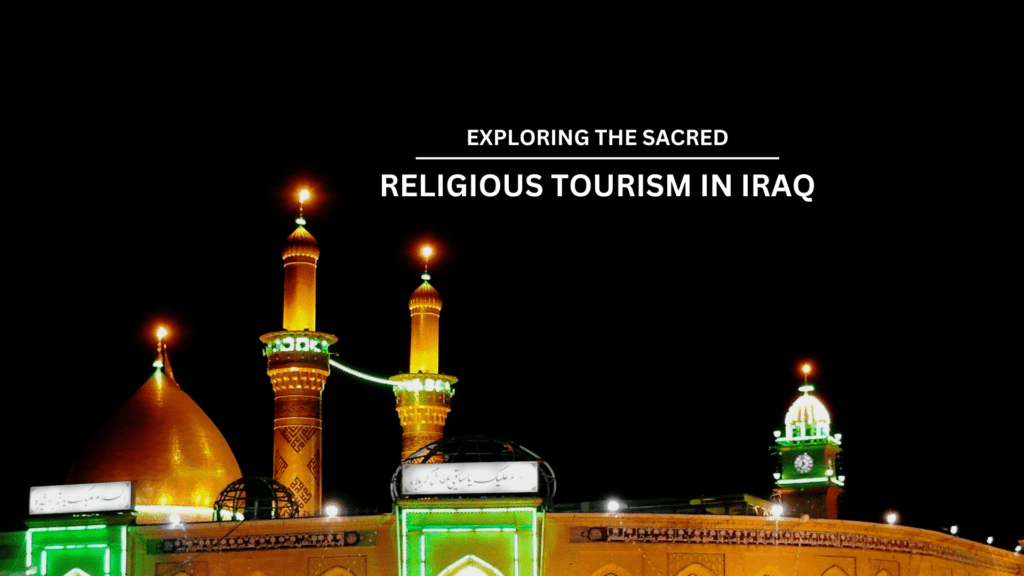
Iraq has welcomed growing numbers of pilgrims, diaspora visitors, journalists, business travellers, and culturally curious tourists in recent years. Religious tourism in particular is well established, with millions visiting Najaf and Karbala during major occasions. In cities that receive regular visitors, you will often find a visible security presence, strong community awareness, and a hospitality culture that can feel surprisingly personal.
At the same time, Iraq remains a destination where security conditions can change. Some areas are far more stable than others, and some are not suitable for tourism at all. That means travellers should not rely on general impressions, social media snippets, or assumptions based on nearby countries. Iraq rewards nuance.
Why Iraq’s safety picture is more complex than people think
One reason Iraq is often misunderstood is that people tend to confuse historical instability with current travel reality. International perception is still shaped by war coverage, political tension, and years of alarming news. Those histories matter, and no credible travel platform should pretend otherwise. But they do not tell the full story of what a visitor may actually experience on the ground in the country’s more accessible destinations.
In many parts of Iraq, everyday life is active, social, and normal in ways that surprise first-time visitors. Cafes are full, shrines are busy, markets are lively, and family hospitality remains one of the strongest features of travel here. The country is not frozen in its past. It is living, changing, and reopening to the world, though unevenly.
That unevenness is the point. Iraq is a destination where regional knowledge matters more than broad labels.
Which parts of Iraq are generally more accessible?
The Kurdistan Region is often seen as the easiest starting point for first-time visitors. Cities such as Erbil, Sulaymaniyah, and Duhok have long attracted regional and international travellers. Many visitors find the infrastructure more familiar, the pace more straightforward, and the tourism experience easier to navigate independently.
Federal Iraq also receives visitors, but planning needs to be more deliberate. Baghdad has become an increasingly interesting stop for travellers interested in history, architecture, food, and contemporary urban life. Najaf and Karbala are major religious destinations with established visitor flows. Basra appeals to those interested in southern Iraq, waterways, trade history, and Gulf culture.
Some visitors also explore Babylon, Samarra, Ur, and parts of Mosul, but these trips are best approached with up-to-date local advice. Places of enormous historical significance may still have logistical or security considerations that make them less suited to spontaneous travel.
Where extra caution matters
There are areas in Iraq where tourism is not advisable, either because of security concerns, limited infrastructure, political sensitivities, or changing local conditions. Border areas, remote desert routes, and places with an active security risk should not be approached casually.
This is where responsible trip planning makes all the difference. A traveller visiting well-known cities with accommodation arranged, local contacts in place, and a clear route is in a very different position from someone arriving with no structure and a vague plan to “see what happens”. Iraq is not the destination for careless improvisation.
What safety feels like on the ground
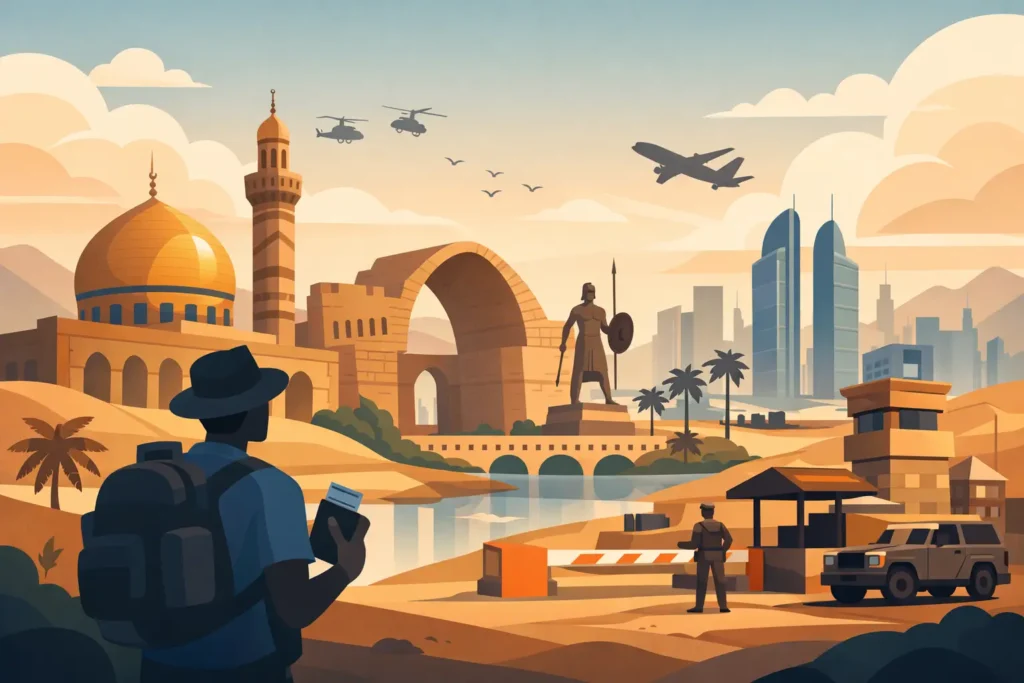
Many travellers are struck by a contradiction when they arrive in Iraq: visible security can look intimidating at first, but often functions as reassurance. Checkpoints, controlled access points, and police or military presence are common in parts of the country. For a first-time visitor, that can be unfamiliar. In practice, it is often part of how movement is monitored and protected.
Daily safety is also shaped by local culture. Iraqis are often remarkably attentive to guests. If something seems unclear, unusual, or inconvenient, people frequently step in to help. That does not replace formal security, of course, but it does affect how travellers experience the country. Human connection is not a side note in Iraq – it is part of how journeys become manageable.
Still, common-sense precautions matter. Avoid unnecessary night travel on unfamiliar roads. Keep someone informed of your plans. Use trusted drivers or transport arrangements where possible. Stay aware in crowded areas, especially during major religious events, when cities become busier and movement more complex.
Practical ways to travel more safely in Iraq
The safest trips to Iraq are usually the ones built on preparation rather than confidence alone. Before travelling, check the latest official travel advice from your own government, but do not stop there. Government advisories are often cautious by design and may not capture regional nuance. They are useful as one layer of information, not the only layer.
Look closely at your itinerary. Ask whether each stop is realistic, connected, and suitable for current conditions. Book accommodation in advance, especially in cities where you may arrive late or where language barriers could slow things down. If you are entering federal Iraq for the first time, arranging airport transfers or trusted local transport can remove a lot of friction.
It also helps to travel with cultural awareness. Dress modestly, particularly in religious cities. Be respectful when photographing people, shrines, checkpoints, or government buildings. Understand that local customs are not obstacles to your trip but part of travelling well here.
For many travellers, using a local guide or fixer for at least part of the journey is sensible. That is not because Iraq is impossible to navigate, but because context matters. A guide can help with language, route choices, timing, and reading situations that a first-time visitor may misjudge.
Is Iraq safe to visit solo?
Solo travel in Iraq is possible, but it depends very much on your experience level and destination choices.
Experienced travellers with a strong sense of situational awareness may feel comfortable in parts of Iraq, especially if they have local contacts and keep their plans structured. But Iraq is not the best place to approach with a casual solo-travel mindset based on spontaneous hostel culture or last-minute overland decisions.
For solo women, the answer is again nuanced. Many female travellers have had positive experiences in Iraq and speak warmly about local respect and hospitality. Even so, conservative dress, well-reviewed accommodation, and careful transport planning are especially important. What feels socially comfortable in one city may feel different in another.
The role of religion, events, and timing
Travel timing has a major effect on both safety and ease. During significant religious periods, especially in Najaf and Karbala, visitor numbers rise dramatically. For some travellers, this is an extraordinary chance to witness devotion, community, and spiritual life on a vast scale. For others, the crowds, road closures, and pressure on accommodation can make travel more difficult.
Political events and regional tensions can also affect movement. Even if tourists are not directly targeted, disruptions can happen through protests, transport delays, or tightened security. Flexible planning is valuable in Iraq because conditions can shift faster than in more established leisure destinations.
So, should you travel to Iraq?
If you want a polished, effortless holiday with minimal uncertainty, Iraq may not be the right fit. If you are drawn to living history, sacred cities, ancient landscapes, remarkable hospitality, and the chance to encounter a country beyond stereotype, Iraq can be one of the most meaningful journeys in the region.
The right question is not simply whether Iraq is safe in the abstract. It is whether your specific trip to Iraq is well planned, regionally informed, and suited to your travel style. For the right traveller, the answer can be yes.
Iraq asks more of its visitors than easier destinations do. In return, it offers something harder to find elsewhere – the feeling that travel can still surprise you, challenge your assumptions, and connect you with people in a genuinely human way. If you come with respect, preparation, and curiosity, you may leave with a very different understanding of what safety, hospitality, and meaningful travel can look like.