A traveller stands in old Baghdad at sunset, walks through the shrine cities of Najaf and Karbala, or watches the light change over the marshes in southern Iraq, and something shifts. The phrase why Iraq may become the Middle East’s most surprising destination starts to make sense not as a headline, but as a real travel pattern already taking shape.
For years, Iraq sat in the category of places people were curious about but unsure how to approach. That is changing. Not because Iraq is trying to imitate more established destinations, but because it offers something many travellers now want more than polish – depth, meaning and genuine human connection.
Why Iraq may become the Middle East’s most surprising destination
The surprise is not that Iraq has history. Most people know, at least vaguely, that this is the land of Mesopotamia, of ancient cities, rivers, scholarship and sacred memory. The real surprise is how much of that heritage still feels alive, and how directly visitors can experience it.
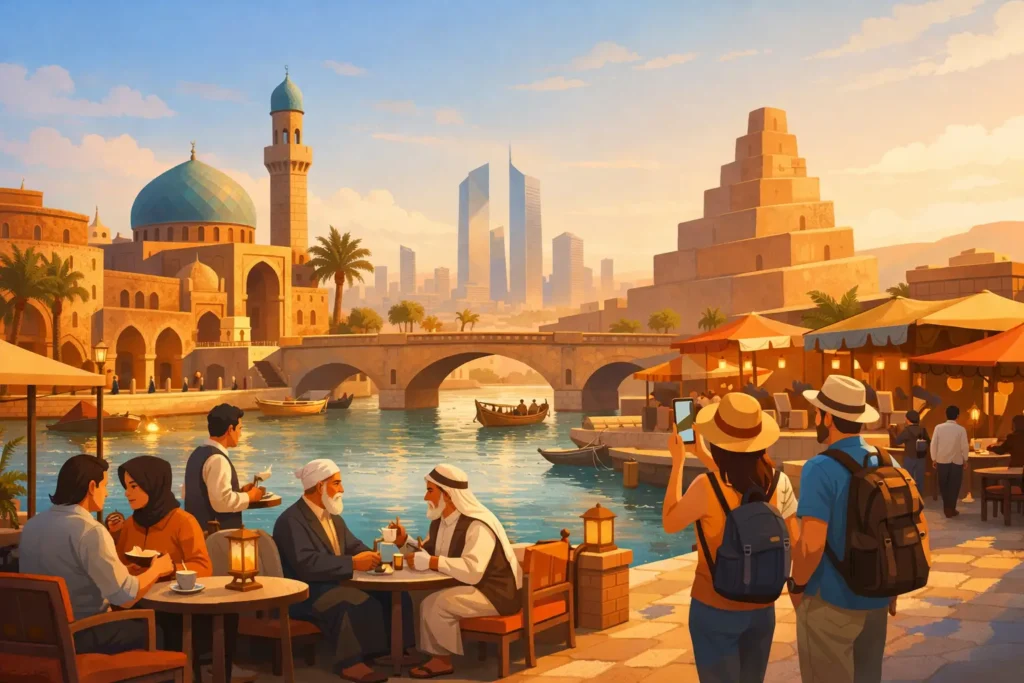
In many destinations, history is carefully packaged behind barriers, labels and timed entry slots. In Iraq, history often feels closer to daily life. It is in the call to prayer echoing through historic quarters, in the rhythm of shrine cities welcoming pilgrims, in archaeological landscapes that still hold a powerful sense of place, and in homes, cafés and markets where hospitality is not performed for tourists but offered as a matter of character.
That difference matters. Travellers are increasingly looking for destinations that feel real rather than over-curated. Iraq speaks to that shift in a way few places can.
A destination with rare cultural depth
Iraq brings together layers of travel appeal that are usually spread across several countries. It is a destination for history travellers, religious visitors, photographers, food lovers, architecture enthusiasts and diaspora families reconnecting with memory and identity.
Baghdad alone offers enough material for a meaningful trip. The city carries literary weight, Abbasid heritage, river life, old neighbourhoods and a cultural atmosphere that rewards slow attention. It is not a place to consume quickly. It is a place to absorb.
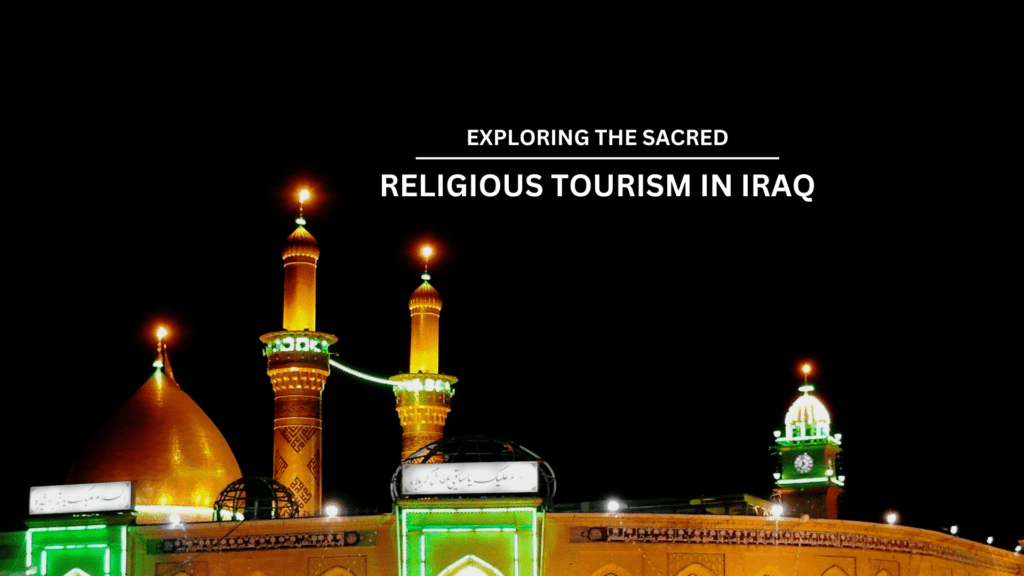
Beyond the capital, the country opens out in very different directions. Najaf and Karbala hold profound importance for Muslim travellers and for anyone interested in spiritual geography. Mosul is drawing renewed interest for its heritage, craftsmanship and cultural resilience. Basra offers a different Iraqi identity altogether – maritime, poetic and deeply connected to the waterways of the south. Then there are the marshes, where landscape and tradition combine in a way that feels unlike anywhere else in the region.
That breadth gives Iraq unusual strength as an emerging destination. It can speak to many kinds of traveller without losing its coherence.
Spiritual travel with global significance
One reason Iraq’s tourism future matters is that religious travel here is not niche. It is already deeply rooted, internationally significant and emotionally meaningful for millions. The shrine cities have long welcomed visitors, and for many people a journey to Iraq is not simply tourism but devotion, reflection and connection.
Yet even travellers who arrive for pilgrimage often discover a broader country than they expected. They encounter Iraqi generosity, local food traditions, historic urban life and the warmth of everyday conversation. This overlap between spiritual purpose and wider cultural discovery is part of Iraq’s distinct appeal.
It also means Iraq is not starting from zero. It already has proven travel demand in key religious routes, and that creates a foundation for wider destination growth.
Hospitality that travellers remember
Countries can promote monuments. What people share with friends afterwards is usually how they were treated.
Iraq has a strong advantage here. Visitors often speak about welcome before they speak about landmarks. They remember invitations to tea, the ease with which conversations begin, and the pride locals take in introducing their city, their customs or their food. This is especially important in a destination where some travellers arrive with uncertainty. Human warmth changes the whole experience.
Hospitality in Iraq is not a side note to the trip. It is one of the main reasons the trip stays with people. For a travel industry trying to build trust, that matters more than glossy branding ever could.
The appeal of the unoverdone
There is another reason Iraq stands out. It still feels unoverdone.
That does not mean undeveloped in every sense, and it certainly does not mean effortless. Travel in Iraq can require more planning than a weekend city break in Europe. It depends where you are going, how independently you want to travel, and what level of comfort or structure you expect. But for many travellers, that is part of the attraction.
Places that remain relatively untouched by mass tourism often offer a stronger sense of discovery. Streets are lived in rather than staged. Markets serve residents first. Encounters feel less transactional. Iraq has that quality, and for experienced travellers especially, it can be far more compelling than destinations that have become overly predictable.
Accessibility is improving, even if planning still matters
One of the biggest barriers to Iraq tourism has not been lack of interest. It has been lack of clear, trusted information. People want to know how to enter, where to stay, how to move between cities, what cultural norms to respect and what kind of itinerary is realistic.
That is precisely where change is happening. Travel planning resources are improving. More travellers are sharing first-hand experiences. Accommodation discovery is becoming easier. There is growing confidence around structured trips, city-based stays and purpose-led visits.
This does not mean every journey is simple. Iraq is a country where practical preparation still matters. Visa requirements can vary by nationality. Transport decisions should be made with care. Travellers benefit from up-to-date local guidance and realistic itineraries. But complexity is not the same as impossibility. Increasingly, Iraq is becoming bookable, navigable and understandable to people who once assumed it was out of reach.
That transition from curiosity to practical confidence is one of the clearest reasons Iraq may rise as a major regional travel story.
Travellers are changing too
Iraq’s momentum is not only about Iraq. It is also about what modern travellers are seeking.
Many people have grown weary of identical luxury districts, formulaic itineraries and destinations designed mainly for social media performance. They want travel that teaches them something, unsettles assumptions in a good way, and leaves them with stories that feel personal rather than generic.
Iraq fits that mood remarkably well. It offers scale, gravity and intimacy at once. You can stand in places tied to the earliest chapters of civilisation, then sit down for a meal that feels warm, local and entirely present. That contrast is powerful.
For diaspora travellers, the appeal can be even more personal. Iraq offers a chance to reconnect with family histories, languages, landscapes and traditions in a direct way. For non-Iraqi visitors, it offers something equally valuable – access to a country that is often discussed from a distance but understood much more clearly when experienced on the ground.
Why Iraq may become the Middle East’s most surprising destination for culture-led travel
Culture-led travel depends on more than famous sites. It depends on atmosphere, continuity and the feeling that a place still belongs to itself. Iraq has that in abundance.
Its cuisine is part of the story, from masgouf and quzi to regional sweets and deeply rooted coffee and tea culture. Its architecture tells many stories at once – Abbasid, Ottoman, religious, vernacular and modern. Its sacred cities shape movement and meaning. Its rivers and marshes bring a different landscape narrative to the wider region. And its people often make visitors feel less like spectators and more like welcomed guests.
That combination is difficult to manufacture, which is why it is so valuable. The strongest destinations of the next decade may not be the ones with the biggest marketing budgets. They may be the ones offering sincerity, memory and cultural confidence. Iraq has all three.
What could hold it back – and what could move it forward
It would be unrealistic to pretend that Iraq’s tourism growth is automatic. Perception gaps remain. Some travellers still struggle to find reliable planning information. Infrastructure and service consistency can vary depending on destination and travel style. For first-time visitors, reassurance is often as important as inspiration.
But these are solvable challenges. Better destination information, trusted accommodation options, clearer visitor guidance and stronger storytelling can all reduce uncertainty. Platforms such as Stay In Iraq matter because they help transform abstract interest into practical travel decisions.
Most importantly, Iraq does not need to become a copy of somewhere else to succeed. Its strength lies in presenting itself honestly – historic yet modern, spiritual yet varied, serious in cultural weight yet full of warmth and welcome.
The travellers who come to Iraq in the coming years may not be looking for the easiest destination. They may be looking for one of the most meaningful. And that is exactly why Iraq’s rise as a visitor destination feels not only possible, but increasingly likely.
If Iraq surprises more travellers, it will not be because the country changed its essence. It will be because more people finally gave themselves the chance to see it clearly.