For many families, an Iraqi diaspora heritage trip example starts with a simple moment – a surname recognised, a childhood story repeated at the dinner table, or an old photograph that suddenly feels unfinished. Returning to Iraq is rarely just about seeing landmarks. It is about placing memory, identity and family history back into a real landscape.
That is why heritage travel needs a different kind of planning. A standard sightseeing itinerary may help first-time visitors see Baghdad, Najaf or Basra, but diaspora travellers often want something more personal. They may be looking for the neighbourhood where a parent grew up, the shrine a grandparent spoke about, the family home that still exists in some form, or simply the feeling of hearing Iraqi Arabic spoken around them every day.
An Iraqi diaspora heritage trip example with purpose
A strong Iraqi diaspora heritage trip example balances emotion with practicality. It should leave space for family visits, reflection and unexpected conversations, while still being organised enough to reduce stress. The goal is not to pack every day with activity. The goal is to make the journey feel grounded, respectful and genuinely meaningful.
For a first heritage return, 8 to 10 days is often a sensible length. It gives enough time to move beyond airport-to-family-home logistics and experience Iraq as it is now, not only as it exists in family memory. If you are travelling with older relatives or children, a slower pace matters even more.
Imagine a 9-day trip designed for a British Iraqi traveller returning with a spouse or sibling, perhaps for the first time as an adult.
A realistic 9-day heritage itinerary
Days 1 and 2: Baghdad as the starting point
Baghdad makes sense as the emotional and practical entry point for many diaspora travellers. The city carries immense historical and cultural weight, but it is also where many family stories begin. Even if your roots are elsewhere, starting here can help you settle into the rhythm of Iraq before moving on.
Use the first day lightly. Check into your accommodation, rest, and let the city come to you. A heritage trip can be surprisingly emotional, and it helps not to begin with a packed schedule. An evening meal with relatives or trusted local contacts is often more valuable than rushing through several sites while tired.
On day two, combine personal family context with broader cultural orientation. Visit a traditional market, spend time in an older district, and, if relevant to your family story, arrange a visit to a former neighbourhood, school area or place of worship. Even when a building has changed, the surrounding streets often reveal more than expected. A conversation with a shopkeeper or neighbour can become one of the most memorable parts of the trip.
Days 3 and 4: Family roots and local connection
These are the days to move closer to your family’s own geography. That may mean remaining in Baghdad for deeper visits, or travelling onward to another city or town linked to parents or grandparents.
If your family is from Najaf, Karbala, Mosul, Basra, Hilla, Nasiriyah or elsewhere, plan these days around people first and places second. It is tempting to build an itinerary around famous sites, but diaspora travel often works better when family introductions shape the route. A cousin may know the exact lane where your grandfather lived. An uncle may remember the cemetery where relatives are buried. A family friend may open a door to stories that were never shared in full abroad.
This is also where expectations need careful handling. Some travellers imagine a neat emotional homecoming. Sometimes that happens. Sometimes the reality is more complex. Streets change, homes are rebuilt, and family branches drift apart over time. That does not make the journey less worthwhile. In many cases, it makes it more honest.
Days 5 and 6: Spiritual and historical depth
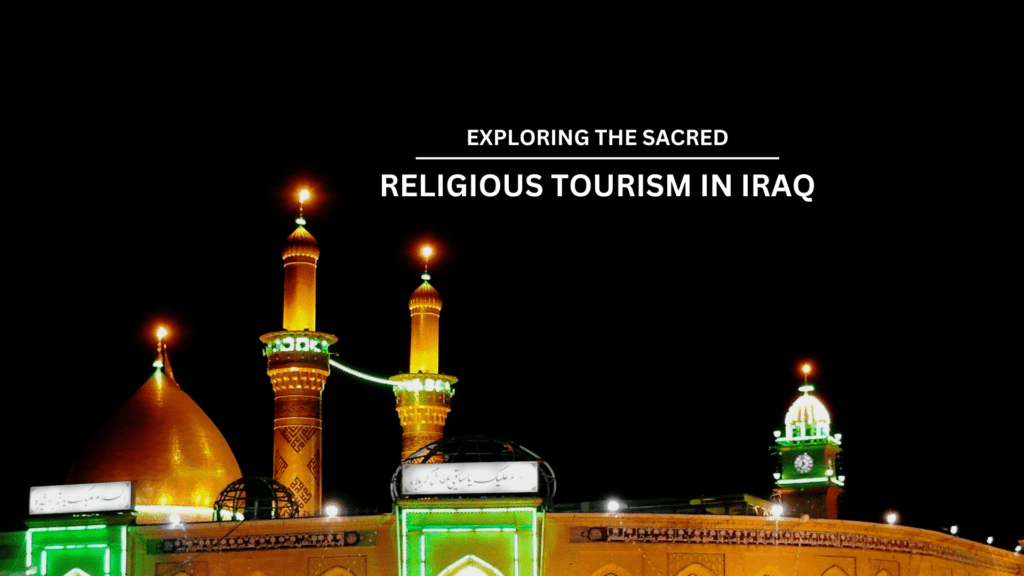
For many Iraqi diaspora travellers, heritage is not only familial but spiritual. A visit to Najaf or Karbala can bring together personal faith, family tradition and a stronger understanding of Iraq’s religious life. For others, Babylon, Ur or the Marshes may feel more connected to civilisational history and identity.
The right choice depends on your own background. A Shia Muslim traveller may prioritise shrine visits and religious learning. A culturally curious traveller with Iraqi roots but less direct religious practice may still find these cities deeply moving because they reveal how faith, community and memory are woven into daily life.
If you are choosing between destinations, avoid trying to do too much. Two places experienced properly are often better than four visited in a rush. Heritage trips are not about collecting cities. They are about recognising what each place means to you.
Days 7 and 8: A wider Iraq beyond memory
One of the most valuable parts of a heritage trip is seeing Iraq as a living country, not only a repository of family history. This is where the itinerary should gently widen.
If you have spent the first half of the journey reconnecting with relatives and places from family memory, use these days to encounter contemporary Iraq. That might mean exploring Basra’s waterfront atmosphere, seeing the natural beauty of the south, or spending more time in Baghdad’s cafés, bookshops and cultural spaces.
This part matters because many diaspora visitors carry inherited images of Iraq from another era. Some are warm and detailed. Others are fragmented by distance. Present-day experience helps close that gap. You begin to understand not just where your family came from, but the country as it is now – modern, layered, hospitable and still deeply attached to tradition.
Day 9: Leave space for return, not just departure
The final day should be simple. Meet family again if possible, buy a few meaningful items rather than generic souvenirs, and allow time to absorb what the trip has actually meant. Heritage travel can be emotionally full in ways that only become clear once the journey is ending.
Many travellers leave with more questions than they arrived with. That is not a failure of planning. It is often the sign that the trip has done something important.
What makes this Iraqi diaspora heritage trip example work
The strength of this Iraqi diaspora heritage trip example is not the exact sequence of cities. It is the balance. You need enough structure to make travel smooth, but enough flexibility to follow family leads, adjust to invitations and respond to the emotional pace of the journey.
A good heritage itinerary usually includes three elements: a practical base in at least one major city, protected time for family or ancestry-related visits, and a broader cultural layer that helps you understand Iraq beyond your own surname. If one of those is missing, the trip can feel either too transactional or too emotionally narrow.
Accommodation choices matter more than many travellers expect. For a heritage-focused visit, location and calm are often more useful than luxury alone. Staying somewhere comfortable, well-positioned and reliable allows you to process busy days, host family more easily if appropriate, and move around with confidence.
Practical planning for diaspora travellers
Heritage travel is personal, but it still benefits from clear preparation. Before arriving, speak to relatives and ask specific questions rather than broad ones. Instead of saying, “Tell me about where our family is from,” ask for district names, nearby landmarks, old family occupations, schools, mosques, churches, shrines or cemeteries. Specific details travel better than nostalgia.
It also helps to gather names in both English and Arabic where possible. Old spellings often differ across passports, documents and memory. A neighbourhood may be remembered by one name in family conversation and another in everyday local use.
Be realistic about pace. Summer heat, long social days and emotional intensity can be draining, especially if this is your first visit. Travelling with parents or older relatives may enrich the trip enormously, but it may also require shorter journeys, more rest and more adaptable scheduling.
There is also a social trade-off. Some visitors want privacy and time to reflect. Others find themselves immediately folded into large family circles. Neither is wrong. If you need balance, build it in early. A morning for heritage visits followed by a quiet evening can make the entire trip feel more sustainable.
Heritage travel is not only for people with exact answers
Some diaspora travellers arrive with complete family maps. Others know almost nothing beyond a city name and a few stories. Both are valid starting points.
You do not need a perfect archive to plan a meaningful return. Sometimes heritage is recovered through formal visits and historical context. Sometimes it appears in smaller moments – a phrase your grandmother used that you hear in the street, a dish that tastes exactly as described, or a conversation that makes your family history feel less abstract.
For travellers approaching Iraq in this way, the most useful mindset is openness. Come prepared, but do not over-script the experience. Let Iraq speak in its own voice, through its cities, its hospitality and the people who still carry your family story in everyday life.
If you are planning your first return, think of the journey not as a final answer but as the beginning of a more grounded relationship with Iraq – one built not only on inheritance, but on presence.