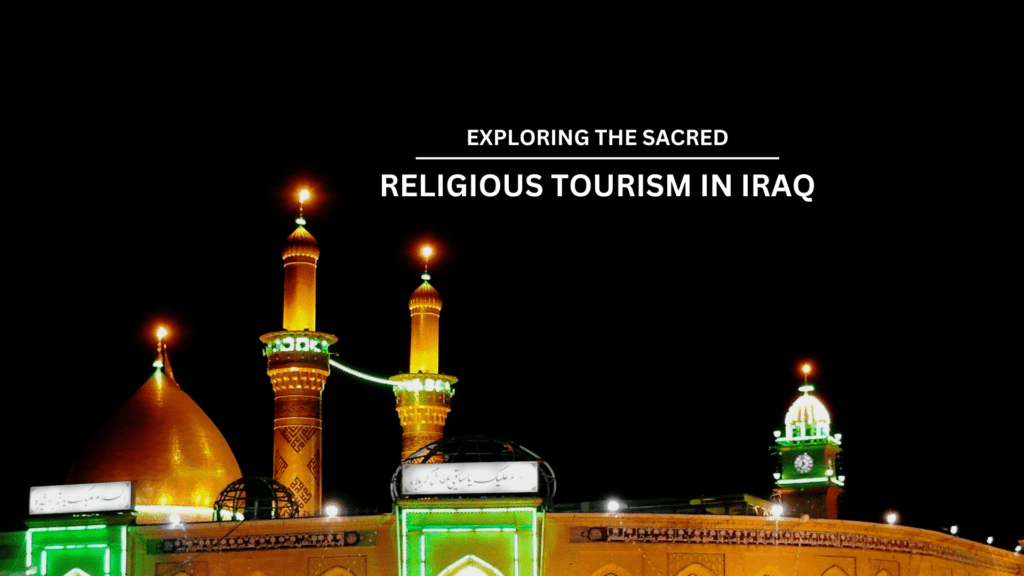
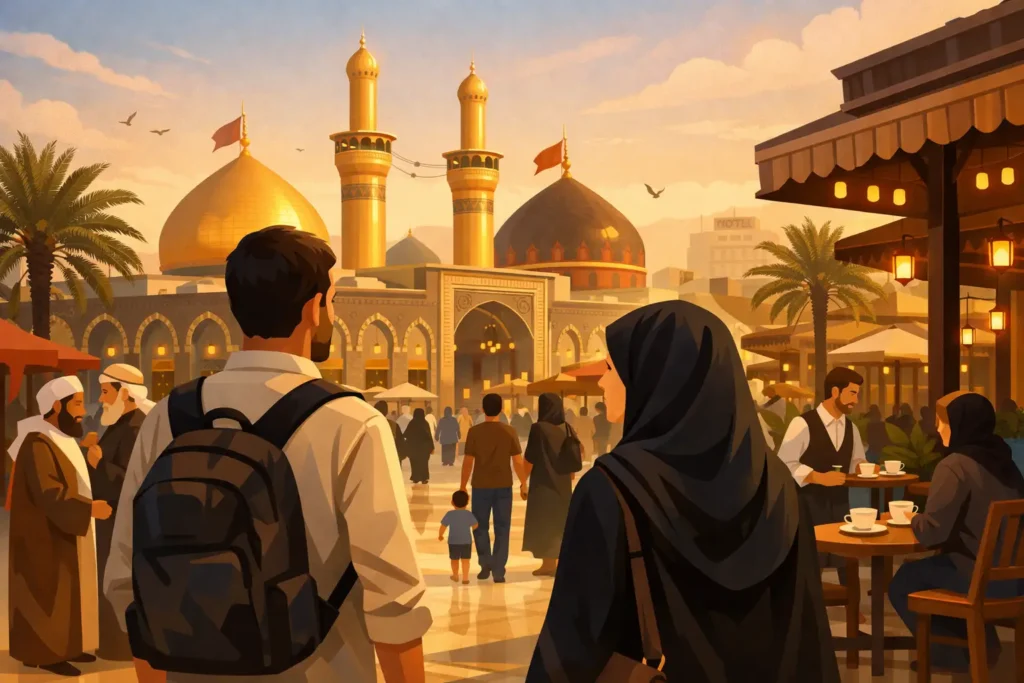
Karbala is not a monument to be ticked off an itinerary. For millions of people, it is a place of grief, devotion, memory and renewal centred on Imam Hussein and the events of Ashura. Knowing how to visit Karbala respectfully begins with recognising that you are entering a living sacred city, where the most meaningful response is often to slow down, observe and follow the lead of those around you.
Visitors are warmly received in Karbala, and Iraqi hospitality is often felt in small, memorable gestures: an offered cup of tea, directions from a stranger, or food shared freely with pilgrims. Respect is not about knowing every custom perfectly before you arrive. It is about arriving with humility, dressing appropriately, asking when unsure and making room for worshippers.
Understand what Karbala means to its visitors
Karbala is one of the most important cities in Shia Islam. Its two principal shrines commemorate Imam Hussein ibn Ali, the grandson of the Prophet Muhammad, and his half-brother Abbas ibn Ali. For Shia Muslims, the martyrdom of Imam Hussein in Karbala in 680 CE stands for moral courage, justice and sacrifice in the face of oppression.
This history is felt most strongly around Ashura and Arbaeen. Ashura marks the tenth day of Muharram, while Arbaeen, forty days later, brings vast numbers of pilgrims to the city, many arriving on foot from Najaf and other parts of Iraq. These are profound religious occasions, not festivals staged for visitors. If you travel at these times, patience, restraint and consideration for pilgrims should shape every decision.
Non-Muslim and non-Shia visitors can still appreciate Karbala’s heritage and atmosphere. The right approach is curiosity without intrusion. Listen to local guides, learn the basic story of the city before visiting, and avoid treating acts of mourning or prayer as a spectacle.
Dress modestly before entering the shrine area
Modest clothing is expected throughout Karbala and becomes especially important near the shrines. Choose loose, non-transparent garments that cover your arms and legs. Neutral, understated clothing is usually the most comfortable and appropriate choice, particularly in busy sacred spaces.
Women should carry a headscarf and be prepared to cover their hair when entering shrine precincts. Some shrines provide a chador or similar covering at the entrance, but bringing your own scarf is sensible. Men should avoid shorts, sleeveless tops and clothing with prominent slogans or images.
Shoes are removed before entering many interior prayer areas. Wear clean socks and choose footwear that is easy to take off and put back on. In warmer months, stone courtyards can become hot, while winter evenings may be cool, so practical layers are useful.
Follow entry arrangements without assumptions
Shrine procedures can differ between locations and can change during major pilgrimage periods. There may be separate entrances, security checks, designated prayer areas or different access arrangements for women and men. Follow signs and staff instructions calmly, even if the process feels unfamiliar.
Access rules for non-Muslims or non-Shia visitors may vary by shrine, time and current local guidance. Do not presume entry to every interior area. A respectful visitor asks politely, accepts the answer given and enjoys the wider shrine complex, courtyards and surrounding city with equal appreciation.
Behave as a guest in a place of worship
Inside and around the shrines, lower your voice and keep your mobile phone on silent. People may be praying, reading the Quran, grieving or simply sitting in reflection. Move steadily rather than stopping abruptly in crowded walkways, and never push to reach a particular viewpoint.
You do not need to imitate religious practices that are not your own. It is perfectly respectful to stand quietly, observe from a suitable distance, or sit in a designated area if permitted. Avoid stepping in front of someone who is praying, and take care not to block entrances, passageways or devotional spaces.
Physical contact with sacred structures is a personal devotional act for many pilgrims. Whether or not you take part, give people space and do not try to move closer for a photograph. If crowds are dense, step aside, breathe and wait. Karbala rewards unhurried attention far more than a rushed visit.
Photography needs judgement, not just permission
Karbala is visually extraordinary, from gilded domes and tilework to the movement of pilgrims through the courtyards. Yet a camera should never take priority over another person’s privacy or worship.
Before photographing anyone, ask clearly and accept a refusal warmly. This is particularly important when taking pictures of women, families, religious scholars, security personnel or people in mourning. Do not photograph someone praying at close range, and do not use a flash inside sacred spaces.
Rules on photography may be posted at entrances or explained by staff. Some areas allow general images but prohibit filming, tripods, drones or professional equipment. During crowded periods, even permitted photography can be inconsiderate if it obstructs the flow of people. Put the camera away when the moment calls for presence rather than documentation.
If you share images afterwards, give them context. Karbala is more than a beautiful backdrop. Captions that acknowledge the spiritual significance of the place are more thoughtful than content focused only on spectacle.
Visit thoughtfully during Ashura and Arbaeen
Outside the main pilgrimage season, Karbala can offer more space for quiet reflection and easier movement between sites. During Ashura and Arbaeen, the city becomes an extraordinary expression of collective faith and service, but accommodation, transport and personal space are under greater pressure.
If you choose to visit during these periods, plan well ahead and stay flexible. Book accommodation early, allow generous time for journeys, carry water, and keep essential documents and a charged mobile phone secure. Walking routes may be busy for long stretches, and road access can be limited around shrine areas.
You may see mawkibs, community hospitality stations offering meals, tea, water and rest to pilgrims. Receive this generosity with gratitude, but do not treat it as a tourist attraction. Queue patiently, avoid waste and make room for those completing long pilgrimages. Small acts of consideration matter greatly when the city is hosting immense numbers of guests.
Ask before joining communal activities
A local host or trusted guide can explain what is taking place and whether visitors are welcome to participate. You may be invited to share food, join a procession for part of the route, or sit with a family. There is no obligation to do so. A sincere thank you is enough if you prefer to observe.
Avoid costumes, performative displays of devotion or commentary that reduces mourning traditions to something exotic. Karbala’s rituals carry intimate meaning for the people taking part. Respecting that meaning is more valuable than trying to turn every encounter into a personal story.
Meet local hospitality with courtesy
Karbala’s warmth is often one of the strongest impressions visitors carry home. When offered tea or food, accept if you can and thank your host. If you cannot accept, a smile and a polite explanation are appreciated. Learning a few Arabic phrases, such as shukran for thank you and salaam alaikum as a greeting, is a simple sign of goodwill.
Ask permission before entering private spaces, photographing shopkeepers or discussing personal religious beliefs. Conversations about faith can be generous and illuminating when they are led by genuine interest rather than debate. Let people describe their own city and traditions in their own words.
For first-time travellers, staying with a reputable accommodation provider and arranging local transport in advance can make the experience calmer, particularly during busy religious dates. Stay In Iraq can help travellers begin planning with a clearer understanding of the city, its accommodation options and the practical rhythm of a visit.
Plan the practical details with respect in mind
Respectful travel is also organised travel. Carry your passport or required identification, dress before you leave your accommodation rather than changing at a shrine entrance, and leave enough time for checks and walking. Keep valuables discreet and bring only what you need into crowded religious sites.
Karbala is often visited alongside Najaf, but do not compress both cities into an exhausting schedule if you want to understand them. One unhurried day in Karbala may be more meaningful than several hurried stops. Early morning can be a calmer time to visit, while evenings often bring a beautiful, more animated atmosphere around the shrine precincts.
Above all, be receptive. You may not understand every prayer, symbol or custom, and that is all right. A respectful visit does not require perfect familiarity. It asks you to arrive prepared, make thoughtful choices and allow Karbala’s people, faith and hospitality to set the pace of your experience.