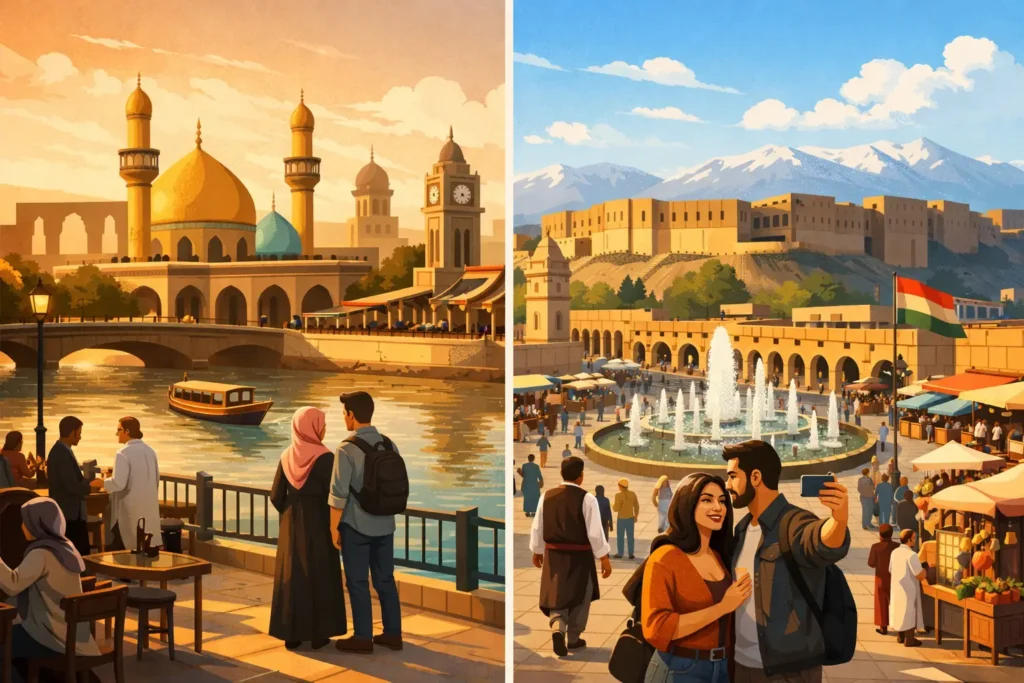
Baghdad and Erbil offer two compelling, very different entrances into Iraq. Choosing between them is not about finding a better city. It is about deciding what you want your first Iraqi journey to feel like: the pulse of a historic capital shaped by scholarship, faith and daily life, or a gentler introduction centred on an ancient citadel, mountain horizons and a more compact urban rhythm.
For many visitors, Baghdad or Erbil travel becomes the first practical question when flights, visas and accommodation plans begin to take shape. Both can be welcoming bases for international travellers, diaspora visitors, pilgrims, photographers and curious independent explorers. The right choice depends on your interests, confidence with city travel, available time and the regions you hope to visit afterwards.
Baghdad or Erbil travel: begin with the purpose
Baghdad is for travellers who want to encounter Iraq at its most layered and immediate. This is a city of major museums, literary memory, riverside evenings, traditional markets, important shrines and neighbourhoods where the everyday pace is part of the experience. It rewards patience and a willingness to look beyond a checklist. A morning may begin with Iraqi tea and end with a long conversation over grilled fish beside the Tigris.
Erbil is often a comfortable first base for travellers who prefer a more contained city experience or who want to explore the Kurdistan Region of Iraq. Its centre is anchored by the Erbil Citadel, one of the world’s longest continually inhabited settlement sites, while the surrounding city offers broad avenues, modern hotels, lively restaurants and easy access to landscapes beyond the urban centre.
Neither city should be reduced to a single identity. Baghdad has modern hospitality alongside its deep history, and Erbil is far more than a convenient gateway. The decision is simply about where your own interests will find the strongest connection.
Choose Baghdad for living history and cultural depth
Baghdad suits travellers drawn to the intellectual and human story of Iraq. The city carries the legacy of the Abbasid era and the House of Wisdom, but its appeal is not confined to the past. Its character is found in bookshops, family restaurants, palm-lined streets, neighbourhood cafés and the generosity extended to guests.
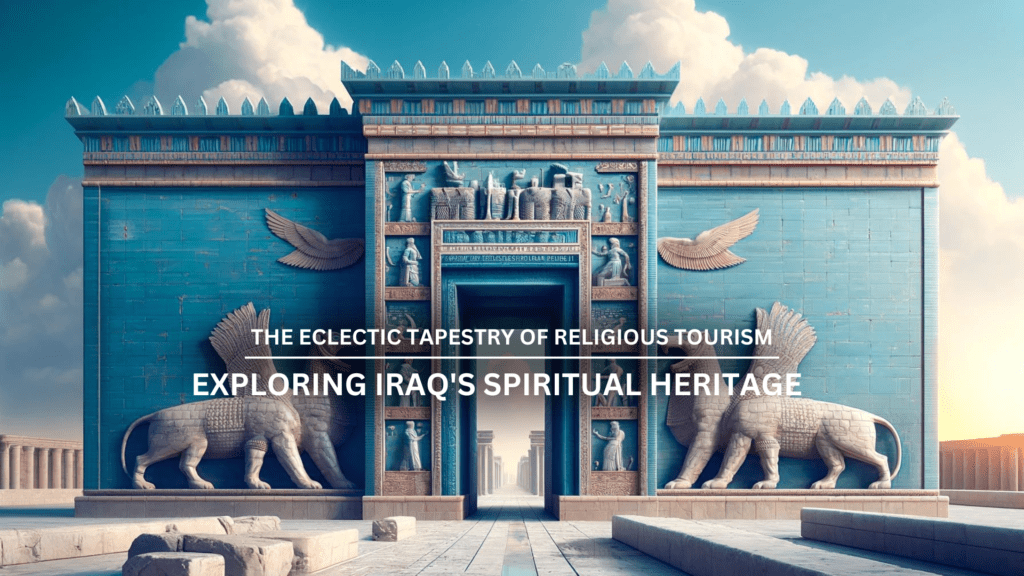
A visit to the Iraq Museum can add vital context to the civilisations that shaped Mesopotamia. The city’s historic areas, including the old market districts, invite a slower approach: notice the craftspeople, ask before photographing people, and leave space for the unplanned encounters that often become the most memorable part of a trip.
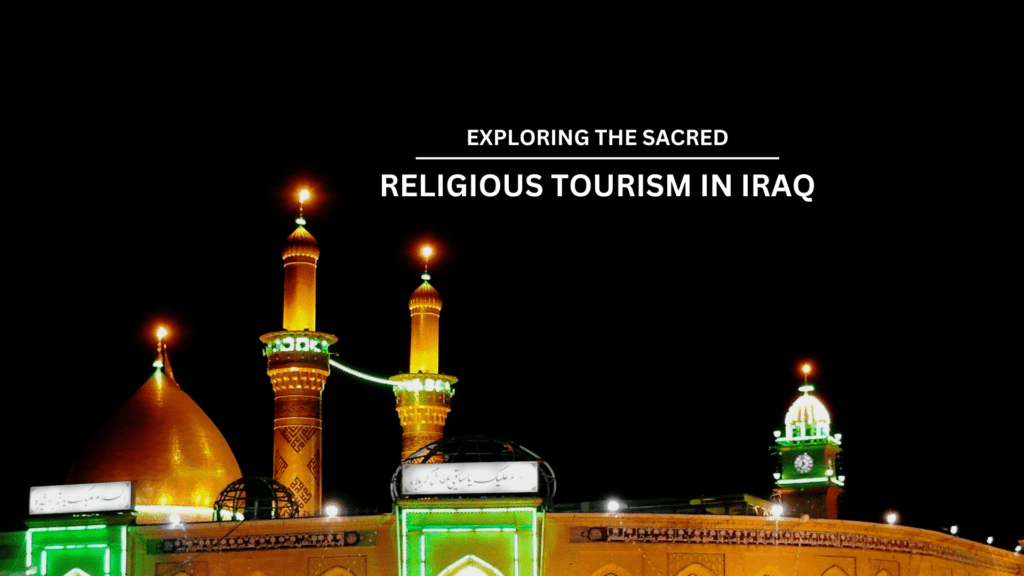
Baghdad also makes sense for religious visitors and those building an itinerary around Iraq’s sacred cities. Its position can make onward travel towards places such as Kadhimiya, Najaf, Karbala or Samarra more logical, depending on your route and current transport arrangements. Religious sites deserve modest dress, calm conduct and attention to local guidance, especially at busy visiting times.
The trade-off is scale. Baghdad is a large capital, and seeing it well takes planning. Distances can be longer than they appear on a map, traffic can shape the day, and first-time visitors will often find a trusted local driver, guide or hotel-arranged transport worthwhile. This is not a reason to avoid the city. It is a reason to give it enough time, ideally at least three full days, rather than treating it as a one-night stop.
Choose Erbil for an easier-paced first stay
Erbil offers a different kind of depth. Standing at the Citadel’s edge, looking towards the bazaars and the city that has grown around it, visitors can feel the continuity between ancient settlement and contemporary Kurdish life. The citadel, bazaar and nearby public spaces make an excellent first-day route, particularly for travellers who enjoy walking, food and local atmosphere without needing to cross a vast metropolis.
The food scene is a strong reason to linger. Kurdish and Iraqi cooking is generous, social and best enjoyed without rushing. Fresh bread, grilled meats, rice dishes, stews, tea and sweets are everyday pleasures, while family-run restaurants offer a warm introduction to the region’s hospitality. Ask staff what is popular that day rather than ordering only familiar dishes.
Erbil is also a practical base for trips towards places such as Shaqlawa, Rawanduz, Soran or the mountains, subject to season, road conditions and local advice. Spring and autumn are particularly appealing for travellers who want to combine city culture with time outdoors. Summer heat can be intense, so early starts and a realistic daily pace matter.
For a first visit to Iraq, Erbil can feel straightforward because many hotels and tourism-facing businesses are accustomed to international guests. English is commonly encountered in hotels and some restaurants, though a few Kurdish and Arabic greetings are always appreciated. That said, Erbil should not be treated as a simplified version of Iraq. It has its own culture, history, languages and rhythms, and respectful curiosity goes a long way.
Arrival, visas and moving between regions
Your entry arrangements should influence the Baghdad-or-Erbil decision before you book anything non-refundable. Visa rules, eligibility, entry points and permission to move between the Kurdistan Region and federal Iraq can change. Requirements may differ according to nationality, passport type and the airport or land border used.
Check the latest guidance from the relevant Iraqi authorities and your own government’s travel advice before departure. Carry printed and digital copies of your hotel booking, onward plans and any required approvals. If your itinerary includes both Baghdad and Erbil, confirm that your entry permission covers the route you intend to take rather than assuming a visa arrangement applies everywhere.
Flights into Erbil are often attractive for travellers beginning in the north, while Baghdad can be the natural arrival point for a capital-focused or pilgrimage-led itinerary. Domestic flights may save significant time between cities, while private road transfers offer greater flexibility for travellers who want stops along the way. Overland journeys can be rewarding, but they are best planned with current local information, a reliable driver and sufficient daylight.
Hotels: select a base that supports your plans
In Baghdad, location and dependable transport matter more than chasing a particular neighbourhood name. Choose a reputable hotel with clear guest support, reliable communication and easy arrangements for airport collection or drivers. A comfortable base helps you use your time well in a city where the most meaningful places may be spread across several districts.
In Erbil, staying near the Citadel, Ankawa or a well-connected central area can each work, depending on the atmosphere you prefer. The Citadel area places you close to heritage and the bazaar; Ankawa is known for its restaurants and mixed local character; newer hotel districts may offer more extensive facilities. Read recent guest feedback carefully and ask about transport, breakfast times and assistance with day trips before confirming.
Stay In Iraq can help travellers compare accommodation options as part of a wider city plan, not as an isolated room booking. The best hotel is the one that makes your particular itinerary feel calm and achievable.
A practical decision for different kinds of traveller
Choose Baghdad if your priority is national history, major cultural institutions, sacred heritage, riverfront life and the energy of a capital. It is especially rewarding for travellers who are comfortable with a fuller itinerary and want to understand Iraq through its centre of gravity.
Choose Erbil if you want a relaxed starting point, an ancient citadel at the heart of the city, access to the Kurdistan Region and the option to pair urban culture with scenic day trips. It can be particularly well suited to shorter stays, first-time visitors and travellers arriving with a desire to move at an unhurried pace.
If you have seven days or more, consider making room for both. Start where your flight and entry arrangements make the most sense, then let the contrast become part of the journey. Baghdad and Erbil do not compete for the traveller’s attention. Together, they reveal how broad, hospitable and deeply lived-in Iraq truly is.
Whichever city you choose, arrive with flexible plans, modest clothing for religious and traditional settings, patience for changing schedules and genuine interest in the people you meet. In Iraq, a warm welcome is rarely a scripted tourism moment. More often, it is the beginning of the story you will take home.