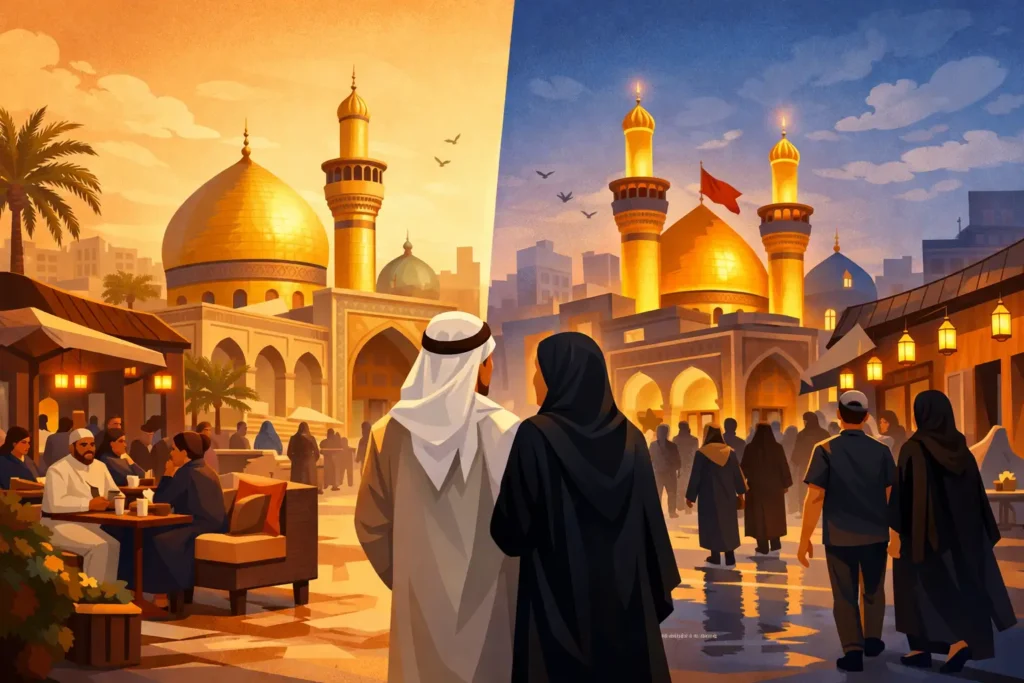
A Najaf vs Karbala pilgrimage is not a choice between two competing destinations. For many visitors, the cities form one deeply connected spiritual journey through Iraq, linked by devotion, memory and the warmth of the people who welcome pilgrims throughout the year. Yet each city has its own pace, sacred focus and practical considerations. Understanding those differences can help you plan a visit that feels meaningful rather than rushed.
For first-time travellers, Najaf often feels contemplative and scholarly, while Karbala feels intensely communal and emotionally expressive. Both are among the most important centres of Shia Islam, and both reward visitors who arrive with humility, curiosity and time to absorb more than the landmarks.
Najaf vs Karbala pilgrimage: the essential difference
Najaf is centred on the Shrine of Imam Ali ibn Abi Talib, revered by Shia Muslims as the first Imam. The shrine is the spiritual heart of the city, drawing pilgrims into a setting of prayer, reflection and profound reverence. Around it, Najaf carries the character of a historic centre of religious learning. Its seminaries, bookshops and scholarly traditions give the city a quieter intellectual presence alongside its devotional life.
Karbala is centred on the shrines of Imam Husayn ibn Ali and his half-brother, Al-Abbas ibn Ali. The city’s spiritual identity is inseparable from the events of Ashura and the enduring message of sacrifice, justice and steadfastness associated with Imam Husayn. The two major shrines face one another across a broad open area, creating a powerful focal point for pilgrims walking, praying and gathering together.
If your time is limited, choose according to the purpose of your visit. Najaf may suit travellers seeking a reflective encounter with scholarship, heritage and the shrine of Imam Ali. Karbala may feel more fitting for those drawn to the story and commemoration of Imam Husayn. If your schedule allows, visiting both offers the fuller context: the two cities are close enough to be planned as part of the same itinerary.
What a pilgrimage to Najaf feels like
Najaf’s old city unfolds through narrow lanes, small markets and an atmosphere shaped by centuries of learning and worship. The golden dome of the Imam Ali Shrine is visible from many approaches, but the experience is not only visual. Visitors often notice the rhythm of recitation, the quiet movement of worshippers and the care with which families mark a visit to one of Islam’s most revered places.
Beyond the shrine, Wadi Al-Salam is an important part of Najaf’s spiritual landscape. Regarded as one of the world’s largest cemeteries, it is a place of remembrance that should be approached with particular sensitivity. It is not a conventional sightseeing stop. For pilgrims and families, it holds deep religious and personal significance.
Najaf also gives visitors a chance to understand Iraq as a living centre of religious thought. Respectful conversations with local people, time spent observing the life around the shrine, and a simple meal in the old city can be as memorable as the formal pilgrimage itself. The city is often best experienced at an unhurried pace, especially outside the busiest religious dates.
Who may prefer Najaf
Najaf is particularly rewarding for visitors interested in Islamic history, religious scholarship and a more contemplative atmosphere. Diaspora travellers reconnecting with family heritage may also find it especially moving. That said, the city is not reserved for experts. A first-time visitor who observes local customs and asks for guidance politely can still feel welcomed into its spiritual rhythm.
What a pilgrimage to Karbala feels like
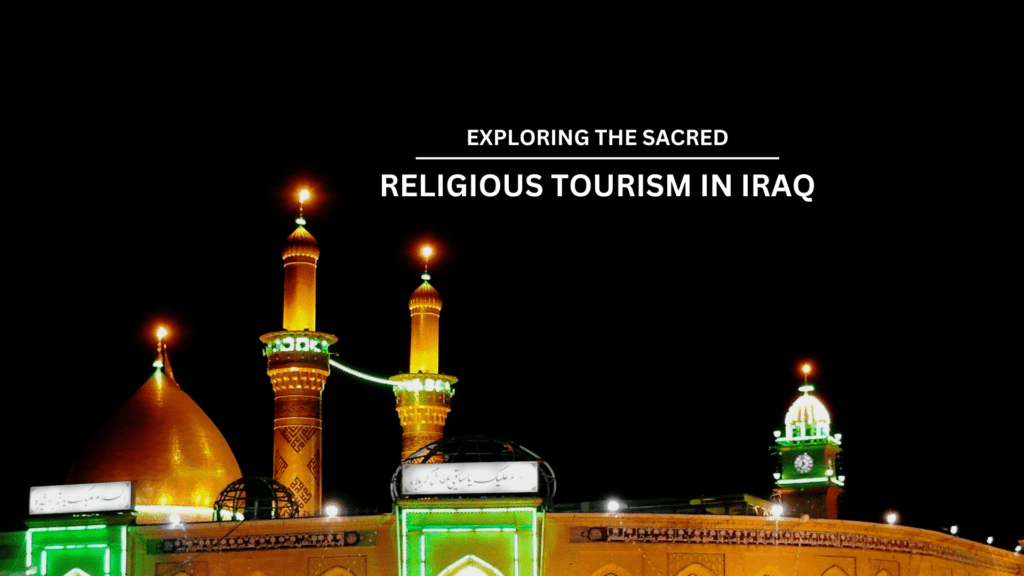
Karbala has an immediate emotional energy. The shrine precincts are places of prayer, mourning, gratitude and collective remembrance, with pilgrims arriving from across Iraq and far beyond. The approach to the shrines of Imam Husayn and Al-Abbas can feel especially powerful at night, when the illuminated domes and minarets draw people towards the centre of the city.
The experience is often more outwardly communal than in Najaf. Families travel together, groups share food and water, and volunteers offer practical help to visitors. Iraqi hospitality is particularly visible here: a pilgrim may be greeted with tea, a meal or an offer of assistance with no expectation beyond goodwill.
During Muharram, Safar and especially Arbaeen, Karbala becomes the destination for one of the world’s largest annual religious gatherings. For many, travelling on foot towards Karbala is itself an act of devotion. It can be extraordinary to witness, but it requires more preparation than a visit at quieter times. Accommodation fills early, roads and transport arrangements change, and the city becomes far more crowded than usual.
Who may prefer Karbala
Karbala may be the stronger choice for travellers whose pilgrimage is closely connected to Imam Husayn’s story and the rituals of remembrance surrounding Ashura and Arbaeen. It also suits visitors looking for a vivid expression of shared faith and service. For some people, however, the intensity of major pilgrimage periods can be demanding. Visiting outside peak dates may offer more space for reflection and a simpler experience of the shrines.
Visiting both cities in one journey
For most pilgrims, the answer to Najaf or Karbala is both. The road journey between the cities is relatively short, and a stay of at least two nights in each place allows time to settle in rather than treating either city as a day trip. Travellers arriving through Baghdad may include Najaf and Karbala in a wider route, while Najaf International Airport can be a practical arrival point for those focusing on the holy cities.
The order depends on your itinerary and personal intention. Some begin in Najaf, visiting Imam Ali before continuing to Karbala. Others plan around a specific religious occasion in Karbala and add Najaf before or afterwards. A local driver or trusted tour provider can make transfers easier, particularly if you are travelling with family, carrying luggage or visiting during a busy period.
Accommodation deserves the same attention as transport. Staying near the shrine precincts offers convenience for early and late visits, while properties slightly further out may provide a calmer base. Check walking distance carefully, especially if anyone in your group has limited mobility. During major observances, confirm arrangements well in advance and allow extra time for every journey.
Respectful etiquette at the shrines
The sacred spaces of Najaf and Karbala welcome large numbers of visitors, but they remain active places of worship rather than tourist attractions. Modest dress is essential. Women should bring a headscarf and wear loose, covering clothing; men should avoid shorts and sleeveless tops. At some entrances, women may be offered an abaya, and security procedures can vary by shrine and entrance.
Photography rules should always be checked locally. In some areas, cameras and phones may be restricted, particularly inside shrine spaces. Avoid photographing people at prayer, grieving families or volunteers without clear permission. Keep your voice low, follow the flow of worshippers and be patient in queues.
Non-Muslim visitors should be especially mindful that access practices can differ between areas and at particular times. Do not assume entry rules. Ask respectfully at your accommodation or through an authorised local guide before visiting, and be prepared to admire certain spaces from outside if requested. Courtesy is never a compromise in a pilgrimage setting; it is part of the journey.
Timing, comfort and practical preparation
The cooler months, broadly from late autumn to early spring, are generally more comfortable for walking between shrines and exploring the old cities. Summer heat can be intense, so plan outdoor movement around early morning and evening, drink water regularly and choose accommodation with reliable cooling.
For peak pilgrimage dates, prepare for large crowds with a small bag, comfortable walking shoes, a portable charger and a copy of essential documents stored securely. Keep clothing simple and practical. It is also wise to carry any personal medicines you need, as long days and altered routines can be tiring.
Travellers should check current entry requirements with official sources before booking, since visa procedures can change. Build flexibility into your schedule, particularly around religious calendars. The most meaningful moments in Najaf and Karbala are rarely the ones that can be timed precisely: a call to prayer, a shared cup of tea, or the sight of families arriving together at a shrine.
Whether you begin in Najaf, Karbala or travel between the two, give the journey enough room to be felt. Iraq’s holy cities offer more than sacred architecture. They invite visitors into a tradition of remembrance, learning and hospitality that remains deeply alive in the everyday life of the streets around them.