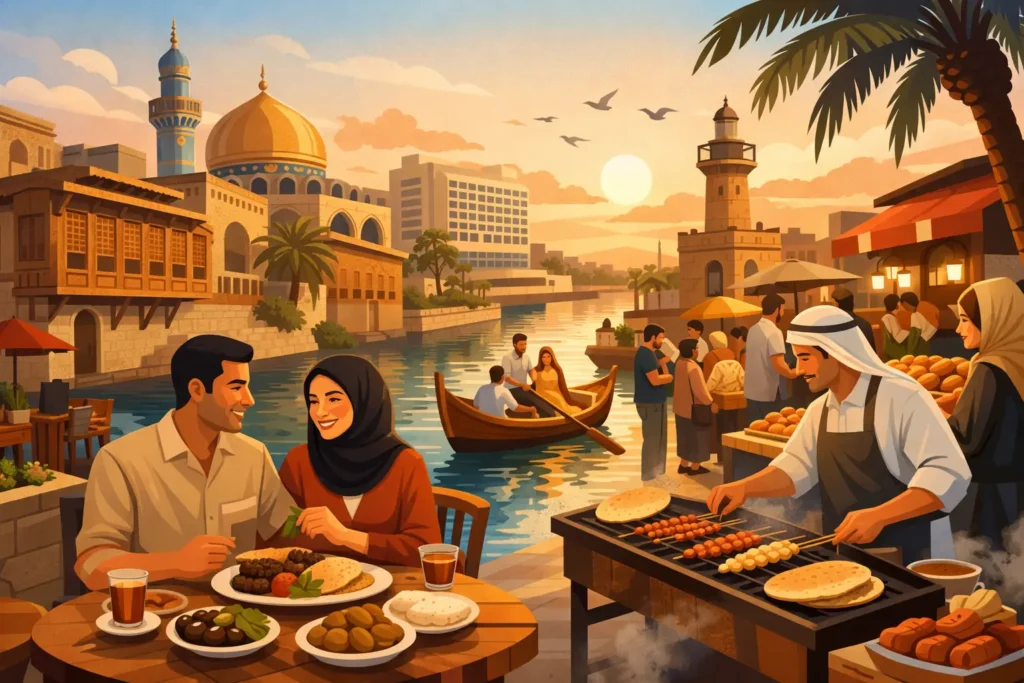
Basra is best understood at the table: in the sweetness of its dates, the fragrance of cardamom rice and the generous way a simple glass of tea can become an invitation to stay a little longer. This Basra food trail example is designed for travellers who want to experience the city through its everyday flavours rather than rush between landmarks. It is not a fixed restaurant checklist. It is a flexible, respectful day of eating that leaves room for conversation, appetite and local recommendation.
The city’s position near the Shatt al-Arab, its historic links to the Gulf and its date-growing heritage give Basra a distinct food identity. Some dishes are familiar across Iraq, but the ingredients, rice traditions and seafood culture make the experience feel unmistakably local.
A Basra food trail example: from breakfast to tea
Start early, particularly in warmer months, when the streets are calmer and breakfast places are full of regulars rather than visitors. A food trail works best when you eat modestly at each stop. Basra’s hospitality is sincere, and portions can be generous.
Morning: Iraqi bread, cheese and tea
Begin at a neighbourhood bakery or a busy breakfast café. Look for fresh samoon, the golden Iraqi sesame bread that is often served still warm from the oven. Pair it with local white cheese, eggs, honey or date syrup, depending on what is available. The pleasure is not only in the food but in the rhythm of the place: bread being carried out in paper, friends sharing breakfast and tea arriving in small glasses.
If you see geymar, a rich clotted cream usually enjoyed with honey or date syrup, it is worth trying. It can be filling, so sharing a portion is sensible if you plan to eat throughout the day. Ask for tea with little or no sugar if that is your preference, but be open to trying it the local way at least once. Iraqi chai is typically strong, sweet and deeply comforting.
This first stop also offers a gentle introduction to Basra’s social culture. People may ask where you are from or offer advice about what to see. Respond with warmth, avoid treating the exchange as a performance, and accept that a short breakfast can turn into an unhurried conversation.
Late morning: dates in the city that made them famous
Basra’s dates are not merely a souvenir. They are part of the city’s agricultural story and a daily ingredient in homes, cafés and sweet shops. Visit a market or specialist seller and ask what is in season. Dates differ in size, softness and sweetness, and the best choice depends on your taste.
Try a small selection rather than buying a large box immediately. Some varieties are soft and caramel-like, while others are firmer and less sweet. You may also find date syrup, tahini, nuts and sweets prepared with date paste. Dates travel well when properly packed, but check your home country’s food-import rules before taking any agricultural products abroad.
A market visit is also a useful reminder that food trails should adapt to the season. The range of fresh produce, fish and dates changes during the year. A guide or hotel receptionist may know which market is most active that day, especially if you are visiting for the first time.
Midday: fish, rice and the flavours of the river
For lunch, make fish the centre of the day. Basra has a close culinary relationship with the waterways around it, and fish is one of the most meaningful choices for visitors. Availability can vary according to season, supply and the individual restaurant, so it is better to ask what is fresh than arrive with one specific dish in mind.
Where possible, order grilled fish prepared simply, with lemon, herbs, onion and fresh bread. Masgouf, Iraq’s celebrated open-fire grilled fish, may appear on menus, although its preparation and fish choice can differ from place to place. It is usually best shared, and the slower cooking time is part of the occasion. If masgouf is not available, a locally grilled fish dish can be just as rewarding.
Alongside it, seek out muhammar, Basra’s beloved sweet rice. It is often flavoured with dates, sugar, cardamom or spices, creating a rich contrast with savoury fish. For travellers accustomed to rice being strictly savoury, the combination may be unexpected. Give it time. This balance of sweet, smoky and salty flavours is one of the clearest introductions to Basra’s culinary character.
A good lunch stop is not necessarily the most polished-looking venue. Look for places with a steady local custom, clear food preparation and staff willing to explain the menu. If you have dietary requirements, communicate them plainly. Vegetarian travellers can often find rice, beans, salads, breads and vegetable dishes, but should ask how stocks, sauces and cooking surfaces are prepared. Seafood allergies deserve particular care in fish-focused restaurants.
Build pauses into the route
The strongest food trails are not competitions to eat the most. Basra rewards a slower pace. After lunch, take time to walk through an old market area, sit by the Shatt al-Arab where appropriate, or return to your accommodation for a rest before the evening.
Travellers visiting during Ramadan should be especially mindful of local rhythms. Many people fast during daylight hours, and opening hours can change. Non-fasting visitors should eat and drink discreetly in public during the day, while the evening brings a particularly warm and lively atmosphere around shared meals. It is wise to confirm restaurant times locally rather than rely on a standard schedule.
Transport is another practical consideration. Basra is spread out, and heat can make long walking distances uncomfortable. Plan your trail around one or two areas, use a trusted local driver or taxi arrangement when needed, and keep water with you. Your hotel can often help identify dining areas that suit your location and schedule.
Afternoon: sweet pastries and a second tea
By late afternoon, look for a sweet shop or café serving kleicha, Iraq’s traditional filled biscuit. Fillings may include dates, walnuts or sweetened spices. It is a thoughtful choice for a small snack, especially with tea or Arabic coffee.
Do not expect every Basra café to be styled for visitors. Some may be simple, busy and primarily used by local families or groups of friends. That is often part of their appeal. Dress respectfully, ask before photographing people or food displays, and follow the lead of those around you on seating and service. A little courtesy goes further than a perfectly planned itinerary.
If you are travelling with children or prefer a quieter experience, an afternoon café may be easier than a packed evening restaurant. On the other hand, travellers looking for the energy of the city may enjoy an evening tea house, where conversation continues long after the meal itself.
Evening: a shared table, not a rushed reservation
For dinner, choose according to what lunch has not covered. If fish was the midday highlight, try a home-style Iraqi meal with grilled meat, chicken, rice, soups, salads and bread. If you have met a trusted local guide, host or resident who offers a recommendation, this can be the moment to follow it. Personal recommendations often lead to dishes that do not appear in travel articles or English-language menus.
Basra’s dining culture places real value on sharing. Order a few dishes for the table if you are travelling with companions, and allow the meal to unfold. It is common for hosts to encourage guests to eat more, but you can decline politely after thanking them. Showing appreciation matters more than finishing every plate.
End with tea, fruit or a final date-based sweet. This is the right moment to reflect on what the trail has revealed: not only recipes, but the way food connects Basra’s river heritage, agricultural landscape and welcoming social life.
How to make the experience respectful and practical
A Basra food trail is most enjoyable when curiosity is matched with common sense. Choose busy, well-kept eateries, eat cooked food served hot, and use bottled or reliably filtered water if you are unsure about local water arrangements. If a particular stall does not feel right for your needs, move on without judgement. There will be another good option nearby.
Learn a few useful phrases in Arabic, even if staff speak English. A greeting, a thank you and a question about a dish can change the tone of an interaction. It is also helpful to carry cash in small denominations, as smaller cafés and market sellers may not accept cards.
For first-time visitors, stay somewhere with staff who can help arrange transport and suggest current dining options. Stay In Iraq can be a useful starting point for finding accommodation while you shape a city break around food, heritage and time with local people.
Basra does not need to be consumed quickly to be appreciated. Follow the scent of fresh bread, accept the second glass of tea if you have time, and let one well-chosen meal lead naturally to the next.