A journey through Iraq can move from the riverfront of Basra to Baghdad’s historic streets, the shrine cities of Najaf and Karbala, or the mountain landscapes around Erbil in a matter of hours. Iraq transport is often more flexible and personal than visitors expect, but it rewards a little preparation. For most international travellers, the simplest approach is to combine domestic flights or a trusted driver for longer distances with taxis for getting around each city.
The country is increasingly accessible to visitors who come for heritage, pilgrimage, family connections and cultural discovery. Transport is not yet built around a single tourist booking system, so planning ahead matters. That is not a disadvantage: it often creates the space for the warmth, conversation and local knowledge that make travelling in Iraq so memorable.
Understanding Iraq Transport Before You Arrive
Road travel is the backbone of getting around Iraq. Major cities are connected by highways, and many journeys that look significant on a map are practical within a day. Baghdad is the natural hub for central Iraq, while Najaf is particularly useful for visitors focused on the holy cities. Basra serves the south, and Erbil is a convenient base for the Kurdistan Region.
Distances are only one part of the calculation. Traffic within and around large cities can affect timings, especially at busy periods, on Fridays, and during major religious occasions. Road checks and local procedures can also add time. Build flexibility into your itinerary rather than arranging a tightly packed sequence of museum visits, hotel check-ins and onward departures on the same day.
For first-time visitors, a local driver arranged through a reputable hotel, tour provider or trusted contact is usually the most comfortable choice. It offers door-to-door travel, removes the difficulty of negotiating routes in Arabic or Kurdish, and makes it easier to pause for food, prayer or a viewpoint along the way. Independent travellers who speak Arabic or Kurdish, or who already know the country, may be more comfortable using shared transport and taxis.
Domestic Flights: Best for Longer Iraq Journeys
Domestic flying can save substantial time when connecting Baghdad, Basra, Najaf and Erbil. It is particularly useful for travellers who have limited holiday time and want to experience both central or southern Iraq and the Kurdistan Region without spending long hours on the road.
Flight schedules can change, so treat the timetable shown when you book as a guide rather than a promise. Reconfirm your departure with the airline or booking provider, arrive with time to spare, and keep the address and phone number of your accommodation available. Hotels can often help confirm a transfer from the airport, which is reassuring after an evening arrival.
Flying is not always the best answer. If your itinerary centres on Baghdad, Babylon, Karbala and Najaf, road travel is often more rewarding and can be more efficient once airport waiting time is considered. The landscape also gives a better sense of Iraq’s scale: fertile river plains, date palms, roadside tea stalls and the changing rhythm of city life.
When to choose a driver instead
A private driver is especially valuable for multi-stop routes. The journey between Baghdad and the shrine cities, for example, is not simply a transfer. It can be shaped around arrival times, rest stops and the pace of your visit. For heritage travellers, the same applies when combining Baghdad with sites such as Babylon or the ancient cities of the south.
Agree the daily rate, hours, fuel expectations, route and any overnight arrangements before setting off. Clarify whether the driver speaks English if that is important to you. A driver with limited English can still be excellent, but knowing this in advance helps you prepare offline maps, hotel names in Arabic and a translation app.
Taxis and Ride-Hailing in Iraqi Cities
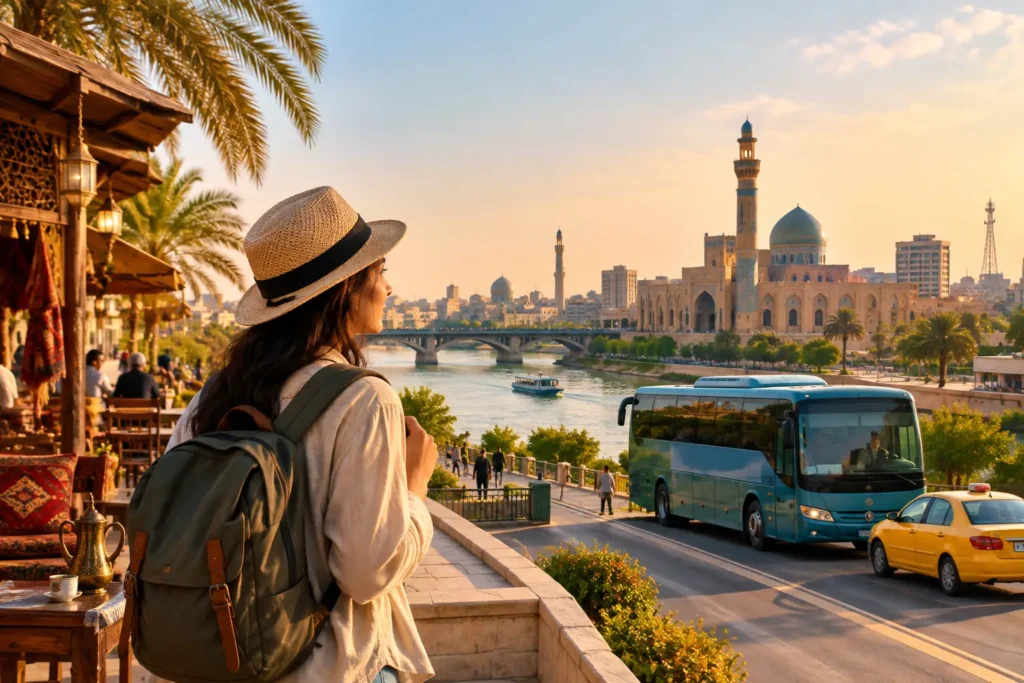
Taxis are a central part of everyday urban life and a useful option for visitors making short journeys. In Baghdad, Basra, Najaf, Karbala and Erbil, your hotel reception can usually arrange a car, recommend a trusted driver or advise a realistic fare. This is a good first step when you are unfamiliar with local neighbourhoods and traffic patterns.
Ride-hailing availability varies by city and can change over time. Where an app works reliably, it can make journey planning easier because the destination and fare are visible before you travel. In other situations, agreeing a price before getting into a taxi remains standard practice. Carry small-denomination Iraqi dinar, as drivers may not always have change for larger notes.
Use the name of a well-known hotel, shrine, market or landmark if your precise address is difficult to communicate. Screenshots of your destination in Arabic or Kurdish are useful, particularly for smaller guesthouses or residential streets. It is also sensible to ask your driver to wait when visiting a location where finding another taxi may be difficult.
Traffic can feel energetic to visitors accustomed to quieter roads. Give yourself extra time, wear a seat belt when one is available, and avoid assuming that a short distance means a quick journey. In Baghdad especially, scheduling appointments by neighbourhood rather than crossing the city repeatedly will make the day much more enjoyable.
Shared Taxis, Buses and Trains
Shared taxis and minibuses connect many cities and towns at a lower cost than hiring a private car. They are widely used by residents and can be a good choice for confident travellers with flexible schedules. They usually depart when enough passengers have gathered, which makes them less predictable for anyone catching a flight or travelling with substantial luggage.
Comfort varies. A shared taxi may be quick and direct, while a minibus can involve more stops and less space. Ask locally where vehicles leave from, how long the journey usually takes and whether you will need to change en route. Hotel staff and local hosts are often better sources than an online map for these practical details.
Rail has a more limited role in Iraq transport, but selected services can offer an appealing alternative, particularly on the Baghdad-Basra corridor when operating. Train travel is best treated as an experience-led option rather than the foundation of a tightly timed itinerary. Check current schedules and ticket arrangements close to your travel date, as services and departure times may vary.
Public buses within cities exist but are usually less straightforward for visitors who do not speak the local language. They can be useful for those travelling with Iraqi family or friends, but taxis are generally simpler for short urban journeys.
Planning Around Pilgrimage and Religious Dates
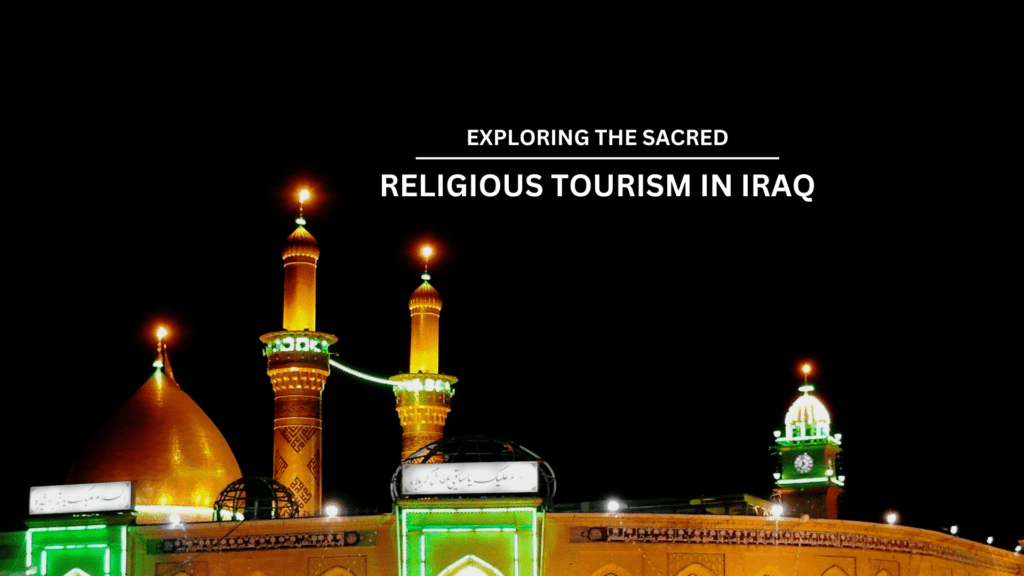
Najaf and Karbala welcome visitors throughout the year, and their spiritual atmosphere is one of Iraq’s most meaningful travel experiences. During major pilgrimage periods, however, roads, hotels and transport services can be exceptionally busy. This is a powerful time to witness community hospitality and devotion, but it requires more advance planning.
Book accommodation early, allow additional travel time and ask your hotel or host about access arrangements near the shrines. In some areas, walking may be quicker than driving. Dress respectfully, follow local guidance around sacred spaces, and remember that the experience is first and foremost religious for many of the people around you.
Travellers who prefer a quieter visit may choose dates outside the largest pilgrimage occasions. There is no single right choice: it depends on whether you are seeking the energy of a major gathering or more time for reflection and architectural detail.
Driving Yourself: Possible, but Not the Easiest First Option
Hiring a car and driving independently may appeal to experienced travellers, particularly those returning to Iraq or visiting with local companions. Yet it is rarely the easiest first option. Rental availability, insurance terms, documentation requirements and road conditions should be confirmed directly with a reputable provider before you commit to an itinerary.
Traffic conventions may differ from what British and European visitors are used to, and navigation apps do not always reflect local access arrangements or the most practical route. If you do drive, keep your passport, entry documents, driving paperwork and accommodation details accessible. Avoid night driving outside familiar urban routes where possible, and do not rely on a route without checking it locally.
For many visitors, the cost of a driver is balanced by convenience, local insight and the freedom to look out of the window rather than concentrate on the road.
A Better Way to Build Your Route
The most satisfying Iraq itinerary usually has fewer bases, not more. Spend several nights in Baghdad rather than treating it only as an arrival point. Pair Najaf and Karbala if religious heritage is central to your journey, or build a southern route around Basra and the marshlands with local arrangements. If you want to include Erbil, consider a domestic flight when time is limited.
Stay In Iraq can help travellers begin with accommodation and destination planning, then shape transport around where they genuinely want to spend time. The order matters: book the places that deserve your attention first, then choose the journeys that connect them sensibly.
Leave room for an unhurried tea, a recommendation from a hotel host, or a conversation with the person driving you between cities. In Iraq, the road is often not simply the space between experiences. It is where the country begins to introduce itself.