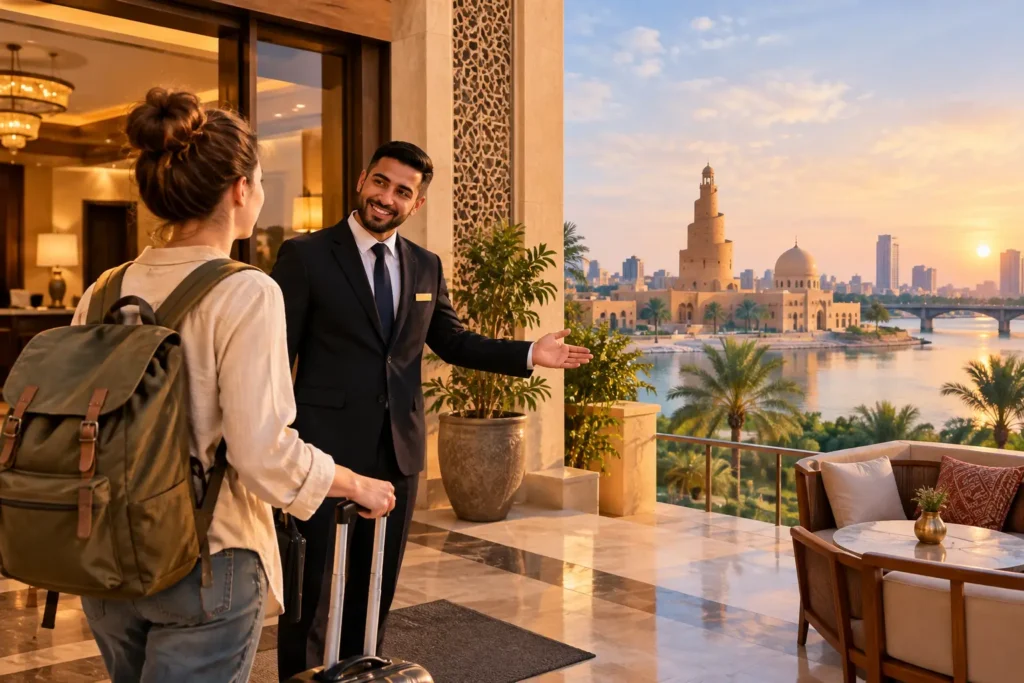
A late arrival in Baghdad, a dawn check-in before a visit to Najaf, or a few days in Erbil between heritage sites: these are ordinary travel moments, and hotels are often where an international visitor first encounters Iraqi hospitality. So, are Iraqi hotels foreigner friendly? In most established hotels, particularly in major cities and pilgrimage centres, the answer is yes. Guests are received with warmth, staff are accustomed to helping travellers find their way, and the practical needs of overseas visitors are increasingly well understood.
The more useful answer is that standards and services vary by city, property and travel purpose. Iraq is a large country with a fast-developing tourism sector, so choosing the right hotel and arriving prepared will make your stay far more comfortable.
Are Iraqi Hotels Foreigner Friendly in Practice?
Many hotels in Baghdad, Erbil, Najaf, Karbala, Basra and Sulaymaniyah regularly welcome international business travellers, diaspora visitors, pilgrims, aid and development professionals, and culturally curious tourists. Larger properties generally have English-speaking reception staff, international-style rooms, Wi-Fi, air conditioning and assistance with taxis or local arrangements.
The defining feature is often not a polished script or identical service model to a large European chain. It is personal attention. Staff may take extra time to explain the area, call a trusted driver, suggest a nearby restaurant, or help solve an unexpected problem. Iraqi hospitality is deeply rooted in generosity towards guests, and that spirit is often most memorable in the hotel setting.
That does not mean every property offers the same level of English, online booking reliability or facilities. A newer business hotel in Erbil may feel familiar to frequent international travellers, while a modest family-run hotel in a smaller city may offer simpler rooms and more limited communication in English. Neither is automatically a poor choice. The key is matching your expectations to the property, rather than assuming a star rating tells the full story.
What to Expect at Check-In
Foreign guests should expect a more formal check-in process than they may be used to elsewhere. Reception staff will normally ask for your passport, visa or entry documentation, and may take copies or record details for local registration procedures. This is standard practice and a reason to keep your passport, entry stamp and booking confirmation easy to access.
If you have arrived through a tour operator, host organisation, religious group or local contact, keep their phone number available. Hotels can often communicate directly with them if a clarification is needed. It is sensible to confirm the address and booking name in advance, especially if you are arriving late or your reservation was made through a third party.
At a well-established hotel, check-in is usually straightforward. Still, patience goes a long way. Procedures can take longer at busy times, particularly during major religious occasions when Najaf and Karbala receive high volumes of visitors. A calm, courteous approach will be met in kind.
Language and communication
Arabic and Kurdish are the principal languages you will encounter, depending on the region. English is common in many higher-end hotels and business-facing properties, especially at reception, but it is not universal. In religious cities and smaller towns, staff may have more limited English.
A translation app, the hotel address saved in both English and Arabic where possible, and a few polite phrases can make a genuine difference. You do not need to speak Arabic to travel successfully in Iraq, but showing willingness to communicate respectfully is appreciated. Hotel staff are often happy to write down destinations for drivers or make a call on your behalf.
Facilities: What Is Common and What May Vary
Hotels aimed at international guests commonly provide private bathrooms, climate control, bottled water, lifts in larger buildings, room service or an on-site restaurant, and round-the-clock reception. Breakfast is frequently included and may range from a simple spread of bread, cheese, eggs, fruit and tea to a generous Iraqi breakfast with local dishes.
Wi-Fi deserves a realistic expectation. It is widely available in city hotels, but speed and consistency can differ between properties and even between rooms. If you need dependable connectivity for work, ask directly before booking rather than relying only on a general Wi-Fi claim. The same applies to laundry, airport transfers, card payments and a generator or backup power supply.
International card acceptance is growing but should not be presumed everywhere. Carry sufficient Iraqi dinar for small purchases, tips and taxis, while confirming the hotel’s payment terms before arrival. Some properties may prefer cash, bank transfer or a payment method arranged in advance. This is a practical detail, not a barrier, but it is best settled before you reach reception.
Choosing the Right Hotel for Your Trip
Your itinerary should shape your accommodation choice. A visitor focused on museums, markets and the old quarters of Baghdad may value central location and a hotel that can arrange reliable transport. A pilgrim visiting the holy shrines may prefer to stay within easy reach of the sacred sites, especially during busy periods. For travellers exploring the Kurdistan Region, Erbil and Sulaymaniyah offer a broad choice of modern hotels alongside local guesthouses.
Before reserving, look beyond photographs. Check the location, ask whether the property has staff who can assist in English, and confirm whether your rate includes breakfast, transfers or taxes. If accessibility matters, ask about lifts, step-free entry and bathroom layouts, as standards vary. Solo travellers may also appreciate a hotel that can arrange a known driver or advise on practical local transport.
For a first visit, booking a recognised hotel or a well-reviewed property through a trusted Iraq-focused platform can reduce uncertainty. Stay In Iraq is designed to make this stage easier by bringing accommodation discovery together with destination guidance, helping travellers choose stays that suit both their route and their travel style.
City differences matter
Baghdad has a range of business-oriented hotels, from established larger properties to more modest options. Expect the greatest concentration of services designed around international guests, though traffic and journey times make location worth considering carefully.
Erbil is often a comfortable starting point for first-time visitors, with a developed hospitality scene and many hotels familiar with international clientele. Najaf and Karbala are shaped by religious tourism. Their hotels can be exceptionally welcoming, but availability changes dramatically around pilgrimage dates, and booking well ahead is essential.
Basra offers accommodation for business and regional visitors, while smaller cities may have fewer choices and a more local style of service. In every case, advance confirmation is preferable to arriving without a booking, especially outside the largest urban centres.
Customs That Help You Feel at Home
Iraqi hotels are welcoming, but visitors should approach shared spaces with cultural awareness. Dress neatly and modestly in lobbies, restaurants and public areas, particularly in religious cities. Alcohol policies differ by property and location, so travellers should not assume it will be available or appropriate to request. During Ramadan, hotel dining arrangements may also change.
Courtesy towards staff matters. Greetings, a warm thank you and respect for local rhythms create the kind of exchange that Iraq is known for. If you are unsure about a custom, simply ask. Hotel teams are used to questions from overseas guests and will generally guide you with kindness.
Photography should also be approached thoughtfully. Ask before photographing staff, guests or interior spaces, and avoid treating religious visitors or private family moments as attractions. These small choices allow a stay to feel not only easier, but more connected to the place around you.
A Few Practical Preparations Before Arrival
Bring printed or saved copies of your hotel confirmation, passport details and any relevant travel paperwork. Tell the hotel your expected arrival time, particularly for late-night arrivals. Confirm payment, transfer arrangements and whether the hotel can help with onward transport before you travel.
It is also wise to have a local contact method once you arrive, whether that is a local SIM, roaming plan or a reachable host. This makes it easier for a driver and hotel reception to coordinate, and gives you more freedom to explore with confidence.
Foreign visitors are not an afterthought in Iraq’s hospitality sector. They are guests, and the best hotels understand that a comfortable room is only part of the welcome. Choose carefully, communicate clearly and arrive with curiosity: you may find that the conversation at reception becomes one of the first warm memories of your journey.