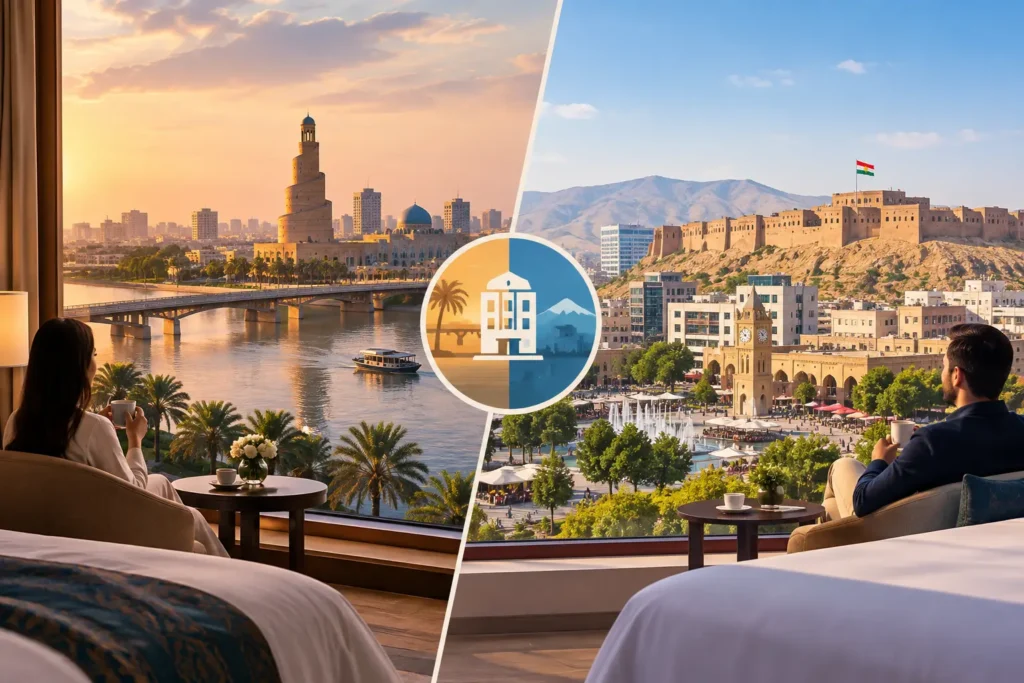
A hotel address shapes an Iraq trip more than many first-time visitors expect. In the comparison of Baghdad versus Erbil hotel areas, the choice is not simply between two cities or two price points. It is a choice between Baghdad’s immense, lived-in capital energy and Erbil’s more spread-out, contemporary rhythm – and between being close to the places you plan to visit and spending valuable time in traffic.
Both cities offer welcoming hotels, capable staff and generous Iraqi hospitality. Yet their neighbourhoods serve different kinds of traveller. A heritage-focused visitor may value mornings near Baghdad’s historic heart; a business traveller may prefer easy access to meetings in Erbil’s newer districts. The best base depends on your purpose, your pace and how independently you intend to move around.
Baghdad versus Erbil hotel areas: the essential difference
Baghdad is broad, busy and deeply layered. Its hotel districts tend to be chosen for practical connections: proximity to business appointments, major roads, the airport route, family homes, religious sites or historic neighbourhoods. Distances that look modest on a map can take time, so a well-placed hotel is especially valuable.
Erbil is also expansive, but its visitor-friendly areas are often easier to understand at first glance. Modern hotels, restaurants, cafés, shopping and business venues cluster around several well-known corridors, while the Citadel and older bazaar quarter offer a distinct historical centre. It can feel more straightforward to settle into a district and explore from there, though taxis remain useful for most journeys.
Neither city has one universally “best” hotel area. Choose Baghdad for the density of national life, heritage and human encounters; choose Erbil for a polished regional base, a compact heritage core and access to Kurdistan’s wider landscapes. Many well-planned Iraq itineraries benefit from experiencing both.
Where to stay in Baghdad
Karrada for cafés, city life and central access
Karrada is one of Baghdad’s most recognisable accommodation areas for visitors who want to feel connected to the capital’s daily life. It is known for restaurants, cafés, shops and an active local atmosphere, making it a practical choice for diaspora visitors, independent travellers and those with meetings across central Baghdad.
The appeal is not that every landmark is within walking distance – Baghdad is too large for that promise – but that Karrada gives you a useful middle ground. You can arrange a driver or taxi to cultural sites, government and business districts, and family visits without feeling removed from the city after returning to the hotel.
Choose Karrada if you enjoy being near dining options and want an energetic evening environment centred on food and conversation. Ask your hotel about the most convenient pick-up point and whether it can arrange a trusted driver, particularly if you have several appointments in one day.
Jadriya for universities, business and a calmer base
Jadriya, on the eastern side of the Tigris, suits travellers whose plans involve universities, professional meetings or quieter residential surroundings. The district has a more spacious character than some central areas and offers access to parts of the city associated with institutions, embassies and business activity.
For a visitor balancing work with cultural exploration, Jadriya can be a sensible compromise. It may feel less immediately geared towards sightseeing than Karrada, but it can provide a comfortable base when your schedule is not built around wandering from attraction to attraction.
This is also a good example of why hotel selection should follow the itinerary, not just star rating. A higher-category hotel on the wrong side of your meetings can add hours to the week. Before booking, identify the addresses you must reach and ask the property for a realistic estimate of journey times at the hours you will travel.
Al-Mansour for western Baghdad appointments
Al-Mansour is often considered by travellers with business, family or administrative reasons to be in western Baghdad. It has commercial streets, established services and a different geographical advantage from Karrada or Jadriya. If much of your programme lies west of the river, staying here can reduce unnecessary cross-city journeys.
It is less about ticking off sights from the doorstep and more about making a demanding city schedule manageable. Visitors who are travelling with relatives, arranging a longer stay or attending a series of meetings may appreciate this practical positioning.
Central and heritage-oriented stays
Travellers drawn to Baghdad’s literary, artistic and historical character may be tempted by accommodation nearer central districts and the routes towards the old city, Mutanabbi Street and the Iraq Museum area. The rewards are real: Baghdad’s history is not confined to a museum label. It lives in bookshops, riverside views, old commercial streets and the conversations that unfold over tea.
However, central positioning requires more planning than it might in a compact European city. Hotel standards and services vary, while local access arrangements can change. Treat the hotel as a partner in your trip: confirm transport, arrival procedures, breakfast times and assistance with arranging visits before you commit.
Where to stay in Erbil
Ankawa for dining, longer stays and easy-going evenings
Ankawa is a popular Erbil base for international visitors, business travellers and families. Its broad selection of restaurants, cafés, shops and hotels gives it a sociable, convenient feel, while its established community character makes it particularly comfortable for visitors settling in for several nights.
It is not beside the Citadel, but that is often an acceptable trade-off. Ankawa is well positioned for the airport area, many corporate offices and the city’s modern amenities. It works especially well for travellers who want choice after a day of meetings or touring and prefer a hotel district where dinner is easy to arrange nearby.
Visitors should still approach the area with cultural awareness. Erbil is hospitable and relaxed, but respectful dress, considerate behaviour and an interest in local customs will always make interactions warmer.
Gulan Street and the 100 Metre Road for modern Erbil
Around Gulan Street and the 100 Metre Road, travellers will find many of Erbil’s larger, contemporary hotels and a convenient connection to business districts, shopping centres and key road routes. This is often the most efficient choice for conferences, corporate visits, short stays and travellers continuing by road to other destinations in the Kurdistan Region.
The trade-off is atmosphere. These areas are designed around movement and modern development rather than the intimate texture of the old bazaar. If your ideal evening is a stroll through heritage streets, plan short taxi journeys to the Citadel and central market. If your priority is a reliable business base with straightforward transfers, the location is hard to beat.
Near the Citadel and city centre for heritage at the doorstep
Staying near Erbil Citadel and the bazaar area offers a more immediate connection to one of the world’s oldest continuously inhabited urban sites. Early mornings and late afternoons are especially rewarding here, when the city’s changing light brings out the warm tones of the Citadel walls and nearby streets begin to fill with everyday commerce.
This is the strongest choice for photographers, cultural travellers and visitors with only a short time in Erbil. You can spend more of your day around the bazaar, tea houses, museums and public spaces rather than repeatedly crossing the city. Accommodation options may be less uniform than on the major modern roads, so read current property details carefully and decide which facilities matter most to you.
Sami Abdulrahman Park and the airport side
Hotels around Sami Abdulrahman Park and the airport-side districts appeal to travellers who value open views, modern infrastructure and quick access for early flights. They are often convenient for high-end business stays or families seeking larger properties and a quieter setting than the busiest central streets.
The compromise is that Erbil’s historic core is a taxi ride away. For some travellers, particularly those staying one night before a flight, that is a sensible exchange. For others, it can make the city feel more like a hotel district than a cultural destination.
How to choose the right area for your trip
Start with the reason you are visiting. For Baghdad’s museums, book culture and central-city encounters, Karrada or a carefully selected central stay can make sense. For meetings in the west, Al-Mansour may save time; for institutional or professional commitments east of the Tigris, consider Jadriya.
In Erbil, choose Ankawa for a relaxed base with plentiful dining, Gulan Street or the 100 Metre Road for modern business convenience, and the Citadel area when heritage is the heart of the journey. The airport and park districts work well when comfort, road connections or a flight schedule take priority.
Then consider transport honestly. Walking is enjoyable in specific pockets of both cities, but it is not the default way to cover a full itinerary. Arrange airport collection when possible, keep the hotel’s address and contact number available, and use a hotel-recommended driver or established taxi arrangement for longer days. Check current official travel advice and speak to your accommodation directly about arrival logistics before departure.
Finally, do not judge a hotel only by its lobby photographs. Ask whether breakfast is included, whether English-speaking assistance is available when needed, how payment is handled, and whether the team can help organise local transport. In Iraq, thoughtful service and local knowledge can be as valuable as a rooftop view.
Baghdad and Erbil reward different travel instincts, but both offer something more lasting than a convenient bed for the night: a chance to meet Iraq through its neighbourhoods, its hospitality and the everyday life unfolding just beyond the hotel door.