The first time you hold Iraqi dinars, the number of zeroes can feel surprising. A modest lunch, a taxi ride or a bag of fresh dates may be priced in thousands rather than tens. This Iraqi currency exchange guide helps make that adjustment simple, so money becomes one less thing to think about while you focus on Iraq’s historic cities, sacred sites and generous everyday hospitality.
Iraqi Currency Exchange Guide: Know the Basics
Iraq’s national currency is the Iraqi dinar, written as IQD. Notes are commonly used in denominations including 250, 500, 1,000, 5,000, 10,000, 25,000 and 50,000 dinars. Coins and small subdivisions exist in principle, but they are not part of most visitors’ day-to-day spending.
The key point is that the dinar is a cash-led currency for travellers. Even where electronic payments are becoming more common, cash remains the most dependable way to pay for taxis, market purchases, local cafés, smaller restaurants and many independent businesses. Carrying a sensible amount of dinars gives you flexibility and makes everyday interactions easier.
Exchange rates move, sometimes noticeably, so avoid relying on an old social media post or a figure quoted months before your trip. Before you travel, check the current market rate using a reputable currency source. Treat it as a reference point, not a promise of the exact amount you will receive at a counter. Exchange providers will apply their own rate, and the gap can vary by city, note condition and transaction size.
Should You Bring US Dollars or Other Currencies?
For most international visitors, US dollars are the easiest foreign currency to exchange in Iraq. Dollars are widely recognised by exchange offices, and prices for some larger travel services may occasionally be discussed in US dollars before payment is made in dinars. British pounds and euros may be exchangeable in major cities, but acceptance and rates can be less consistent.
Bring clean, undamaged US dollar notes if possible, particularly newer series notes. Exchange offices can be selective about notes with tears, heavy creases, writing, stains or older designs. This is a practical reality, not a reflection on the value of your money. Keeping notes flat in a secure travel wallet can prevent an awkward refusal when you need cash.
It is sensible not to exchange every dollar at once. Start with enough dinars for immediate transport, meals and small purchases, then exchange more once you understand your plans and spending pace. This also means you are less likely to finish your trip with a large amount of unused dinars, which can be harder to exchange outside Iraq.
Where to Exchange Money in Iraq
Licensed exchange offices are the usual choice for visitors and are common in cities such as Baghdad, Erbil, Najaf, Karbala and Basra. They may be concentrated in commercial districts, near major markets or around busy transport areas. Ask your hotel reception or host where travellers commonly exchange money nearby. A good local recommendation can save time, especially after arrival.
Airport exchange desks can be useful when you need a small amount of cash immediately, but convenience does not always mean the best rate. If your onward transport is arranged and you do not need cash at once, you may prefer to exchange in the city. On the other hand, arriving late at night or travelling independently may make an airport exchange worthwhile for peace of mind. The right choice depends on your arrival plan.
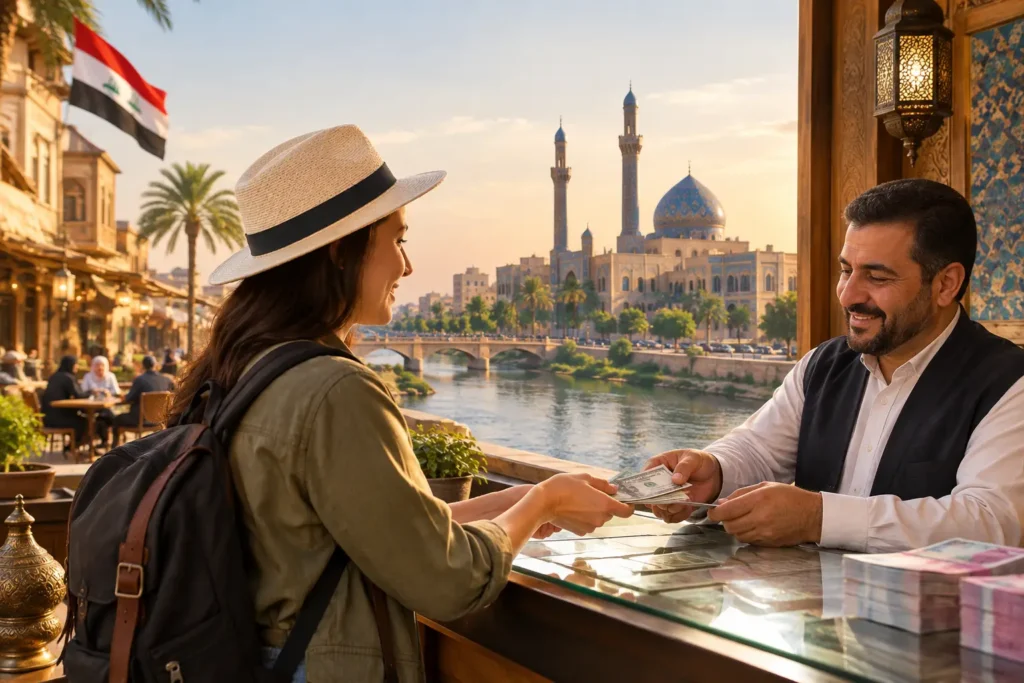
Before handing over any money, ask clearly how many dinars you will receive. Confirm the figure, count the notes before leaving the counter and keep your receipt where one is provided. A calculator is useful, but you do not need to turn the exchange into a tense negotiation. A polite, direct question and a careful count are normal travel habits.
Avoid informal street exchanges, however tempting a quoted rate may sound. Use established, licensed providers and choose locations that feel professional and busy. This reduces the risk of misunderstandings, poor-quality notes or avoidable problems.
A simple way to calculate prices
Because the dinar’s denominations are high, it helps to learn a quick mental conversion before you begin exploring. Choose one current reference rate and use a rough rule for the day rather than trying to calculate every purchase precisely. For example, you might work out what 10,000 IQD and 25,000 IQD equal in your home currency, then use those amounts as anchors.
You will soon develop a sense of value through ordinary experiences: a short journey, a plate of food, a museum ticket or a bottle of water. Local prices can differ between neighbourhoods and cities, as they do anywhere. Let the exchange rate guide you, but leave room for the pleasure of travelling without converting every small purchase back into pounds.
Cash, Cards and Cash Machines
International bank cards are increasingly accepted at some hotels, newer restaurants, shopping centres and larger businesses, especially in bigger cities. Yet card acceptance is not universal, and a terminal may be unavailable even at a place that normally takes cards. Cash should therefore remain your main payment method throughout the trip.
Cash machines can be useful, but do not build a whole itinerary around finding one or assume that every machine will accept every foreign card. Availability, withdrawal limits, network compatibility and bank charges vary. Tell your bank that you will be travelling to Iraq before departure, check its overseas withdrawal policy and carry a second payment card separately from your main wallet if you can.
For accommodation, clarify the accepted payment methods before you arrive. Some properties may accept a card, while others may prefer cash or a bank transfer arranged in advance. This is especially relevant for independent stays, regional travel and visits during busy pilgrimage periods, when planning ahead makes the journey more comfortable.
Carrying Dinars Safely and Respectfully
There is no need to carry all your cash in one place. Keep a day’s spending money accessible, with the remainder divided between a secure wallet, money belt or hotel safe where available. Larger notes are useful for hotel bills and longer taxi journeys, while a supply of 1,000 and 5,000 dinar notes makes small purchases easier.
When you receive change, take a moment to check it without fuss. It is also courteous to have smaller notes when buying inexpensive items. In a busy bakery, tea shop or market stall, handing over a very large note for a tiny purchase can make change difficult.
Bargaining is common in some souqs and with certain informal services, but it should be warm and good-humoured rather than confrontational. Fixed-price shops, restaurants and many visitor sites will not expect negotiation. In either case, a few words of Arabic or Kurdish, a smile and patience go a long way. The financial exchange is often only one small part of a human encounter that may include tea, conversation and a welcome you remember long after the receipt is gone.
Plan for Religious Visits and Regional Travel
Travellers visiting Najaf, Karbala, Kadhimiya or Samarra should carry enough cash for local transport, meals, small donations where appropriate and incidental purchases. During major religious occasions, visitor numbers rise and cash services may be busier than usual. Exchange money before travelling to the shrine area rather than waiting until you are pressed for time.
If your itinerary includes the Kurdistan Region of Iraq as well as federal Iraq, the Iraqi dinar remains the standard currency, but payment practices can differ by business and city. Erbil and Sulaymaniyah may offer more card-friendly options in some settings, yet cash still gives you the greatest freedom. Do not assume that a payment arrangement in one city will apply everywhere.
Keep any currency declaration requirements in mind if you are carrying a substantial amount of cash across borders. Rules can change, so check the latest official guidance before departure and retain documentation for larger exchanges. This is particularly useful if you need to explain the source of funds when leaving the country.
Before You Leave Iraq
Try to spend most of your remaining dinars before reaching the airport. Buy gifts, enjoy a final meal, pay your driver or keep a small amount for unexpected transport costs. Exchanging dinars back into foreign currency may be possible in some places, but it is not something to leave until the final minutes of your journey.
Money in Iraq is practical, but it can also bring you closer to the rhythm of the country: the early-morning bread shop, the family-run café, the bookseller, the driver with a recommendation for a lesser-known landmark. Carry cash wisely, exchange it carefully, and leave room in the day for the conversations that make travelling in Iraq feel so personal.