A walk through Iraq’s ancient cities is not a journey into a distant, silent past. It is a chance to stand where writing, urban life, law, worship and trade took forms that still shape the world. The best Iraqi archaeological sites reward curious travellers with far more than monumental ruins: they reveal the depth, ingenuity and continuity of a country whose heritage remains deeply woven into everyday life.
For first-time visitors, the scale can be surprising. Iraq is not home to one great archaeological attraction, but to entire landscapes of civilisation. A thoughtful itinerary needs time, local knowledge and flexibility, but the experience is extraordinary.
The best Iraqi archaeological sites for heritage travellers
Babylon
Babylon is the essential starting point for many visitors, and for good reason. Near Hillah in Babil Governorate, its name has carried almost mythical weight for centuries. Yet being there makes it feel real: a vast city of baked brick, ceremonial routes and royal ambition set against the Iraqi plain.
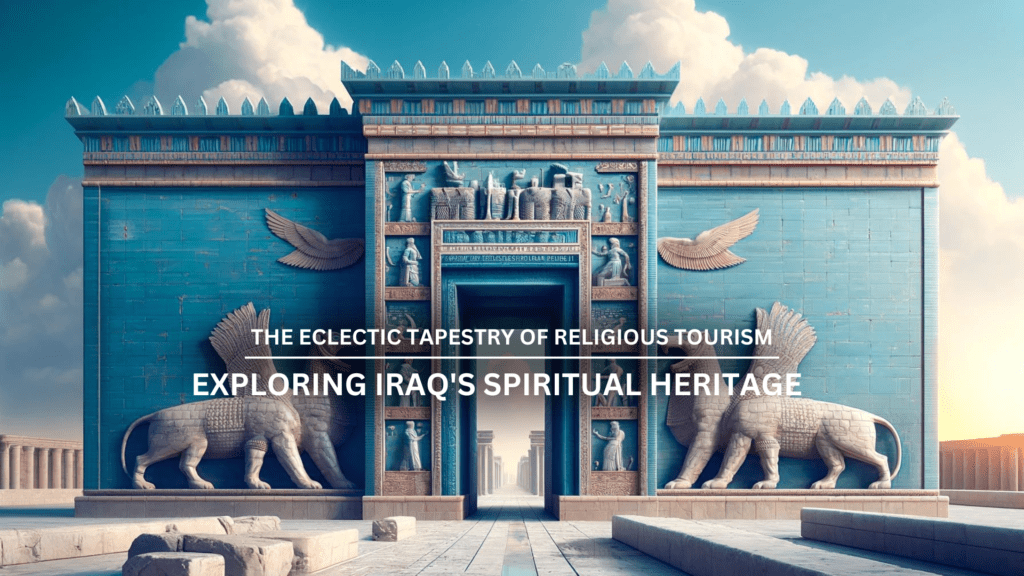
Look for the processional way, the reconstructed Ishtar Gate area and the remains associated with Nebuchadnezzar II, whose building projects made Babylon one of the ancient world’s great capitals. Some reconstructed elements prompt debate among archaeologists, but they also help non-specialists understand the city’s former scale. Visit with a knowledgeable guide and allow time to distinguish between original fabric, conservation work and later reconstructions.
Babylon is relatively straightforward to include from Baghdad or Karbala, making it an excellent choice for travellers who want a major archaeological experience without a long overland journey.
Ur
In southern Iraq, near Nasiriyah, Ur delivers one of the country’s most memorable archaeological views: its immense ziggurat rising sharply above the flat landscape. This was a Sumerian city of wealth, learning and religious importance, closely connected with the worship of the moon god Nanna.
The ziggurat is the visual centrepiece, but Ur deserves a slower visit. Its excavated residential quarters offer a rare sense of how an ancient city was organised, while the Royal Cemetery revealed extraordinary objects that transformed understanding of early Mesopotamian society. Travellers interested in biblical and Abrahamic heritage may also find Ur especially meaningful, though the site’s importance is much broader than any one tradition.
The open setting can be intensely hot from late spring to early autumn. Morning visits, water, sun protection and sturdy shoes make a substantial difference.
Erbil Citadel
At the heart of Erbil, the Citadel rises above the modern city as one of the world’s longest continuously inhabited settlement mounds. Its distinctive oval form is immediately recognisable, but its real appeal lies in the way history meets present-day Kurdistan.
The Citadel’s lanes, restored houses and cultural spaces show how generations built upon the same elevated ground. It is less a single-period ruin than a layered urban record, shaped by ancient settlement and later Islamic-era life. From its edge, visitors can look towards the bustling bazaar below, then return for tea, Kurdish cuisine or an evening walk in the city centre.
Erbil is often a practical first stop for independent travellers because it has a broad range of accommodation and visitor services. The Citadel pairs particularly well with museums, local markets and a longer northern Iraq itinerary.
Hatra
Hatra has a presence unlike any other Iraqi site. Located in the desert landscape south-west of Mosul, this former caravan city is known for its monumental temples, towering walls and remarkable fusion of Mesopotamian, Parthian, Greek and Roman artistic influences.
Its sandstone architecture catches the changing light beautifully, making Hatra a compelling destination for photographers as well as history travellers. The monumental temple complex conveys the confidence of a city that prospered through trade, faith and strategic connections across the region.
Access arrangements can vary, and Hatra is best visited with an experienced local operator who can confirm current permissions, routes and site conditions. That planning is worthwhile: Hatra feels remote, but it is one of Iraq’s most visually powerful heritage experiences.
Ashur
Ashur, also known as Qal’at Sherqat, was the first capital of the Assyrian Empire. Set beside the Tigris, it holds the remains of temples, palaces and fortifications from a civilisation that became one of the ancient Near East’s most influential powers.
This is a site for travellers who enjoy reading the landscape. Ashur does not present every story with dramatic reconstruction; its significance emerges through the setting, the city plan and the scale of what remains. A guide can bring its royal inscriptions, religious institutions and political history into focus.
Because it sits beyond Iraq’s main tourism circuits, Ashur generally requires more advance organisation than Babylon or Erbil. It is a rewarding addition for travellers building a specialist archaeological route through the north.
Nimrud
South-east of Mosul, Nimrud was another major Assyrian capital, renowned for the palace of Ashurnasirpal II and the monumental winged bull figures that once guarded its gateways. Its ancient name, Kalhu, belongs to a city that played a central role in Assyrian administration, art and royal ceremony.
Nimrud is also an important reminder that archaeology is an ongoing process of conservation, research and careful stewardship. Visitor arrangements may be limited or change as preservation work continues. Do not treat a visit as a quick photo stop: go with approved local guidance, respect restricted areas and ask what current work is taking place.
For those able to visit responsibly, Nimrud offers a deeper understanding of the Assyrian heartland and the dedication of Iraqi heritage professionals preserving it for future generations.
Samarra Archaeological City
Samarra stretches along the Tigris north of Baghdad and was once the capital of the Abbasid Caliphate. Its most famous landmark is the Great Mosque’s spiral Malwiya Minaret, an architectural form so distinctive that it remains one of Iraq’s defining images.
The archaeological city is vast. Beyond the minaret lie traces of palaces, mosques, residential quarters and planned avenues that speak to Samarra’s ninth-century importance. It is a superb choice for travellers interested in Islamic architecture as well as ancient archaeology, because it expands the usual Mesopotamian story into Iraq’s later intellectual and urban achievements.
Dress modestly, particularly around religious places, and follow guidance at all times. Combining Samarra with Baghdad creates a rich contrast between historic capital landscapes and contemporary Iraqi city life.
Nippur
Nippur, near Afak in Qadisiyah Governorate, was one of ancient Mesopotamia’s most sacred cities. It was dedicated to Enlil, a chief deity in the Sumerian pantheon, and retained religious prestige across many different periods and dynasties.
The site may look understated at first, with broad mounds rather than towering monuments. Its importance lies in what archaeologists found here: temples, administrative archives and thousands of cuneiform tablets that illuminate education, religion, economy and daily life.
Nippur is best for travellers who value context over spectacle. Pair it with Ur or nearby southern heritage destinations, ideally with a guide who can explain why a seemingly quiet mound changed how scholars understand the ancient world.
Kish
Near Babylon, Kish was a powerful early city whose rulers appear in some of Mesopotamia’s oldest king lists and literary traditions. It is associated with the formative centuries when city-states shaped the political map of southern Iraq.
Kish is not as visually developed for visitors as Babylon, but that is part of its appeal for serious heritage travellers. Its scattered archaeological areas invite a more imaginative kind of visit, one centred on place, chronology and the origins of urban authority. Consider it an enriching extension rather than a substitute for Babylon.
Dur-Kurigalzu
Aqar Quf, west of Baghdad, is the site of Dur-Kurigalzu, a Kassite city founded in the second millennium BC. Its restored ziggurat is visible from a distance and makes a striking introduction to Iraq’s less familiar ancient dynasties.
For travellers based in Baghdad, this is among the most accessible archaeological excursions. It can fit into a day that also includes the capital’s museums, historic streets and riverside atmosphere. While its interpretation is less extensive than at Babylon or Ur, its proximity and silhouette make it a worthwhile stop.
Planning an archaeological journey in Iraq
The most satisfying Iraqi archaeology itineraries are regional rather than rushed. Baghdad works well for Babylon, Samarra and Aqar Quf, while Nasiriyah is a useful base for Ur and southern sites. Erbil and Mosul open a different chapter of the story, centred on Assyrian and northern heritage.
Conditions at archaeological sites can change due to conservation schedules, weather, local arrangements and access requirements. Before travelling, confirm opening arrangements with a reputable local guide or travel provider, especially for remote locations. A guide is not merely a logistical convenience: they can explain the historical layers, help visitors follow local etiquette and connect a site to the communities around it.
Wear clothing suited to sun and dust, bring more water than you expect to need, and avoid climbing on ancient walls or entering restricted areas. Photography is often welcome, but always ask before photographing people, staff or sensitive areas. Respectful behaviour protects irreplaceable heritage and creates the warmer human encounters that visitors remember most.
Iraq’s archaeological sites are an invitation to travel with patience. Stay a little longer after the first photograph, listen to the stories attached to each mound and temple, and let the country reveal itself as more than the birthplace of civilisation: as a generous, living place where that inheritance is still proudly cared for.