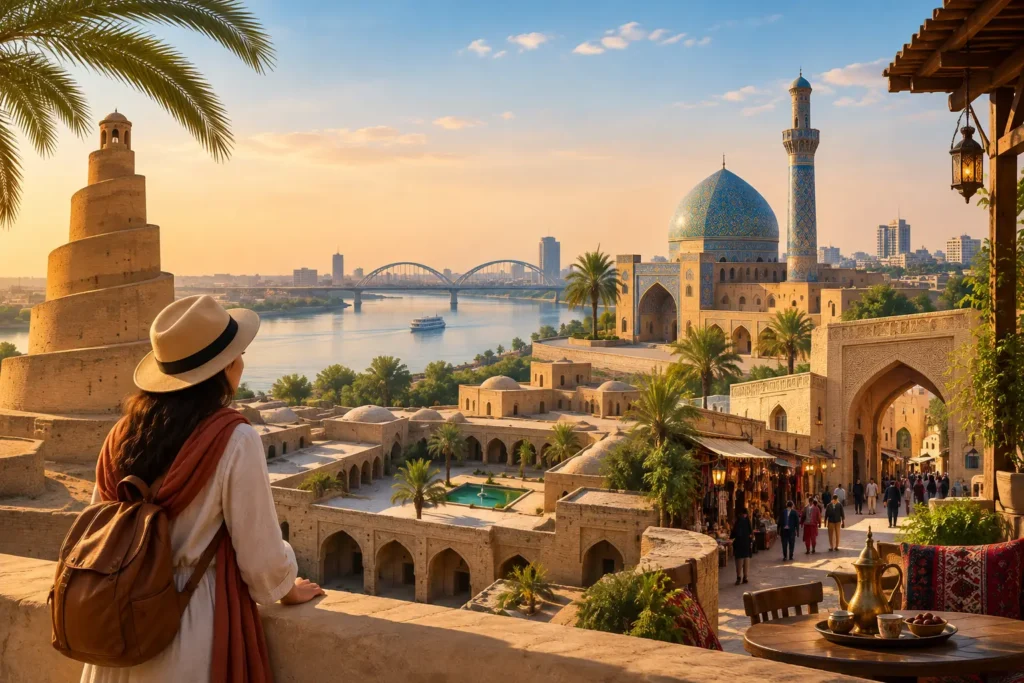
At Ur, the baked-brick steps of a 4,000-year-old ziggurat rise from the southern plain with extraordinary clarity. In Baghdad, a modern monument captures the same impulse to build at a monumental scale. The best Iraqi architecture landmarks are not a single style or era: they are a journey through Sumerian engineering, Abbasid scholarship, sacred geometry, Ottoman streetscapes and confident modern design.
For travellers, architecture is one of the most direct ways to understand Iraq as a living destination. These places are not simply photographs from a history book. Many remain centres of worship, learning, family life and national memory. Visiting with patience, modest dress and local guidance turns a remarkable itinerary into a more meaningful encounter.
The best Iraqi architecture landmarks across the country
1. The Ziggurat of Ur, Dhi Qar
The Ziggurat of Ur is one of Iraq’s most recognisable ancient structures and an essential stop for anyone interested in early civilisation. Built for the moon god Nanna around the 21st century BCE, its monumental terraces once formed the centrepiece of the Sumerian city of Ur.
What makes it compelling is its physical presence. Rather than seeing an artefact behind glass, visitors can stand beside massive mud-brick and fired-brick walls shaped by ancient builders’ understanding of load, drainage and ceremony. Ur is best reached as part of a carefully planned visit from Nasiriyah, ideally with a knowledgeable local guide who can place the site within the wider landscape of southern Mesopotamia.
2. The ancient city of Babylon, Babil
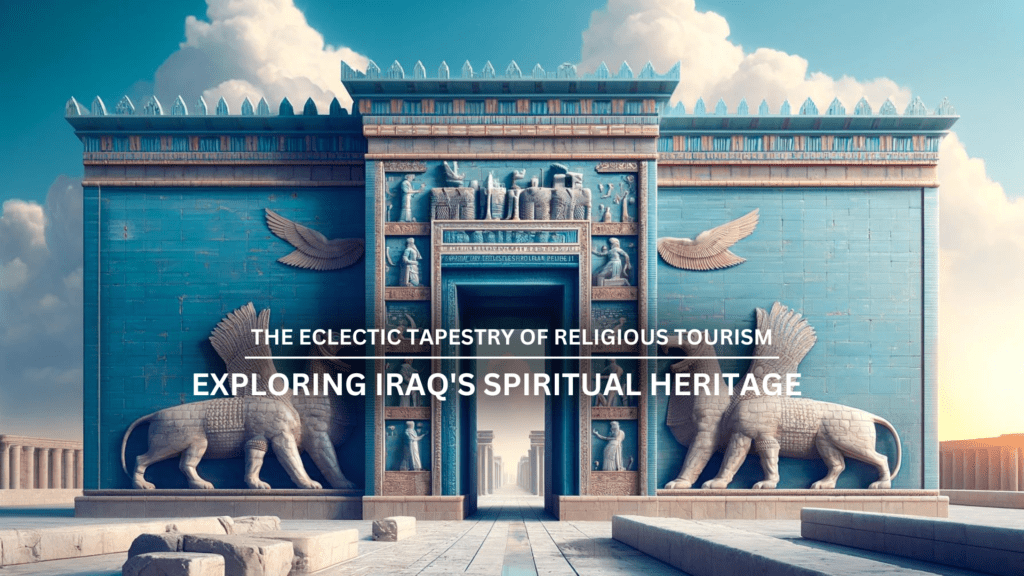
Babylon’s architecture is inseparable from its scale and symbolism. The vast archaeological landscape preserves traces of palaces, processional routes, defensive walls and temples associated with one of the ancient world’s most influential cities. The reconstructed Ishtar Gate at the site gives visitors a vivid impression of the glazed-brick grandeur for which Babylon became famous.
A visit here rewards travellers who look beyond one famous gateway. Take time to understand the city plan, the ceremonial processional way and the relationship between royal architecture and religious life. Some structures have been reconstructed more heavily than others, so a guide can help distinguish surviving ancient fabric from later interventions.
3. The Great Mosque of Kufa, Najaf
The Great Mosque of Kufa is among the most spiritually significant and historically layered buildings in Iraq. Its present form reflects centuries of rebuilding and expansion, but the mosque’s importance reaches back to the earliest period of Islamic history. Its courtyards, arcades and shrines invite visitors to observe how architecture can support prayer, reflection and gathering on a vast communal scale.
Kufa is an especially rewarding addition to a Najaf itinerary. As this is an active sacred space, visitors should dress modestly, follow guidance on photography and be mindful of worshippers. The experience is strongest when approached as a place of devotion rather than a monument alone.
4. The Shrine of Imam Ali, Najaf
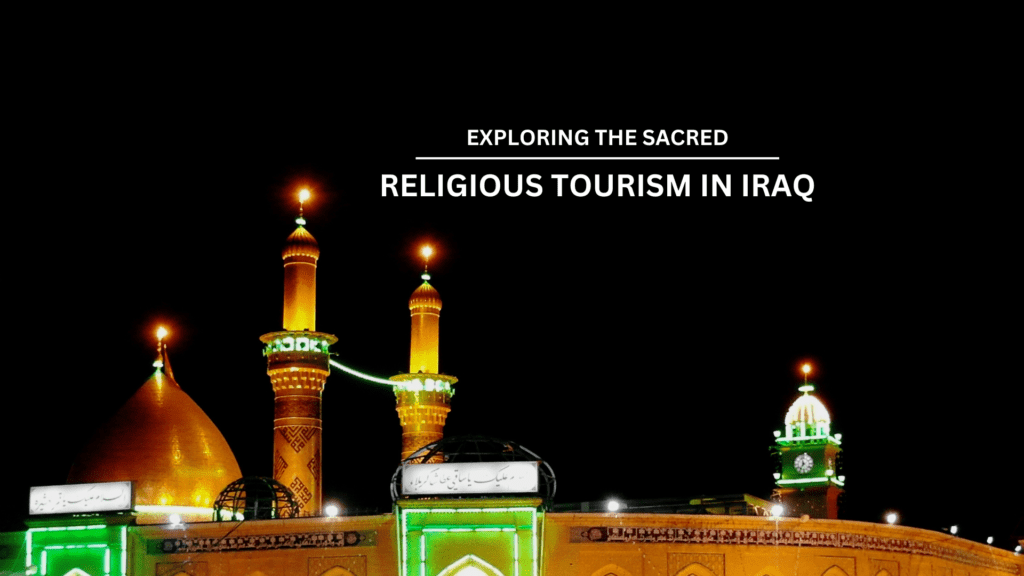
The golden dome and minarets of the Shrine of Imam Ali create one of Iraq’s defining architectural silhouettes. The sanctuary is at the heart of Najaf, where streets, markets, guesthouses and religious schools have developed around the shrine over generations.
Its visual richness lies in the detail: mirrored interiors, tilework, calligraphy, chandeliers and carefully ordered courtyards. Yet the building’s deeper power comes from the people who travel there. Pilgrims and visitors from across Iraq and the wider Muslim world make Najaf a place where sacred architecture remains inseparable from living human connection.
5. Al-Mutanabbi Street and the Abbasid-era quarter, Baghdad
Baghdad is not best understood through isolated buildings. Its architectural character emerges in the relationship between book markets, mosques, cafés, lanes and the Tigris. Al-Mutanabbi Street, long associated with booksellers and writers, offers a memorable entry point into this cultural fabric, particularly when paired with nearby historic buildings and the riverside.
The Abbasid Palace, often associated with the later Abbasid period, is a highlight for its brickwork, pointed arches and intricate decorative patterns. Its restrained material palette shows how much artistry can be achieved through proportion, shadow and the disciplined use of brick. Check local opening arrangements before visiting, as access can vary.
6. The Al-Rahman Mosque, Baghdad
The Al-Rahman Mosque is one of Baghdad’s most striking modern landmarks. Its immense ribbed dome and clustered smaller domes make it unlike the city’s older mosque architecture, reflecting an ambitious twentieth-century vision for a major civic religious building.
Although its history and use have evolved over time, the mosque remains visually significant for travellers interested in Iraq’s modern architectural story. It demonstrates that Iraq’s built heritage did not end with antiquity or the Abbasid era. For photography, appreciate the building respectfully from permitted public areas and avoid assuming access to every part of the complex.
7. The Martyr’s Monument, Baghdad
Designed by Iraqi architect Saman Kamal, the Martyr’s Monument is a powerful example of modern Iraqi architecture. Its split turquoise dome appears to open around a central eternal flame and water feature, creating a composition that is both monumental and contemplative.
The monument’s form has often been read as a reference to traditional domes, reimagined through modern geometry. It is a worthwhile stop for architecture lovers because it conveys an Iraqi design language rather than borrowing a generic international style. The surrounding park-like setting also offers a quieter contrast to Baghdad’s energetic streets.
8. The Al-Shaheed Monument and Iraqi modernism
This landmark deserves attention not only as a memorial but as part of a wider architectural movement. Twentieth-century Iraqi architects worked to reconcile contemporary materials and planning with local climate, craft traditions and urban identity. The Al-Shaheed Monument makes that conversation visible in a single, memorable structure.
Travellers with time in Baghdad should look for this broader story in public buildings, cultural venues and neighbourhood streets. Modern architecture is often overlooked in favour of ancient sites, but it adds necessary depth to any understanding of the capital.
9. The Mosque and Shrine of Imam Husayn, Karbala
Karbala’s Shrine of Imam Husayn is one of the world’s most important pilgrimage destinations. Its gilded dome, minarets, marble-clad courtyards and intricate interior decoration form a sacred architectural ensemble that becomes especially moving in the rhythm of daily prayer and pilgrimage.
The surrounding city is part of the experience. Processional routes, hospitality spaces, religious schools and bazaars reveal how an urban centre grows around a place of deep spiritual importance. Visitor numbers can be very high during major religious occasions, so accommodation and transport should be arranged well ahead.
10. The Al-Askari Shrine, Samarra
The Al-Askari Shrine in Samarra is distinguished by its brilliant golden dome and richly decorated minarets. It is a major Shia pilgrimage site, and its restoration reflects the enduring importance of sacred craftsmanship and collective care for heritage.
Samarra requires a thoughtful, well-organised visit. Local advice is essential for current access arrangements, appropriate etiquette and transport planning. When conditions allow, the city offers a compelling combination of living religious heritage and Abbasid archaeology.
11. The Great Mosque of Samarra and Malwiya Minaret
The spiralling Malwiya Minaret is among the most unusual forms in Islamic architecture. Rising above the archaeological city of Samarra, its broad helical ramp evokes the monumental ambition of the ninth-century Abbasid caliphate. Nearby remains of the Great Mosque underline the immense scale of the original complex.
This is not a delicately preserved interior monument. Its impact comes from landscape, mass and imagination. Stand at a distance and the minaret seems both ancient and surprisingly modern, a reminder that Iraq’s architectural experiments have influenced visual culture for centuries.
12. Erbil Citadel, Kurdistan Region of Iraq
Erbil Citadel crowns the centre of one of the world’s longest continuously inhabited urban sites. Its high, compact mound is edged by a distinctive curtain of nineteenth- and early twentieth-century house façades, while restoration work within the citadel continues to reveal layers of urban history.
Unlike a standalone ruin, the citadel explains how settlement itself can become architecture. Walk around its perimeter, then explore the bazaar and square below to see how the historic core still shapes Erbil’s daily life. It is also one of the easier landmarks to incorporate into a city break, with a wide choice of accommodation and services nearby.
Planning an architecture-focused journey in Iraq
The most rewarding route depends on your interests and the time available. Baghdad, Najaf, Karbala and Babylon can form a strong central and southern journey, while Ur adds a major ancient site for travellers continuing towards Dhi Qar. Erbil is an excellent northern base, and Samarra is best considered with up-to-date local planning.
Sacred sites have their own customs. Conservative clothing is appropriate, and women may be asked to cover their hair in shrine complexes. Ask before photographing people, prayer areas or security points. During pilgrimage periods, the atmosphere can be unforgettable, but roads and accommodation may be much busier than usual.
For first-time visitors, a local driver or guide can make distances, entry procedures and cultural context far easier to manage. Stay In Iraq can help travellers begin shaping a route around the cities where these landmarks are found, while allowing enough time for the quieter moments: tea near a shrine courtyard, a conversation with a bookseller, or an evening view over an old city.
Iraq’s architecture asks visitors to slow down. Give each place the time to reveal not only what was built, but why people still gather around it.