Kufa is not a place to rush through between photographs. The call to prayer, the calm courtyards of its historic mosque and the steady rhythm of local life give this small city a spiritual weight that many visitors remember long after leaving Iraq. So, can tourists visit Kufa? Yes. International travellers can visit, and it is especially rewarding for those interested in Islamic history, pilgrimage and the living heritage of Najaf Governorate.
For many first-time visitors, Kufa feels less like a conventional sightseeing stop and more like an encounter with a place that has shaped religious thought, scholarship and Iraqi identity for centuries. A well-planned visit allows time for its major shrine sites, a respectful walk through the old city area and, ideally, an overnight base in nearby Najaf.
Can tourists visit Kufa independently?
Kufa is accessible to tourists, but the best way to arrange the visit depends on your experience, language skills and wider Iraq itinerary. It lies beside Najaf, one of Iraq’s most important religious cities, and the journey between the two is short by local taxi or pre-arranged driver. Most international visitors use Najaf as their base, where accommodation and transport options are generally easier to arrange.
Independent travellers can visit Kufa, particularly if they are comfortable navigating taxis, confirming opening arrangements locally and observing customs carefully. A knowledgeable local guide or trusted driver can nevertheless add real value. They can explain the significance of each site, help with timing around prayer periods and make the practical side of the day feel more straightforward.
Visitors should not assume that every sacred space follows the same access rules. Major religious sites welcome large numbers of visitors, but entry procedures, visiting hours, photography policies and access for non-Muslims can vary. Dress and conduct expectations may also be more formal than at a museum or archaeological site. Ask politely on arrival, follow signs and accept guidance from staff without argument.
Why Kufa matters
Kufa was founded in the seventh century and soon became one of the most influential cities of the early Islamic world. It served as the capital of Caliph Imam Ali ibn Abi Talib, whose legacy is deeply connected to nearby Najaf. The city was also a major centre of Arabic language study, Qur’anic learning, law and intellectual life.
Its importance is not confined to the past. For Shia Muslims, Kufa is a profoundly meaningful destination linked to pivotal figures and events in Islamic history. For heritage travellers, it offers a valuable perspective on Iraq beyond the better-known ancient sites of Mesopotamia. The experience is strongest when approached with curiosity rather than a checklist mentality.
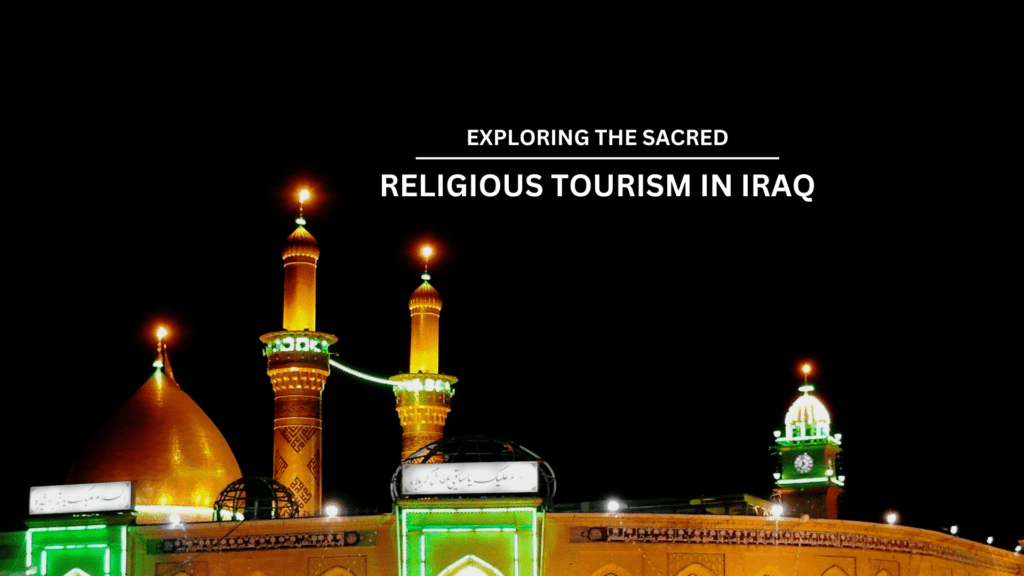
The Great Mosque of Kufa is the central place to visit. Its religious significance is immense, and its courtyard and prayer spaces draw pilgrims from Iraq and abroad. Within the wider complex, visitors may encounter places associated in tradition with revered prophets and key figures of Islamic history. These associations are devotional, so treat the setting as an active place of worship rather than simply an historic monument.
Close by, the Shrine of Muslim ibn Aqil is another important stop for pilgrims. Even travellers without a religious background often find that a respectful visit offers a clearer understanding of the emotional and spiritual dimensions of Kufa. Quiet observation, appropriate dress and a willingness to move at the pace of worshippers go a long way.
Getting to Kufa from Najaf
Najaf is the most practical gateway for Kufa. Najaf International Airport connects the city with a range of regional destinations, while overland journeys from Baghdad and other Iraqi cities are possible depending on your itinerary and current transport arrangements.
From central Najaf, Kufa is typically reached by taxi or private car. Agree the fare before setting off if using a street taxi, or ask your hotel to arrange a trusted driver. For visitors making their first trip to Iraq, this can remove uncertainty around directions, waiting time and the return journey.
Public transport exists, but it may be less intuitive for travellers unfamiliar with local routes and Arabic. It can suit confident, flexible visitors, yet a taxi or driver is often the more comfortable choice for a first visit, especially in warm weather or when travelling with family.
Allow at least half a day for Kufa. A fuller day works better if you want time at the mosque, the shrine of Muslim ibn Aqil, local cafés and a slower walk through the area. Pairing Kufa with Najaf is one of the most meaningful short cultural itineraries in southern Iraq.
Visa and entry planning
Your ability to visit Kufa begins with lawful entry to Iraq. Visa rules depend on your nationality, passport type, point of arrival and the purpose of travel. Some nationalities may be eligible for visa-on-arrival or electronic visa arrangements, while others need to apply in advance. These policies can change, so confirm the latest requirements directly with the relevant Iraqi embassy, consulate or official immigration channel before booking non-refundable travel.
Keep your passport, visa documentation and accommodation details accessible throughout your journey. If travelling as part of a religious group or organised tour, confirm exactly which services are included, particularly airport transfers, transport between Najaf and Kufa, and guide support.
Travel insurance that covers Iraq and the activities you plan to undertake is a sensible part of preparation. It is also worth checking official travel guidance from your own government, not as a substitute for local knowledge but as one source in a considered travel plan.
Dress, etiquette and photography
Kufa rewards visitors who arrive prepared to participate respectfully in a religious environment. Modest clothing is essential. Women should carry a headscarf and wear loose clothing that covers arms and legs. Men should wear long trousers and avoid sleeveless tops or clothing with prominent slogans. Shoes may need to be removed before entering particular prayer areas, so socks are useful.
During prayers and busy pilgrimage periods, give worshippers space and keep conversation quiet. Avoid walking directly in front of someone praying, and follow any separate entry or circulation arrangements. Small gestures of courtesy are noticed and appreciated.
Photography should never be assumed. Courtyards and exterior spaces may be photographed in some circumstances, but rules can differ inside shrines, prayer halls and security-controlled areas. Always ask before photographing people, particularly families, worshippers and religious staff. If photography is not permitted, put the camera away and experience the moment fully.
When to go and what to expect
The cooler months, broadly from late autumn to early spring, are often more comfortable for walking and exploring. Summer in southern Iraq can be intensely hot, so visitors travelling then should start early, carry water and plan indoor or shaded breaks.
Kufa can become very busy around significant religious occasions and pilgrimage seasons. This can be deeply moving for visitors who want to witness collective devotion, but it also means fuller streets, higher demand for rooms in Najaf and longer travel times. If you prefer a quieter visit, choose dates outside major observances and visit earlier in the day.
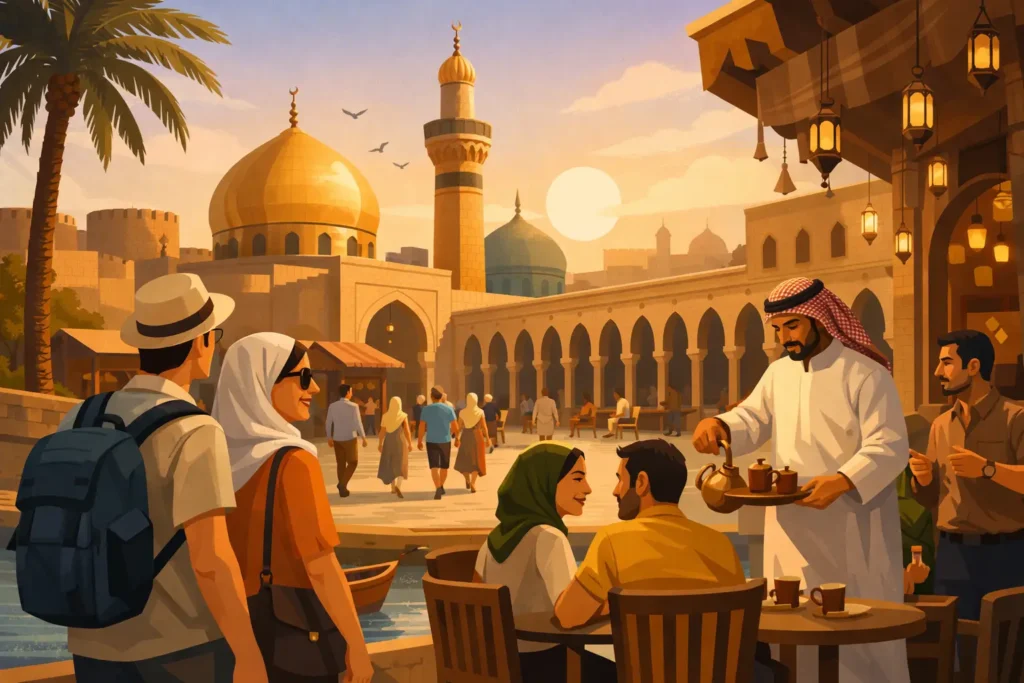
The atmosphere is conservative, communal and welcoming. Do not expect a heavily commercial tourist district. Instead, expect working streets, family businesses, tea shops and people who may be pleased to learn why you have come. A few Arabic greetings, patience and genuine respect can lead to the kind of human exchange that makes travel in Iraq so memorable.
Where to stay for a Kufa visit
Most visitors stay in Najaf rather than Kufa itself. This gives you a wider choice of hotels, easier access to dining and services, and the opportunity to visit the Imam Ali Shrine and Najaf’s historic religious quarters before or after your Kufa excursion.
Choose accommodation based on your priorities. Pilgrims may prefer to be close to Najaf’s shrine precinct, while families and independent travellers might value a quieter hotel with reliable transport arrangements. Confirm check-in policies, breakfast times and whether the property can organise a driver to Kufa. Platforms such as Stay In Iraq can help travellers compare accommodation options while keeping a wider itinerary in view.
A visit shaped by respect
Kufa is easy to reach from Najaf, yet its meaning cannot be measured by distance. Give it time, dress thoughtfully and arrive with an open mind. In return, this historic city offers something increasingly rare in travel: not a staged attraction, but a direct connection to faith, memory, scholarship and the everyday hospitality of Iraq.