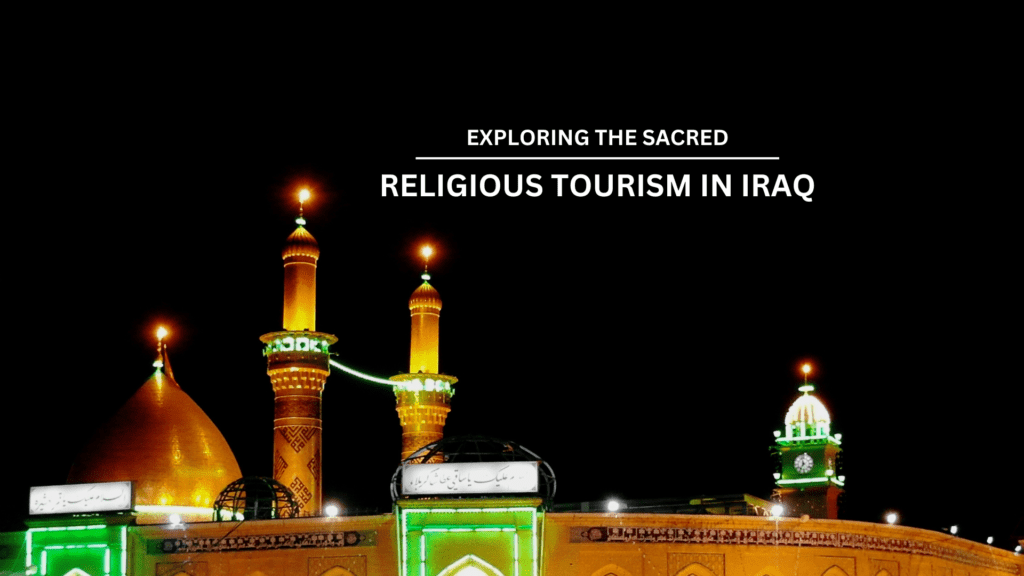
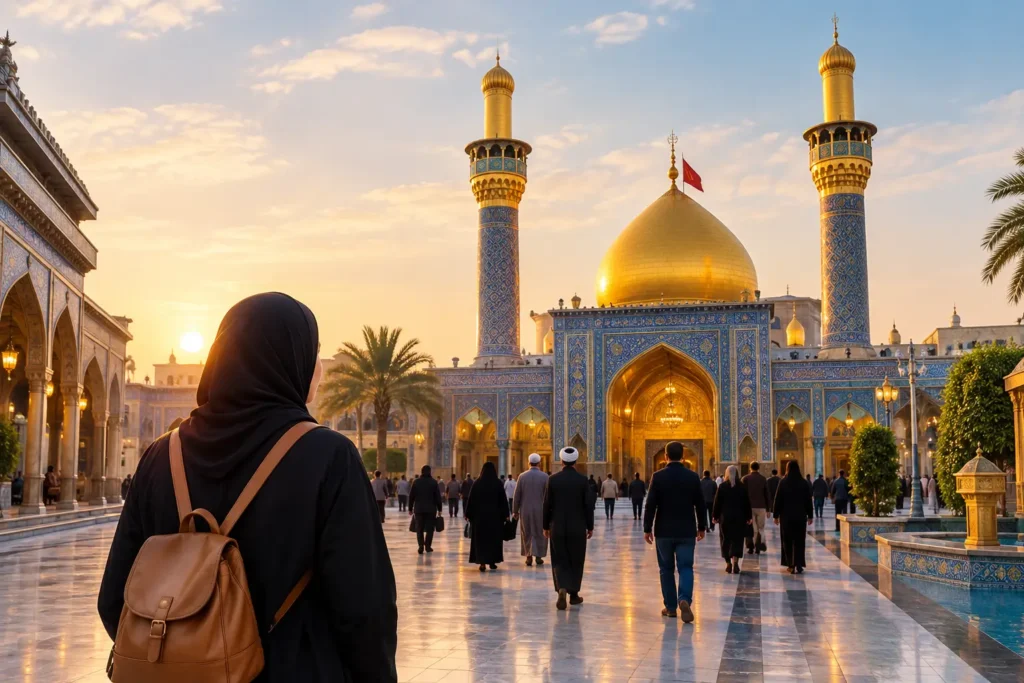
A quiet moment beneath the golden dome in Najaf, the shared rhythm of pilgrims walking towards Karbala, the scent of rosewater near a shrine entrance – Iraq’s sacred cities offer encounters that are deeply human as well as profoundly spiritual. But can visitors enter Iraqi shrines? In many cases, yes. International travellers, including non-Muslims, are often welcome when they arrive with modest dress, patience and genuine respect for the worshippers around them.
Iraq’s major shrines are active places of faith, not simply historic monuments. Understanding that distinction will make your visit more meaningful and help you move through these spaces with confidence.
Can visitors enter Iraqi shrines?
Entry policies differ by shrine, the time of year and the purpose of your visit. Major sacred sites in Najaf, Karbala, Kadhimiya and Samarra receive pilgrims from Iraq and around the world, and visitors are commonly admitted to public areas. At some sites, non-Muslim visitors may be asked to follow a particular route, remain in designated areas, or be accompanied by a local guide.
The most important point is to be led by the shrine’s staff. They may adjust access during busy prayer times, religious commemorations or periods when large numbers of pilgrims are arriving. A restriction is not a judgement on a visitor’s background. It is usually a practical measure to protect worship, manage crowds and preserve the dignity of the space.
If you are uncertain, ask politely at the entrance: “May I enter as a visitor?” A local host, guide or hotel team can also help clarify arrangements before you travel. This small preparation is particularly valuable during major pilgrimage periods, when access and movement around the shrine districts can change quickly.
Why these shrines matter
For many visitors, Najaf and Karbala are among the most emotionally memorable places in Iraq. The Shrine of Imam Ali in Najaf is one of the holiest destinations for Shia Muslims. In Karbala, the shrines of Imam Hussein and his brother Al-Abbas stand at the heart of a city shaped by devotion, remembrance and generosity towards pilgrims.
Kadhimiya in Baghdad is home to the shrine of Imam Musa al-Kadhim and Imam Muhammad al-Jawad, while Samarra holds the revered shrine of Imam Ali al-Hadi and Imam Hasan al-Askari. Each place has its own history, community and rhythm. Even travellers who do not share the faith can appreciate the architecture, calligraphy, courtyards and the remarkable care given to guests.
A visit should never be treated as a photo stop between attractions. Give it time. Watch how people enter, where they pause, and how families and pilgrims use the space. That attentiveness is often the beginning of a more genuine connection with Iraq.
What to wear inside and around shrines
Modest clothing is expected at Iraqi shrines, for both women and men. The aim is not to create a complicated dress code for travellers, but to reflect the prayerful setting and the comfort of those worshipping there.
Women should wear loose, non-transparent clothing that covers the arms and legs, along with a headscarf. In some shrines, an outer covering may be provided or requested at the entrance. Bringing your own lightweight scarf is useful, especially when moving between different religious sites during the day.
Men should wear long trousers and a modest shirt or top with sleeves. Shorts, sleeveless tops and clothing with prominent slogans are best avoided. Comfortable socks are also helpful, as shoes may need to be removed before entering interior spaces.
Footwear rules can vary. Look for signs, follow the people ahead of you and use the shoe storage areas where provided. Keep your belongings simple and secure: a small bag, water for outside the shrine and a mobile phone are usually enough.
Shrine etiquette that makes a difference
You do not need to know every custom in advance. Courtesy, observation and a willingness to follow direction will carry you a long way. Speak softly, silence your mobile phone and avoid walking directly in front of someone who is praying. In crowded areas, move steadily rather than stopping suddenly to take a photograph or check a map.
Many worshippers may be praying, reading Quran, touching the shrine enclosure, or sitting in quiet reflection. Visitors should not imitate rituals they do not understand simply for a photograph or social media video. It is perfectly appropriate to stand quietly, observe and absorb the atmosphere.
Physical boundaries matter too. Follow barriers, do not push towards sacred enclosures, and leave space for elderly pilgrims, families and those who are visibly praying. During busy periods, the experience may be intense and slow-moving. Treat this as part of the visit rather than an inconvenience.
If someone offers help or welcomes you, respond warmly. Iraqi hospitality is often expressed through small acts of guidance, a shared word of welcome or an invitation to sit for tea outside the shrine area. Accepting kindly, without making assumptions, can turn a visit into a lasting memory.
Photography: ask before you raise your camera
The domes, mirrored halls and detailed tilework of Iraqi shrines are visually extraordinary. Yet photographs are not permitted everywhere, and rules can be stricter in interior prayer areas, near sacred enclosures, security points or at times of worship.
Always look for signs and ask a member of staff before taking photographs. If photography is allowed, be especially mindful of people praying, grieving or visiting with their families. Do not photograph individuals closely without consent, and never use flash inside a shrine.
The same care applies to filming. A mobile phone held up for a quick video can obstruct the flow of pilgrims in a narrow entrance or courtyard. Capture the wider setting where permitted, then put the camera away. The most powerful part of the experience is rarely the image you take home.
Timing your visit around pilgrimages
Iraqi shrine cities welcome visitors throughout the year, but major religious dates can transform the scale and pace of travel. Arbaeen, which commemorates the end of the mourning period for Imam Hussein, brings vast numbers of pilgrims to Karbala. Ashura and other significant occasions can also affect accommodation availability, transport routes and shrine access.
These periods can be deeply moving for travellers who are prepared for the crowds and who come with the right intention. They are not, however, the easiest time for a first visit if you prefer quieter sightseeing, flexible transport and straightforward entry arrangements. Planning well ahead is essential, particularly for hotels in Najaf and Karbala.
Outside the busiest dates, early morning can offer a calmer experience before the heat and the largest crowds build. Evening visits can be beautiful too, with illuminated courtyards and a lively local atmosphere, though they may be busier. Your ideal timing depends on whether you are seeking contemplation, photography, pilgrimage or a broader cultural itinerary.
Practical preparation for international travellers
Before visiting a shrine, confirm your visa requirements through official channels and carry identification in line with local guidance. Dress before you arrive rather than expecting to change at the entrance. Arrange transport with a trusted driver, tour organiser or local contact, especially if you are travelling between cities or returning after dark.
It is also wise to allow extra time. Shrine districts are often walkable once you are nearby, but road access, pedestrian zones and crowd management can mean the final part of the journey takes longer than expected. Choose accommodation that suits your route and daily plans, rather than focusing only on distance on a map.
For travellers who do not speak Arabic, a guide can add valuable context and remove uncertainty around etiquette. Independent visitors can still have a rewarding experience, but should be comfortable asking simple questions, following signs and adapting when staff direct them elsewhere. Iraq rewards flexibility, and its people are often generous with assistance when visitors approach with respect.
A visit shaped by respect
Entering an Iraqi shrine is less about knowing a perfect set of rules than recognising that you are stepping into a living centre of devotion. Come modestly dressed, ask when unsure, be careful with your camera and give worshippers the space they deserve. In return, you may find that a place you first came to see becomes a place you truly remember – through its beauty, its welcome and the quiet generosity of the people within it.