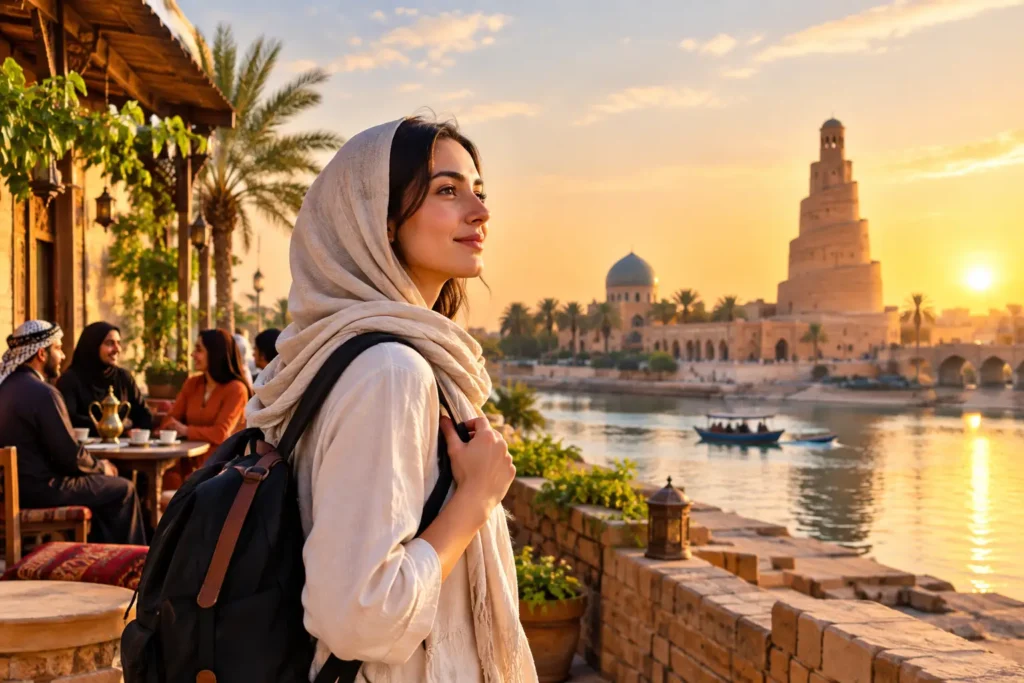
A woman standing beneath the arches of Baghdad’s historic streets, sharing tea with a family in Najaf, or watching the sun settle over the marshes is not an unusual image in Iraq. The question is less whether can women travel Iraq solo and more what kind of planning makes the journey comfortable, respectful and rewarding.
For many women, Iraq is best approached as an independent trip with thoughtful local support: confirmed accommodation, trusted drivers for longer routes, and enough flexibility to accept an invitation for coffee or change plans around a religious occasion. Iraq is a country of immense heritage and generous human connection, but it rewards preparation more than spontaneity.
Can women travel Iraq solo?
Yes, women can travel solo in Iraq, including international visitors. Many do so successfully, particularly when they plan their routes, understand local expectations and choose reputable accommodation and transport. Iraqi hospitality is often one of the strongest memories travellers take home. It is common for people to offer directions, practical help or a warm welcome simply because you are a guest in their country.
That does not mean every part of the trip should be handled alone. “Solo” need not mean isolated. A local guide can add real value at archaeological sites, in busy city centres and at religious locations where customs and access arrangements may be unfamiliar. For intercity travel, arranging a known driver through your hotel or a trusted local contact is usually more comfortable than trying to negotiate transport on arrival.
Your experience will depend on your confidence, travel background, language skills, itinerary and the cities you visit. Baghdad, Najaf, Karbala, Basra, Erbil and Sulaymaniyah each have their own rhythm. A first visit is often easiest when built around a small number of destinations rather than an ambitious cross-country schedule.
Start with current travel and entry checks
Travel requirements can change, so check visa rules directly with the relevant Iraqi embassy or consulate before booking non-refundable arrangements. Entry procedures may differ according to nationality, point of arrival and whether you are visiting federal Iraq or the Kurdistan Region. Ensure your passport has sufficient validity and carry printed copies of your visa, hotel confirmations, travel insurance and key contact details.
Before departure, review the latest official travel advice issued by your own government. This is not about treating Iraq as a place to fear; it is sensible practice for any destination where circumstances and regional regulations can change. Share your itinerary with someone at home, keep your phone charged, and save the address of each hotel in both English and Arabic where possible.
It is also wise to arrange comprehensive insurance that explicitly covers Iraq and the activities you intend to do. Policies vary, and assumptions can be expensive when plans change.
Dress is part of travelling with respect
Iraq is diverse, modern and deeply rooted in faith and family life. Modest clothing is the easiest and most respectful choice for women travellers. Loose trousers, long skirts or dresses, sleeves that cover the shoulders, and tops that cover the hips will suit most settings. A light scarf is useful to carry throughout the country, both for visits to shrines and for moments when you would prefer to dress more conservatively.
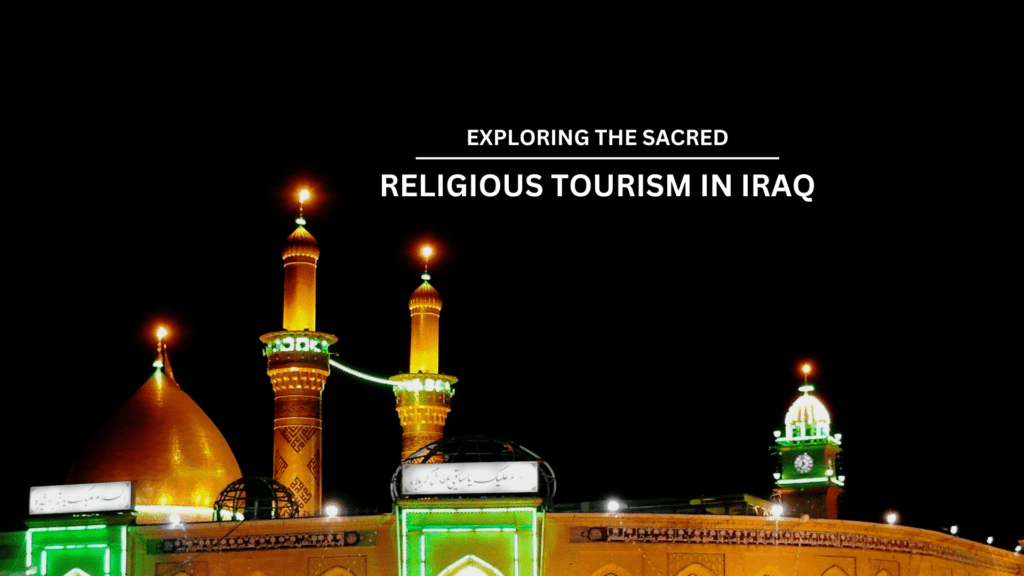
At major Shia holy sites in Najaf and Karbala, women are generally expected to cover their hair and wear modest, loose clothing. Some shrines provide an outer garment for visitors. Follow the guidance at the entrance, remove shoes where required, and ask before taking photographs. These are living places of worship, not simply landmarks.
In parts of the Kurdistan Region, dress can feel more relaxed, especially in Erbil and Sulaymaniyah. Even there, modest clothing remains a good default. Adapting your dress is not about losing your personal style. It is a practical way to move through different spaces with ease and show consideration for the communities welcoming you.
Choose accommodation that gives you confidence
For a solo traveller, a reliable hotel is more than a bed for the night. It is a base for organising drivers, asking local questions, resting between busy days and getting help if an itinerary changes. Look for properties with a staffed reception, clear guest reviews, central or well-connected locations, and the ability to arrange airport collection.
Contact the hotel before arrival to confirm your check-in time, airport transfer and the best way to reach the property. This small step removes a great deal of uncertainty after a long flight. A good reception team can also suggest suitable restaurants, tell you which areas are best visited in daylight, and help arrange a local guide.
Stay In Iraq can help travellers begin that accommodation research with a clearer picture of where they are staying and what each destination offers. Wherever you book, keep the hotel’s number written down as well as saved on your phone.
Move around with a plan, not a rigid script
Within cities, transport options vary. Taxis are widely used, but a solo visitor may prefer a driver recommended by her hotel, particularly at night or when arriving somewhere for the first time. Agree the fare before setting off if there is no meter, and have your destination written in Arabic if possible.
For journeys between cities, pre-arranged private transport is often the simplest choice for first-time visitors. It costs more than shared transport, but brings clarity over timings, stops and luggage. If you are travelling independently for several days, the same driver or local travel partner can become a reassuring point of continuity.
Avoid arriving at a new destination late at night if you can. Build realistic journey times into your itinerary, especially around Fridays, major religious observances and pilgrimage periods, when roads and hotels can be much busier. Iraq is not a destination to rush through between checklists. Leave room for conversations, traffic, tea and the occasional change of plan.
Everyday safety habits matter
The most useful safety measures are usually the ordinary ones. Keep valuables discreet, avoid displaying large amounts of cash, and use a cross-body bag that closes securely. Carry small notes for taxis and cafés, with a second card and emergency cash stored separately. Local currency is used for many everyday purchases, while card acceptance can be limited outside larger hotels and newer businesses.
Be measured about sharing your location in real time on social media. Ask before photographing people, particularly women, families, security personnel, official buildings and religious spaces. If somebody says no, accept it warmly and move on.
For evening plans, choose places recommended by your hotel or a local host, arrange your return journey in advance, and trust your instincts. If a situation feels unclear, step into a hotel, café or family-oriented shop and ask for help. Iraqi people are often remarkably protective of visitors, especially women travelling alone, but calm judgement remains essential.
Connection changes the experience
A few Arabic words go a long way. “Shukran” for thank you and “salaam alaikum” as a greeting are received warmly. English is spoken in parts of the tourism, hospitality and younger professional communities, but you should not expect it everywhere. Offline maps, a translation app and a local SIM can make daily navigation far easier.
Solo travel also creates space for the encounters that make Iraq memorable. You may be offered tea more than once in a day. You may find that a museum guide wants to explain a favourite artefact, or that a shopkeeper is delighted to hear why you chose Iraq. Receive this generosity with warmth, while keeping boundaries clear and your plans known to someone you trust.
For women who want a little more companionship without joining a full group tour, consider booking a guide for selected days. This can be especially worthwhile in Baghdad’s historic quarters, Babylon, the southern marshes, Najaf and Karbala. It offers context that turns a beautiful site into a meaningful story, while leaving you free to shape the rest of your trip.
A confident way to see Iraq
The best solo itinerary is not the one that covers the most ground. It is the one that gives you time to feel the character of each place: Baghdad’s creative energy, Basra’s riverfront heritage, the spiritual atmosphere of Najaf and Karbala, or the mountain-framed cities of the Kurdistan Region.
Travel with curiosity, dress thoughtfully, organise the practical details before you arrive, and allow local knowledge to guide the parts you do not need to solve alone. Iraq offers women travellers something increasingly rare: not a polished, identical holiday, but a deeply human journey shaped by history, faith, hospitality and the people you meet along the way.