
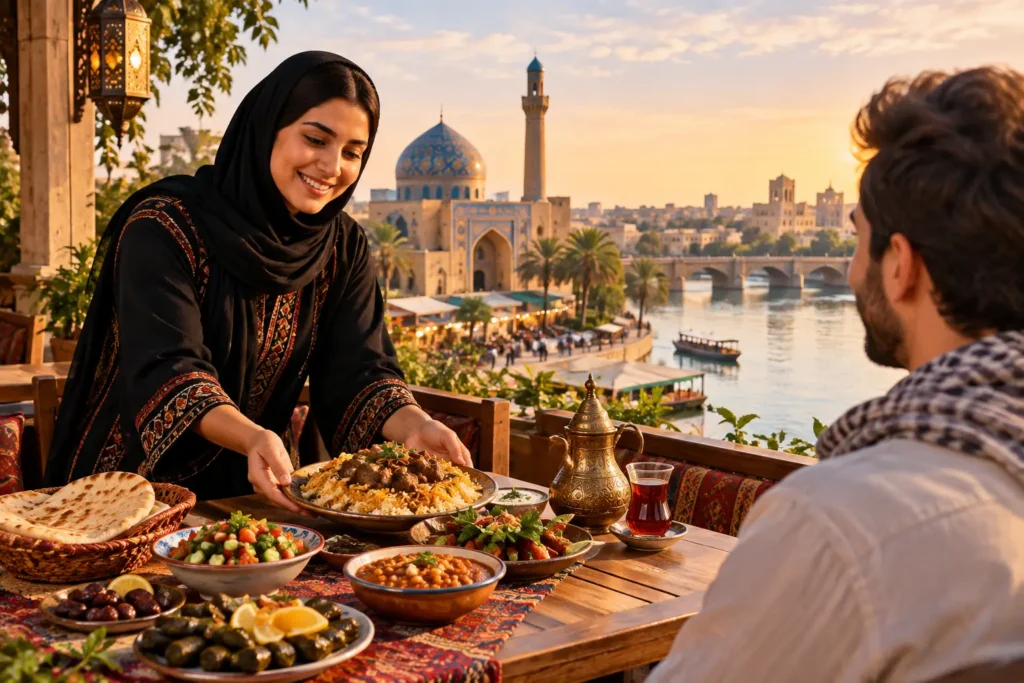
A fish slowly roasting beside the Tigris, a shared platter arriving at a family table, the sharp freshness of herbs beside a rich stew – Iraqi cuisine is one of the most immediate ways to understand the country. It carries the memory of ancient river valleys, busy markets and generous homes, yet it is never simply about the past. For travellers, every meal can become a conversation, an invitation and a memorable part of the journey.
Food in Iraq is made for gathering. Portions are often generous, bread is placed in the middle, and the best meals are rarely rushed. Whether you are visiting Baghdad, Basra, Erbil, Najaf, Karbala or Mosul, eating locally offers a warm introduction to the regional character and hospitality that make travel in Iraq so rewarding.
Iraqi Cuisine Begins with Place and Hospitality
Iraq’s cooking reflects its geography. The Tigris and Euphrates have long supported farming, fishing and trade, while routes through Mesopotamia brought spices, rice dishes and culinary influences from neighbouring regions. The result is a cuisine with its own clear identity: comforting but layered, aromatic without relying on overwhelming heat, and deeply shaped by seasonality.
Rice, wheat, lamb, chicken, fish, pulses, yoghurt, dates and fresh herbs all appear regularly. Spices such as turmeric, cumin, black pepper, cinnamon, cardamom and dried lime bring depth rather than uniform intensity. Tamarind may add a gentle sourness; pomegranate molasses can bring sweetness and tang. The balance is one of Iraqi food’s great strengths.
Hospitality matters as much as the recipe. If tea is offered, accepting a glass is often a simple and meaningful gesture. If a host encourages you to take more food, it is usually generosity rather than pressure. You do not need to overeat, but responding warmly and trying what is offered will be appreciated.
Dishes to Look For in Iraqi Cuisine
Masgouf
Often described as Baghdad’s signature dish, masgouf is freshwater fish, traditionally carp, opened and cooked slowly beside a fire. Rather than being placed directly over the flames, the fish is propped around the heat so that it roasts gradually, developing a smoky exterior while staying tender inside. It is commonly seasoned simply, allowing the fish to remain the focus.
Masgouf is best treated as an occasion rather than a quick lunch. Along the river in Baghdad, it is often chosen first and cooked while guests sit, talk and wait. It usually arrives with flatbread, salad, pickles and perhaps a bright tamarind-based sauce. If you have time for one long, unhurried meal in the capital, this is an excellent choice.
Dolma
Iraqi dolma is far more than a side dish. Vine leaves, onions, peppers, aubergines, tomatoes and courgettes may be filled with a seasoned mixture of rice, herbs and, depending on the household or restaurant, minced meat. The vegetables are packed closely together and simmered until their flavours blend.
What makes Iraqi dolma distinctive is its sweet-sour character, often created with tamarind, pomegranate molasses or lemon. It can be richly savoury, tart and gently sweet in the same mouthful. Family recipes vary greatly, so trying dolma in more than one city is not repetition – it is part of the experience.
Quzi and Iraqi Rice Dishes
Quzi, sometimes written as qoozi, is a celebratory dish built around slow-cooked lamb and fragrant rice. It may be served with nuts, raisins and richly seasoned accompaniments, making it especially popular for gatherings and special occasions. It is filling, generous and worth sharing if you are travelling with companions.
Rice itself deserves attention. Iraqi rice dishes can be delicately perfumed with spices and enriched with vermicelli, vegetables or meat. In the south, rice is central to everyday meals as well as celebrations, while regional seasoning and accompaniments give each plate its own character.
Tashreeb, Kubba and Tepsi
Tashreeb is one of Iraq’s most satisfying comfort foods: broth or stew poured over torn flatbread until it becomes soft and flavourful. It may be prepared with chickpeas, lamb, chicken or vegetables. For travellers who want a meal that feels close to home cooking, tashreeb is an excellent order.
Kubba appears across Iraq in many forms. At its most familiar, it is a crisp shell of bulgur or rice surrounding a savoury filling, often minced meat with onions and spices. In some regions it is served in soup; elsewhere it may be shaped differently or made with local grains. The variety says much about Iraq’s regional food traditions.
Tepsi is a baked tray dish, frequently made with layers of aubergine, potato, tomato and meat. It is straightforward, warming and full of the flavours that make Iraqi home-style cooking so appealing. Pair it with rice, bread and a salad of herbs and chopped vegetables.
From Breakfast Tea to Date-Filled Sweets
Breakfast in Iraq can be simple and deeply enjoyable. Fresh bread may be served with eggs, cheese, cream, honey, jam, herbs and tea. In some places, a warm chickpea-based breakfast or a bean dish offers a more substantial start before a day of walking through historic streets, shrines or museums.
Bread is central to the table. You may encounter thin flatbreads, soft rounds and crisp oven breads, each suited to scooping, wrapping or sharing. It is normal to use bread with food, though cutlery is readily available in many restaurants. Following the lead of local companions is the easiest approach.
Dates are another essential flavour of Iraq. They appear as a snack, a gesture of welcome and an ingredient in sweets. Kleicha, a beloved Iraqi biscuit, is often filled with dates, walnuts or a spiced mixture. It is particularly good alongside Iraqi tea, which is commonly served strong and sweet in small glasses.
For a refreshing drink, try laban, a yoghurt-based drink that can be lightly salted, especially alongside a rich meal. Fresh juices are also widely enjoyed when in season. As with food, choosing a busy, well-regarded local place is often the best sign of freshness and quality.
Regional Flavours Worth Seeking Out
Iraq is not a single dining room. Baghdad offers river fish, bustling grills and a broad mix of dishes shaped by the capital’s long history. Basra, close to waterways and date-growing areas, brings its own relationship with fish, rice and southern ingredients. In the Kurdistan Region, travellers may find excellent grilled meats, breads, yoghurt dishes and hearty meals shaped by mountain and village traditions.
In the holy cities of Najaf and Karbala, meals are closely connected to hospitality and the rhythms of religious travel. Visitors should dress and behave respectfully around sacred sites, but should also make time for the simple pleasure of a local meal or tea in the surrounding streets. In Mosul and northern Iraq, distinctive preparations, breads and stuffed dishes reflect another rich regional culinary identity.
The practical lesson is simple: order beyond the familiar. A good restaurant may have grilled kebabs on the menu, and they can be excellent, but asking what is prepared that day often leads to something more local. If language is a barrier, pointing, observing what nearby diners are enjoying and asking staff for a recommendation usually works well.
How to Eat Well and Respectfully in Iraq
The most rewarding meals are not always found in polished dining rooms. Small family-run restaurants, market stalls and busy neighbourhood bakeries can offer superb food, particularly when locals are coming and going throughout the day. That said, travellers should use the same sensible judgement they would anywhere: choose places that look clean, order food cooked hot and take care with dietary needs.
If you are vegetarian, communicate clearly that you do not eat meat or meat stock, as rice, soups and stuffed vegetables may include them even when meat is not visible. Vegans may find more limitations, though beans, salads, breads, hummus-style dips and some rice dishes can be suitable. Those with allergies should carry a translated explanation where possible, because ingredients can vary from kitchen to kitchen.
During Ramadan and major religious occasions, opening hours and meal patterns may change, especially in certain cities. This can be a wonderful time to experience community and evening food traditions, but a little flexibility helps. Your hotel host or local guide can often suggest suitable places to eat and explain what to expect.
Let the Table Shape the Journey
Iraqi food is not designed to be hurried between sightseeing stops. Make room for a riverside lunch in Baghdad, breakfast from a local bakery, tea with a host or a shared dinner after a day spent exploring. These moments offer something guidebooks cannot fully capture: the pace of daily life, the pride people take in their city and the openness with which guests are received.
When planning where to stay, choosing accommodation near established dining areas can make evenings easier and more enjoyable, particularly for first-time visitors. Stay In Iraq can help travellers pair city exploration with places to stay that put local restaurants, markets and cultural experiences within reach.
Arrive curious, accept the tea, ask what the kitchen recommends and leave time for a second helping if you can. In Iraq, a meal is often the beginning of the welcome, not the end of it.