A photograph in Iraq can begin a conversation long before it becomes a post, portfolio image or family keepsake. Learning how to photograph Iraq respectfully means recognising that the most meaningful images are rarely taken in a rush. They come from curiosity, permission and the small moments of connection that Iraqi hospitality so often makes possible.
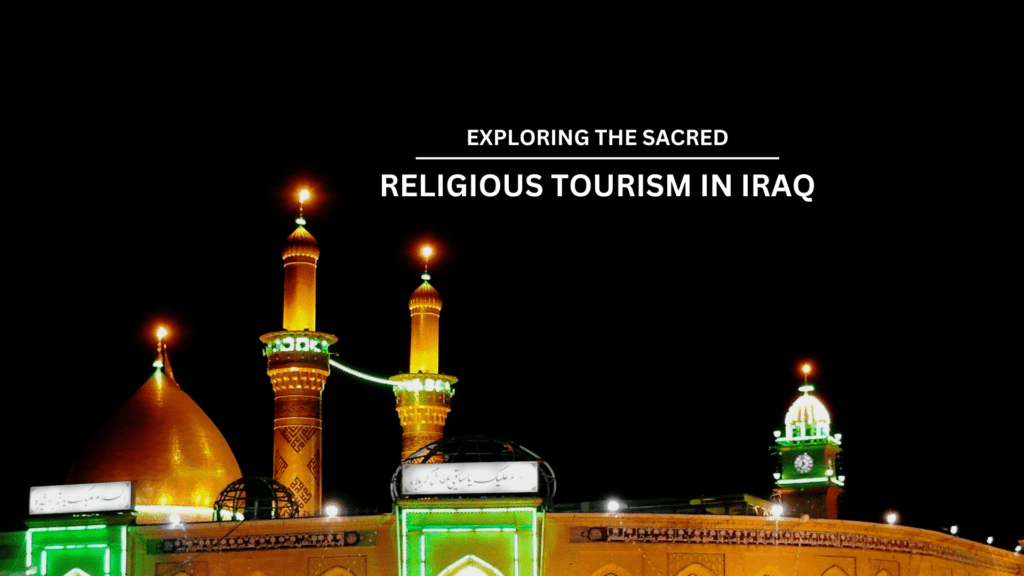
Iraq offers remarkable visual depth: the blue-tiled courtyards of holy shrines, date palms beside the Shatt al-Arab, craftsmen at work, busy souqs, ancient brickwork and family gatherings over tea. Yet the country is not a backdrop. It is home to people with their own routines, beliefs and boundaries. Photograph with that truth in mind and your images will feel more honest, more personal and more memorable.
How to Photograph Iraq Respectfully: Start with Permission
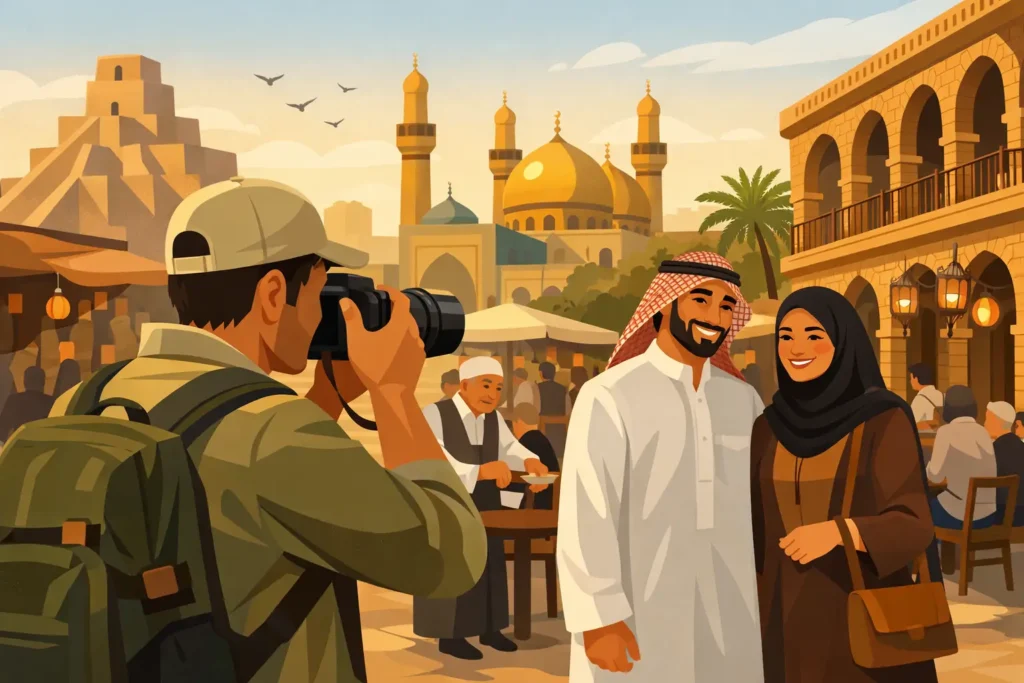
The simplest rule is also the most valuable: ask before taking a close photograph of someone. A warm smile, a gesture towards your camera and a polite question can go a long way. If you share no common language, point to the camera, indicate the image you hope to make, and wait for a clear response.
Many Iraqis are generous with visitors and may be pleased to be photographed, especially after a short conversation. Do not mistake hospitality for automatic consent, though. If a person looks uncertain, turns away or says no, thank them and move on without debate. A respectful refusal often leaves a better impression than an image ever could.
For portraits, take time to introduce yourself. Explain whether the photograph is for personal memories, social media, journalism or professional work. This matters because the purpose changes what informed permission looks like. If you intend to publish images commercially, seek explicit agreement rather than relying on a casual nod.
Showing people the result on your screen is a good gesture. It turns the encounter into something shared and may lead to a better second photograph, taken once trust has replaced the surprise of a raised camera.
Photograph Daily Life Without Turning People into Scenery
Markets, tea houses, riverside walks and city streets can be wonderfully photogenic. They are also places where people are working, meeting friends, praying, shopping and getting on with the day. Keep enough distance to let daily life remain daily life.
A longer focal length can help you photograph the atmosphere of a street without placing your camera inches from someone’s face. Wide shots that show architecture, movement and light often tell a fuller story than an uninvited close-up. When a particular person becomes the focus, return to the principle of permission.
Be especially thoughtful when photographing people in vulnerable or private moments: someone resting, grieving, receiving medical care, asking for help or dealing with a difficult situation. There is no need to turn every striking scene into content. Put the camera down when the dignity of the moment asks you to.
Children deserve extra care. Do not photograph or post identifiable images of children without the clear permission of a parent or guardian. A cheerful wave is not the same as consent. This approach protects families and demonstrates the consideration expected from a guest.
Dress, Behaviour and the Context of Your Camera
How you carry yourself affects how your photography is received. Modest, practical clothing is a sensible choice across Iraq and particularly important at religious sites. Avoid blocking walkways, climbing on heritage structures for an angle, or asking people to repeat an activity solely for the camera.
A small camera or mobile phone can feel less intrusive than a large setup, although any camera can be respectful when used with good judgement. Professional-looking equipment may attract interest or questions, particularly in busy public places. Stay calm, be open about what you are doing and avoid creating a spectacle around your photography.
It also helps to learn a few phrases. “Mumkin sura?” means “May I take a photo?” and “Shukran” means “Thank you.” Your pronunciation does not need to be perfect. The effort signals respect and often opens the door to a more genuine exchange.
Photographing Shrines and Sacred Places
Iraq is one of the world’s most spiritually significant destinations, with revered mosques, shrines, churches, monasteries and pilgrimage sites. These spaces can be visually extraordinary, but worship always comes before photography.
Rules vary by location, and they may change between courtyards, prayer halls and mausoleums. Look for signs, follow staff instructions and ask a custodian or guide before taking out your camera. In some places, photography may be permitted in exterior areas but restricted inside. In others, mobile phone photography may be treated differently from professional equipment.
Never photograph worshippers closely during prayer, mourning or other devotional moments unless you have specific permission and a clear understanding that it is appropriate. Avoid using flash, loud shutters or intrusive filming. If you are unsure, choose an architectural detail, a quiet exterior view or a scene where people cannot be identified.
Dress requirements should be taken seriously. Women may be asked to cover their hair at certain sites, and all visitors should wear clothing that covers shoulders and legs. These are not obstacles to creativity. They are part of entering a place on its own terms.
Know When Photography Is Not Appropriate
Some locations should not be photographed at all, while others require prior authorisation. Government buildings, transport infrastructure, security points and certain official facilities may be sensitive. Do not assume that a quick image from the pavement is acceptable. If signage, staff or your local host indicates that photography is restricted, put the camera away immediately.
The same principle applies at museums, archaeological sites and private businesses. Permissions, ticket conditions and fees can differ from one venue to another. Ask before using tripods, drones, lights or any equipment that could disrupt visitors or risk damaging a historic setting.
Drone photography requires particular caution. Rules and permissions can be complex, and flying one without proper clearance can create serious problems. For most travellers, ground-level photography is more than enough to capture Iraq’s scale, texture and character.
Tell a Fuller Story of Iraq
Respectful travel photography also means resisting narrow visual clichés. Iraq is home to ancient sites and sacred landscapes, but it is also full of contemporary design, university life, family businesses, cafés, farms, bookshops and creative communities. Photographing these layers helps represent the country as it is: historic, spiritual, resilient and alive with everyday culture.
Look for images that place people within their own environment rather than reducing them to a costume, profession or passing expression. A baker with flour on their hands, a calligrapher at work, friends sharing tea or pilgrims arriving at a shrine can be powerful subjects when approached with warmth and consent.
Try to notice what local people are proud to show you. It may be a neighbourhood, a family recipe, a restored heritage building or an overlooked view at sunset. These invitations often lead to photographs that feel less like extraction and more like collaboration.
Edit and Share with Care
Respect continues after the shutter is pressed. Before posting, consider what your caption implies. Name places accurately, avoid exaggerated claims and give context where it helps viewers understand the image. A caption that identifies a craft, a city or a local tradition can be more valuable than one focused only on your own reaction.
Think carefully before geotagging private homes, quiet religious spaces or locations shared with you in confidence. Not every beautiful place needs an exact pin. Similarly, avoid edits that make people, skin tones or surroundings look artificial. Iraq’s colours, light and texture are already compelling without turning real life into a stylised fantasy.
If someone asks you to send them a photograph, follow through where possible. Keep their contact details only with permission, and do not pressure anyone to share a number or social account. A small act of courtesy can turn a brief encounter into a lasting goodwill.
Let Curiosity Lead, Not the Shot List
It is sensible to arrive with ideas, whether you hope to capture Erbil’s old citadel, Baghdad’s riverfront energy, Karbala’s devotional architecture or Basra’s palm-lined waterways. But leave room for what unfolds naturally. The photograph you remember most may be an invitation for tea, a shopkeeper explaining a local craft, or a stranger smiling after you asked rather than assumed.
Iraq rewards travellers who slow down and pay attention. Let your camera be a reason to listen, learn and meet people with humility. The strongest image is often the one that carries not only a beautiful scene, but the respect with which you were welcomed into it.