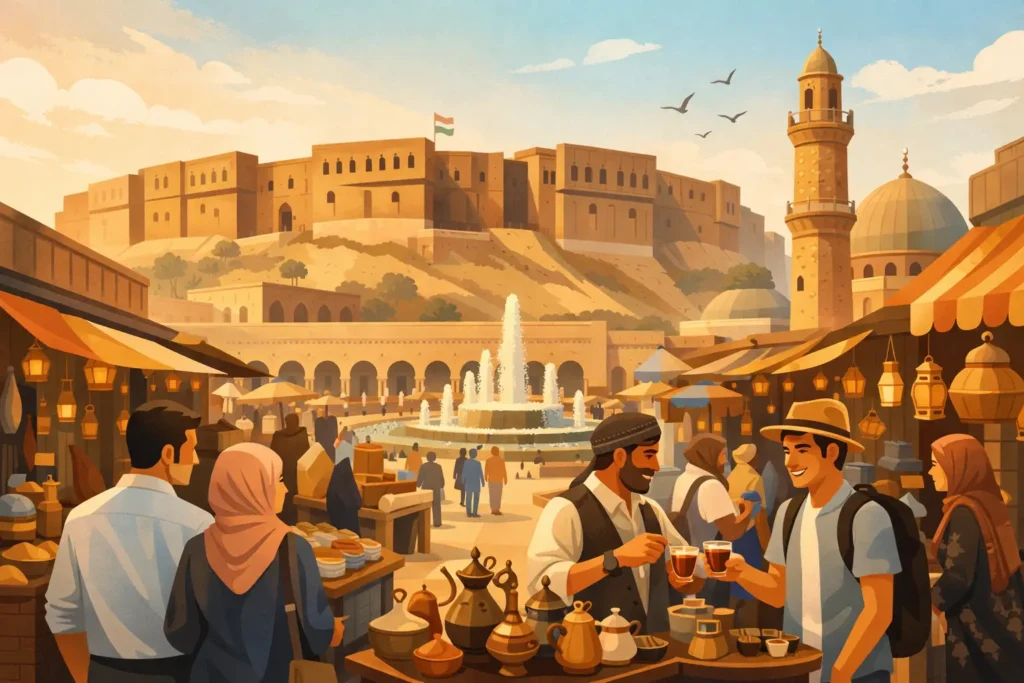
The view from Erbil Citadel is a useful correction to anyone who thinks Iraq can only be understood through headlines. Below the ochre walls, the city moves at its own pace: shopkeepers opening shutters in the bazaar, families crossing the square, and tea poured in small glass cups. This Erbil old city guide helps you experience that rhythm with enough historical context and practical preparation to make your visit feel meaningful rather than rushed.
Erbil, the capital of the Kurdistan Region of Iraq, is a living city built around an exceptionally old urban heart. The Citadel mound rises above the modern streets not as a distant monument, but as the point from which daily life still radiates. Give it time. A couple of unhurried hours will reveal far more than a quick photograph ever could.
Start at Erbil Citadel
The UNESCO-listed Citadel is the natural starting point. Its elevated oval mound has been inhabited across millennia and is often described as one of the world’s oldest continuously inhabited settlements. What visitors see today is a compact district of traditional courtyard houses, narrow lanes and restored façades, set high above the city centre.
Enter slowly and notice the difference in scale. Outside, traffic circles the broad square at the Citadel’s base. Inside, the streets tighten, doorways sit close to the pavement, and the view opens unexpectedly at the edge of the mound. The Citadel is not an entertainment precinct designed around visitors. Its appeal is quieter: architectural details, layers of urban history and the unusual sensation of standing above a city that has kept growing around its ancient core.
Restoration and conservation work can affect which buildings or lanes are open, so treat access as changeable. Some areas may feel empty or carefully managed, while others offer exhibitions or cultural activity. This is a trade-off worth accepting. Conservation protects a site of immense significance, but it also means the experience may be less free-ranging than wandering through an ordinary residential quarter.
For the best light and a more comfortable walk, arrive in the late afternoon. The pale walls take on warmer tones, and the square below begins to fill with local life. Morning is also a good option if you prefer calmer streets and cooler temperatures, particularly between late spring and early autumn.
Look beyond the panorama
The broad city view is memorable, but the Citadel’s smaller details are where its character lies. Look for carved wooden doors, inner courtyards, brickwork and the way the houses follow the mound’s curve. Respect barriers and avoid entering structures that are closed or appear fragile. A heritage site lasts because visitors understand that preservation matters as much as access.
If you are interested in archaeology or urban history, ask locally whether a museum or exhibition space is open during your visit. Opening arrangements can vary, particularly around public holidays and religious occasions.
Erbil Old City Guide: Walk the bazaar streets
At the foot of the Citadel, Qaysari Bazaar offers the most immediate connection to Erbil’s commercial and social life. Its covered passages and adjoining streets are filled with spices, fabrics, household goods, sweets, perfumes and everyday necessities. This is not a staged market. People come here to shop, meet friends, run errands and drink tea.
The most rewarding approach is to let curiosity guide you. Follow the scent of cardamom and roasted nuts, pause at the fabric shops, and notice the steady choreography of trade between regular customers and long-established sellers. A polite greeting goes a long way. “Slaw” is a common Kurdish greeting, while Arabic is also widely spoken. English is increasingly useful in hotels, cafés and among younger residents, but it should not be assumed in every small shop.
Bargaining may be appropriate for some souvenirs, textiles or non-priced goods, but it should remain friendly and modest. For food, tea and everyday items, prices are often straightforward. Ask before taking close photographs of people or shop displays, especially in smaller stalls. A smile and a simple gesture towards your camera are usually enough to seek permission.
Make time for tea and local flavours
A visit to the old city is incomplete without a break. Look for a traditional tea house near the bazaar or the main square, take a seat, and order chai. Iraqi tea is usually strong and sweet, and the pause is part of the experience. It is a chance to observe the city rather than merely pass through it.
For a more substantial meal, Erbil’s central districts offer Kurdish and Iraqi dishes such as grilled meats, kubba, dolma, fresh bread and seasonal salads. Choose busy, clean-looking places with a local clientele. If you have dietary requirements, explain them clearly and patiently. Vegetarian options are possible, though menus may not always label them in English.
Add the Mudhafaria Minaret to your walk
A short distance from the Citadel area stands the Mudhafaria Minaret, also known locally as Choly Minaret. Its distinctive brick shaft and decorative bands make it one of Erbil’s most recognisable medieval landmarks. The minaret is generally viewed from outside, and that is enough to appreciate its craftsmanship and scale.
Pairing the minaret with the Citadel and bazaar gives your visit a fuller sense of Erbil’s historical landscape. The city’s story is not confined to one monument or one era. Ancient settlement, Islamic-era architecture, Kurdish culture and modern urban life meet within a remarkably compact area.
Practical advice for a comfortable visit
Erbil’s old city is walkable, but uneven surfaces, steps and heat can make it tiring. Wear comfortable shoes with grip, carry water, and allow for rest stops. Taxis are widely used for reaching the Citadel from hotels and other parts of the city; agree on the fare or ensure the arrangement is clear before setting off.
Dress should be modest and respectful, especially when visiting religious sites or traditional neighbourhoods. Loose, lightweight clothing is practical in warm weather. Women are not generally expected to cover their hair in public spaces, but carrying a scarf can be useful if entering a mosque or if you simply prefer additional flexibility.
Keep these four details in mind before you go:
- Check current Citadel opening times and access arrangements locally, as restoration activity and holidays can alter them.
- Carry some Iraqi dinars for small purchases, tea and taxis, while using larger hotels or established businesses for card payments where available.
- Visit mosques only when appropriate, remove shoes where requested, and avoid interrupting worshippers during prayer.
- Confirm entry and visa requirements through official sources before travelling, as rules depend on your nationality and can change.
Erbil is welcoming, and travellers will often find that a brief conversation leads to helpful advice, a recommendation for a café or a warm welcome into a shop. The best response is to be equally considerate: ask questions, listen, and avoid treating local people as part of the scenery.
Where to stay for easy access
Staying in central Erbil makes the old city especially easy to revisit at different times of day. A hotel near the Citadel or the main commercial districts can put you within a short taxi ride of the bazaar, restaurants and cultural sights, while also giving you convenient access to the airport and wider city.
The right choice depends on your plans. Heritage-focused visitors may value proximity to the Citadel, while families and business travellers may prefer a larger hotel with more facilities elsewhere in the centre. Wherever you stay, ask reception for current advice on taxis, opening hours and local events. Local staff are often the most reliable source for the practical details that make a day run smoothly.
Leave room in your schedule for an unplanned stop: a second glass of tea, a conversation with a shopkeeper, or the evening call to prayer carrying across the square. Erbil’s old city is most memorable when you allow it to be a place lived in, not simply a place checked off.