
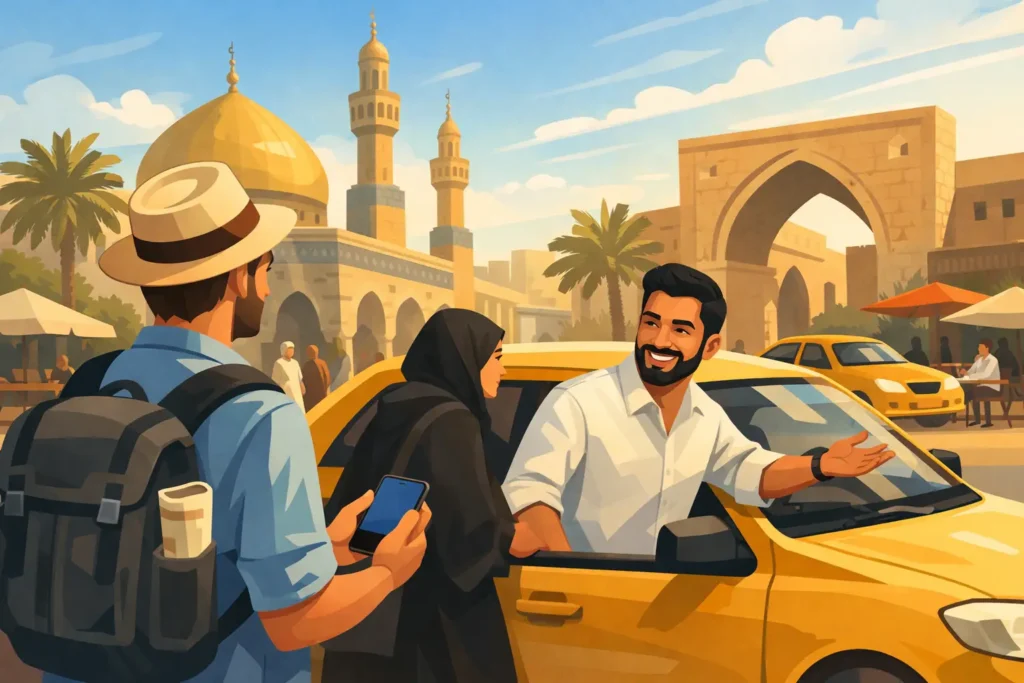
A taxi ride in Iraq often begins with a simple exchange: where are you going, and what fare feels fair? Learning how to use Iraqi taxis is less about mastering a complicated system and more about travelling with calm preparation, clear communication and the openness to accept a little local help along the way.
For many visitors, taxis are the most practical way to move between hotels, shrines, museums, markets and neighbourhood restaurants. They also offer something guidebooks cannot always provide: a brief, human glimpse of everyday life in Baghdad, Basra, Najaf, Karbala, Erbil and beyond.
How to use Iraqi taxis: the essentials
Taxis are widely available in Iraq’s larger cities, although the experience varies by location, time of day and the type of journey. In central areas, you may be able to flag down a passing car. At airports, major hotels, transport hubs and religious sites, it is often easier to find taxis waiting nearby or ask staff to arrange one.
Before getting in, confirm both your destination and the price. Meters are not consistently used, so agreeing the fare in advance is standard practice rather than a sign of distrust. Say the name of your hotel, landmark or neighbourhood clearly, and show the address on your phone if possible. A saved map pin is particularly useful where street numbering is unclear or pronunciation differs.
For visitors who do not speak Arabic or Kurdish, a translation app can help with simple messages. Keep them short: “I am going here”, “How much?”, “Please stop here”, and “Thank you”. In many cases, drivers will be patient and willing to help, particularly when they understand that you are visiting Iraq for the first time.
Agree the fare before you travel
The most useful habit is to settle the fare before the car moves. Ask politely, then consider whether the amount seems reasonable for the distance, time of day and traffic. Your hotel reception, host or a trusted local contact can give you an approximate price for common routes, such as an airport transfer or a journey to a well-known attraction.
A little flexibility goes a long way. Traffic can be heavy, roads may be busy around prayer times or public holidays, and a driver may need to take a longer route because of local restrictions. If a fare feels unexpectedly high, thank the driver and ask another. There is no need for confrontation.
For longer trips, such as travelling between cities or hiring a driver for several hours, agree what the price includes. Clarify whether the driver will wait while you visit a site, whether fuel and parking are included, and how long the arrangement will last. A daily hire can be excellent value when you want to visit several places, but it should be arranged through a reputable hotel, host or local travel provider whenever possible.
Cash, change and tipping
Cash is the most dependable way to pay for taxis. Carry Iraqi dinar in smaller notes so you can pay close to the agreed amount. Drivers may not always have change for a large note, especially early in the day, and settling the fare neatly avoids an awkward final conversation.
Tipping is appreciated but not compulsory. If a driver helps with bags, waits patiently, finds a difficult address or offers particularly considerate service, rounding up the fare is a warm and appropriate gesture. There is no need to overthink it. A modest extra amount, given with thanks, is enough.
It is wise not to display a large amount of cash when paying. Prepare the note before you arrive, keep your wallet secure and use a small cross-body bag or zipped pocket for essentials. These are sensible habits in any busy city, whether you are stepping out near a Baghdad market or leaving a crowded pilgrimage area in Najaf.
Choosing the right taxi for your journey
Not every taxi journey needs the same approach. A short daytime ride from a hotel to a café is usually straightforward. An airport arrival late at night, a family journey with luggage or a trip to an unfamiliar district deserves more planning.
Where available, app-based ride services can offer a useful extra layer of convenience because the destination and fare may be shown in advance. Availability changes between cities and can fluctuate, so do not rely on an app as your only transport plan. Local SIM access, mobile data and payment options may also affect how easily these services work for international travellers.
Hotel-arranged taxis are often the easiest choice on arrival. The price may be slightly higher than hailing a car yourself, but the benefit is clarity: your driver knows where to collect you, the hotel has the journey details, and you can begin your visit without negotiating after a flight. Stay In Iraq accommodation listings can help travellers identify places where local transport advice is readily available.
If you are visiting Iraq during major religious occasions, book transport earlier than usual. Cities such as Najaf and Karbala welcome large numbers of pilgrims, and roads around important sites can be particularly busy. Walking may be faster for short distances, while a hotel or local host can advise on sensible collection points outside the busiest streets.
Practical safety and comfort on the road
Choose taxis from visible, well-used locations and, when possible, travel in a car that is clearly operating as a taxi. At airports and hotels, use the official collection area or ask staff which drivers they recommend. If a situation does not feel right, simply wait for another vehicle or return to the hotel entrance.
Share your route or live location with a friend, family member or travel companion, especially for a longer journey. Keep your phone charged and save your hotel’s name, address and telephone number in both English and the relevant local script if your host can provide it. This small preparation is invaluable if your mobile signal drops or you need help explaining where you are staying.
Seat belts may not always be available or used by local passengers, but wear one when present. Road conditions and driving styles can feel different from those in Britain, so avoid expecting a familiar pace or pattern. Sit back, allow extra time and resist the temptation to schedule tightly timed connections across a city.
Women travelling alone may prefer to arrange a hotel taxi, use a recognised app where available, or ask a trusted local contact to book a driver. Many women travel comfortably in Iraqi cities, but personal comfort matters. Choose the option that lets you feel most at ease, particularly after dark or when arriving somewhere new.
Communicating with your driver respectfully
Iraqi hospitality is often expressed through conversation, practical assistance and genuine curiosity about visitors. A driver may ask where you are from, whether you like Iraq, or if this is your first visit. If you are comfortable chatting, these moments can become a memorable part of the journey.
A few words are always welcomed. “Shukran” means thank you in Arabic. In the Kurdistan Region, “supas” is a useful Kurdish thank you. You do not need fluent language skills, but a greeting, a smile and a respectful tone make everyday interactions easier.
Photography is another area where courtesy matters. Do not photograph your driver, other passengers or people on the street without permission. The same applies when stopping near religious places, homes or local businesses. Iraq is rich in extraordinary scenes, but respectful curiosity will take you further than treating daily life as a backdrop.
Airport taxis and intercity travel
Airport taxis should be arranged with particular care because arrivals can be tiring and you may not yet have local currency, mobile data or a sense of distance. If possible, arrange collection through your accommodation before departure. Confirm the meeting point, driver contact details, vehicle description and fare or payment method in advance.
For travel between cities, a private taxi can be convenient when you are travelling with family, carrying camera equipment or visiting sites not easily reached by public transport. It is not always the cheapest option, and journey times can vary, but it gives you the freedom to stop for tea, views or a meal along the route.
Do not assume that every driver will be comfortable with a long intercity trip. Discuss the route before leaving and make sure the driver understands whether you need a one-way transfer, a return journey or a full-day wait. For complex itineraries, a dedicated driver arranged through a trusted provider is usually more suitable than a taxi found on the street.
A small ritual that makes travel easier
Before every ride, take ten seconds to check four things: your destination pin, the agreed fare, your payment notes and your belongings. Then enjoy the journey. Behind the practicalities lies one of Iraq’s great travel pleasures: moving through living cities where ancient heritage, family life, commerce and faith meet in the same streets.
A well-chosen taxi is not merely transport between places. It can be your first welcome, your local shortcut and, occasionally, the conversation that makes a city feel less unfamiliar.