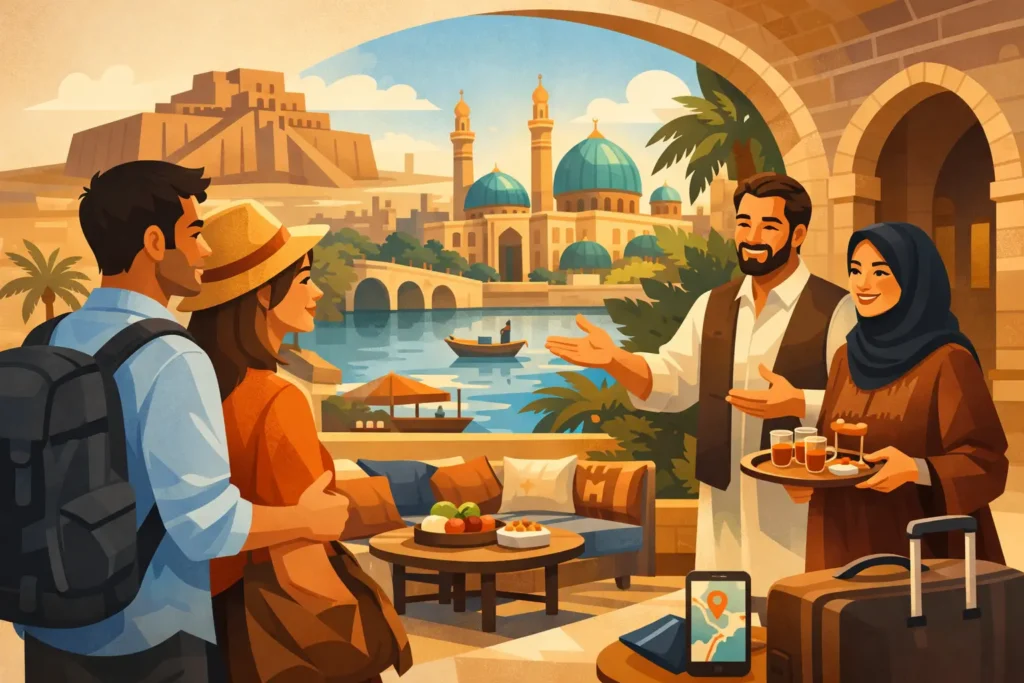
A homestay in Iraq can begin with something as simple as a second cup of tea, a family story over dinner, or an invitation to see a neighbourhood through local eyes. For travellers seeking more than a conventional room, learning how to find Iraqi homestays can turn a visit to Baghdad, Najaf, Karbala, Mosul, Erbil or the southern marshes into a more personal and meaningful journey.
Homestays are still a developing part of Iraq’s visitor economy, so they may not always appear in the same way as they do in established global booking markets. That does not make them difficult to find. It simply means that trust, clear communication and local knowledge matter more than a quick search result.
What an Iraqi homestay may look like
An Iraqi homestay is not one fixed type of accommodation. It may be a private room in a family home, a guest annexe beside a host’s house, a rural stay arranged through a local guide, or a diaspora family reconnecting with relatives and community. In religious cities, it may also mean family-run guest accommodation that offers a warmer, more domestic setting than a large hotel.
The experience varies by city, household and season. Some hosts may provide meals and help with local transport; others may offer only a room and practical guidance. In smaller towns and rural areas, shared family spaces are more common. In larger cities, privacy and independent routines may be easier to arrange.
This is part of the appeal, but it is also why travellers should avoid assuming that every stay follows the same model. A good homestay is built around a shared understanding of what is being offered.
Where to begin your search
The most reliable route is usually through people and organisations with genuine local connections. Look first at accommodation platforms that are building host listings in Iraq, including Stay In Iraq’s Rent Your Home feature as it grows. These services can help bring greater visibility and structure to a sector that has often relied on personal recommendations.
Local tour operators, licensed guides and community-based cultural initiatives can also be valuable starting points, particularly if you are visiting places where accommodation options are limited. A guide who works regularly in a city or village may know families accustomed to welcoming visitors and able to communicate expectations clearly.
For diaspora travellers, family networks can be especially helpful. A relative, friend or trusted local contact may know a suitable household or can make an introduction. Treat a personal recommendation as a starting point rather than a reason to skip practical questions. Even a warm introduction benefits from an agreed price, dates and sleeping arrangements.
Travel communities can offer useful leads too, especially when they share detailed, recent experiences rather than vague praise. Seek recommendations that explain where the stay was, how booking was arranged, what the room was like and whether the host regularly welcomes international guests. Specificity is a better sign than an enthusiastic but incomplete comment.
How to find Iraqi homestays safely and respectfully
Before committing, speak directly with the host or with the person arranging the stay. Messaging is often enough initially, while a short phone or video call can be reassuring where language allows. Ask for current photographs of the room, bathroom and entrance, and confirm whether you will have a private room, private bathroom, air conditioning or heating, Wi‑Fi, and a secure place for luggage.
Clarity is not impolite. It protects both guest and host from misunderstandings. Confirm the full price, the currency, what is included, whether meals are available, and how payment will be made. If transport from an airport, bus station or city centre is offered, agree the cost in advance.
For an overnight stay arranged independently, it is sensible to share the host’s name, address and contact number with someone you trust. Keep a copy of your passport details securely with you, and retain the messages confirming your booking. These are normal travel habits, not a sign of distrust.
If a listing or recommendation feels vague, rushed or unwilling to answer reasonable questions, choose another option. Iraq’s hospitality is real and generous, but responsible travel still depends on sound judgement. A reputable host will understand why an international visitor needs reassurance before arriving.
Questions worth asking before you book
Ask whether the household has hosted visitors before, particularly travellers from abroad. Find out who lives in the home and whether other guests will be staying there. It is also useful to ask about the exact location, the nearest landmark, transport access and the best time to arrive.
For practical comfort, ask about bathroom arrangements, hot water, bedding, electricity backup where relevant, and whether meals suit any dietary needs. If you are travelling as a couple, with children, or as a solo woman, state this early and ask whether the household is comfortable hosting you. Direct, courteous communication avoids awkwardness later.
Finally, clarify check-in and check-out times. Iraqi hospitality can be flexible, but hosts have family routines, work commitments and responsibilities of their own.
Choose the right setting for your trip
Your ideal homestay depends on why you are travelling. Heritage travellers may value a family home near Baghdad’s historic quarters, Babylon, Samarra or Mosul’s cultural landmarks, where local insight adds depth to each day. Pilgrims visiting Najaf or Karbala may prefer family-run accommodation that understands prayer times, peak visitation periods and the rhythms of religious travel.
In Iraqi Kurdistan, Erbil, Sulaymaniyah and mountain communities can offer a different pace, with opportunities to learn about regional food, crafts and landscapes. In the south, stays connected to the marshes may place guests closer to the traditions of boat travel, reed-built homes and wetland life. These arrangements often require advance planning, as distance and transport can shape the experience.
City homestays are generally best for travellers who want an easy base while retaining some independence. Rural stays can be more immersive, but they may involve simpler facilities and fewer nearby services. Neither is better by default. Choose according to your comfort level, itinerary and interest in shared daily life.
Be a guest, not just a customer
The most memorable part of a homestay is rarely the room. It is the exchange: learning why a dish is prepared a certain way, hearing family memories of a neighbourhood, or being shown a small local shrine, market or viewpoint that would never appear on a standard itinerary.
That exchange works best when travellers arrive with humility. Dress modestly, particularly in conservative areas and religious cities. Ask before taking photographs of people, homes or meals. Remove shoes if requested, accept or politely decline food with warmth, and follow the household’s cues around shared spaces and daily routines.
A small gift from your home country can be a thoughtful gesture, though it is never an obligation. More valuable is respect for time, customs and privacy. If a host invites you to join a meal or family gathering, take it as an act of generosity rather than a service automatically included in the rate.
Language should not discourage you. Arabic and Kurdish phrases, translation tools and patient gestures go a long way. Learning a simple greeting and a sincere thank you can change the tone of an interaction immediately. Many hosts will also be eager to practise English and share their own perspective on Iraq.
Plan for flexibility without leaving things vague
Travel across Iraq can reward a flexible mindset. Traffic, weather, religious observances and family commitments may affect timing, especially during busy pilgrimage periods or major holidays. Build a little breathing room into your arrival day and confirm directions shortly before you travel.
At the same time, do not leave essential details to chance. Have the address written in Arabic or Kurdish where appropriate, save the host’s number offline, and arrange a clear meeting point if the home is difficult for a taxi driver to locate. If you are moving between cities, discuss whether your host can help arrange a trusted driver or advise on the most practical route.
For first-time visitors, combining one or two homestay nights with hotel stays can be a sensible balance. A hotel may offer simpler logistics at the beginning of a trip, while a homestay later gives you time to slow down and connect. Independent travellers may be ready for longer stays, especially once they have built confidence with local transport and communication.
A well-chosen homestay does more than provide accommodation. It places Iraq’s celebrated hospitality where it belongs: in the everyday generosity, humour, food and knowledge of the people who call the country home. Approach the search carefully, arrive with curiosity, and give your hosts the same consideration you hope to receive.