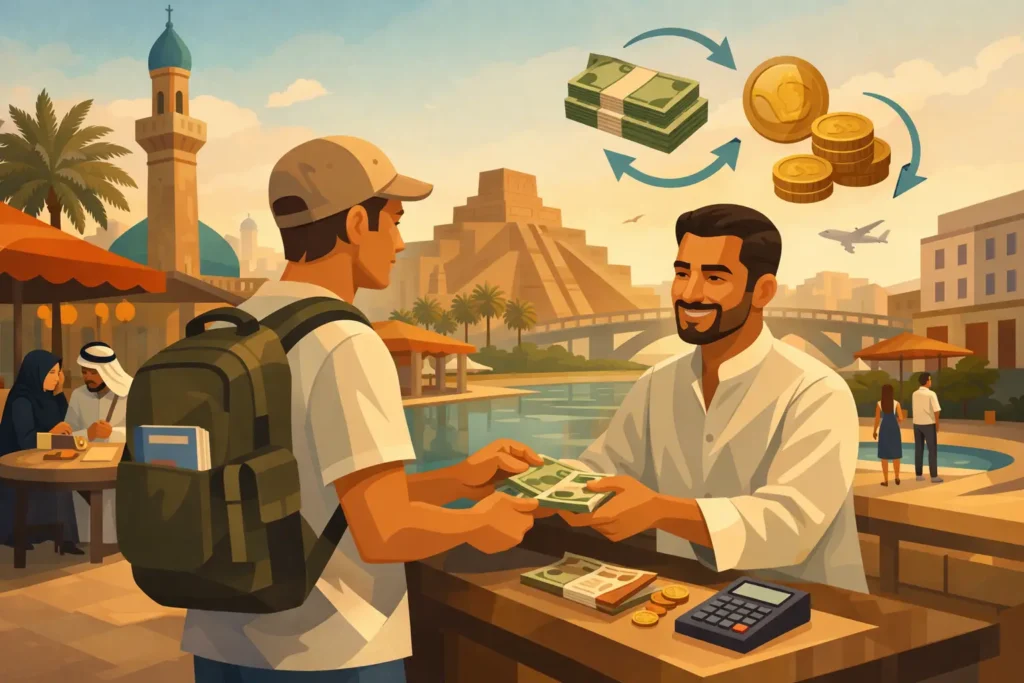
The first Iraqi currency exchange you make is more than a practical stop on your journey. It is often the moment Iraq begins to feel real: a taxi fare agreed with a smile, sweet tea bought from a street-side shop, or your first meal shared in a family-run restaurant. A little preparation lets you handle money confidently and focus on the history, spirituality and hospitality that brought you here.
Understanding the Iraqi dinar
Iraq’s national currency is the Iraqi dinar, written as IQD and commonly referred to locally as dinar. Notes are used far more frequently than coins, so travellers should expect to carry cash during much of their trip. Banknotes come in several denominations, including 250, 500, 1,000, 5,000, 10,000, 25,000 and 50,000 dinars.
For someone newly arrived, the number of zeroes can look daunting. The easiest approach is to take your time when counting, particularly in taxis, markets and busy cafés. Keep smaller notes for everyday purchases and transport, while reserving larger denominations for hotels, longer journeys or more substantial meals.
The dinar is used throughout federal Iraq and the Kurdistan Region. Prices may be quoted in dinars, while some hotels, tour providers and larger travel-related businesses may also discuss prices in US dollars. Always clarify which currency is being quoted before confirming a booking or making a purchase.
Iraqi currency exchange: cash remains central
Cash is the most practical payment method for most visitors. Card acceptance is growing in modern hotels, selected restaurants and larger shops, especially in major cities, but it is not consistent enough to rely on as your only option. Independent businesses, local transport, markets, smaller eateries and many visitor sites may prefer or require dinars in cash.
US dollars are generally the most useful foreign currency to bring for exchange, particularly clean, recent-design notes in good condition. Worn, marked, torn or older notes may be refused, even when they would be accepted elsewhere. Before leaving home, ask your bank for crisp notes and avoid folding or damaging them while travelling.
Euros and some regional currencies can also be exchanged in certain locations, but availability and rates vary by city and provider. If you are travelling from the UK, it is usually wiser to arrange US dollars before departure rather than assume pounds sterling will be readily exchangeable everywhere.
It is sensible to exchange a modest amount soon after arrival for immediate expenses, then convert further funds as needed. This avoids carrying more dinars than necessary at the end of your stay while ensuring you have enough for the first day’s transport, food and small purchases.
Official and market rates
Travellers may notice that the rate quoted by banks, licensed exchange offices and local money changers is not always identical. This reflects the way foreign currency is bought and sold in practice, alongside the official rate published through formal channels. The difference can sometimes be meaningful, so compare rates calmly before handing over your money.
A favourable rate is only one part of a good exchange. Choose a reputable, established provider, count your cash before leaving the counter and request a receipt where available. Do not exchange money with strangers in the street or accept pressure to complete a transaction quickly.
Rates change, and the amount you receive depends on the currency, note condition, location and size of the exchange. Avoid planning a trip around a rate seen online weeks earlier. Check the current rate close to departure, then use it only as a guide when comparing offers in Iraq.
Where to exchange money in Iraq
Banks and recognised exchange offices are generally the best starting points, especially in city centres and commercial districts. Hotel reception teams can often direct guests towards a suitable nearby exchange provider, although a hotel itself may not always offer the best rate or an exchange service.
At airports, exchanging a small arrival amount can be convenient, but it is worth comparing options later if you need to change a larger sum. Availability varies by airport and arrival time, so do not depend on a single service being open or stocked with the currency you need.
For pilgrimage travellers visiting Najaf, Karbala, Kadhimiya or Samarra, it is particularly useful to carry a mixture of small and medium dinar notes. The areas around important shrines are welcoming and lively, with many opportunities to buy water, food, gifts and practical items. Cash makes these everyday interactions simple and respectful.
In Baghdad, Erbil, Basra, Najaf and other major destinations, travellers will find more exchange options than in smaller towns. Even so, exchange enough before taking a longer road journey or heading to an archaeological site where financial services may be limited.
Cards, cash machines and travel budgets
International bank cards can be helpful as a backup, not a guarantee. Before travelling, tell your bank that you will be using your card in Iraq, confirm whether Iraqi transactions are permitted and ask about overseas cash withdrawal and foreign transaction fees. A card that works at one cash machine or hotel should not be treated as proof that it will work everywhere.
Bring more than one payment option if possible: a reasonable amount of US dollars, an international debit or credit card, and a separate reserve of cash stored securely. Keep daily spending money accessible, but separate your main funds between a money belt, locked luggage and another safe location. This is practical travel sense rather than a reason for anxiety.
Your budget will depend heavily on your route and travel style. Private drivers, domestic flights, higher-end hotels and guided archaeological visits need more planning than local meals and city wandering. Ask hotels and guides whether quoted prices are in IQD or USD, whether taxes or service charges apply, and how payment is expected before you arrive.
When paying in dinars, it helps to state the amount aloud and count notes in view of the seller. Most exchanges are straightforward, and Iraqi hospitality is often generous, but clear communication prevents innocent misunderstandings when travellers are still learning the denominations.
Practical habits that make exchanging easier
A few habits can make a noticeable difference throughout your holiday:
- Keep 1,000, 5,000 and 10,000 dinar notes available for smaller purchases, taxis and tips where appropriate.
- Photograph or note the exchange rate and amount received, particularly after changing a larger sum.
- Check every note before leaving an exchange office and avoid accepting visibly damaged notes.
- Carry your passport or a copy when exchanging money, as some providers may ask for identification.
- Exchange only what you expect to use, because converting leftover dinars outside Iraq can be difficult.
Tipping is appreciated in many service settings but should be modest and guided by the situation. There is no need to force a fixed percentage into every interaction. A small gesture for helpful service, offered discreetly and warmly, is usually better aligned with local custom than an exaggerated amount.
Common questions about money in Iraq
Can I buy Iraqi dinars before travelling?
Availability outside Iraq can be limited, and rates may be less attractive than those available locally. Some travellers prefer to arrive with US dollars and exchange them after landing or in the city. Check your own country’s rules and your bank’s availability before departure.
Should I carry only US dollars?
No. US dollars are useful for exchange, but dinars are essential for daily spending. Exchange enough early in your trip to cover ordinary costs, then top up as required. Keeping all your money in one currency is less practical once you begin moving around.
Is bargaining over the exchange rate expected?
It may be possible to compare offers between exchange providers, especially for a larger transaction, but politeness matters. Ask the rate clearly, consider the service and location, and choose the provider you trust. Haggling aggressively over a small difference is rarely worth the time.
Money should support your experience of Iraq, not dominate it. With clean notes, a realistic cash plan and the confidence to ask clear questions, you can move through the country with ease – leaving more room for generous conversations, remarkable places and the everyday warmth that travellers remember most.