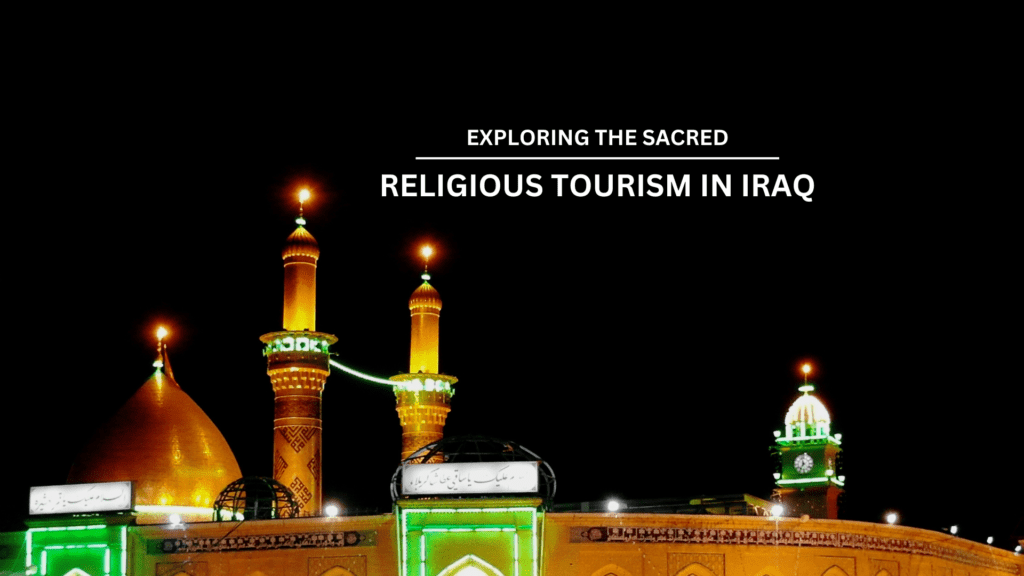
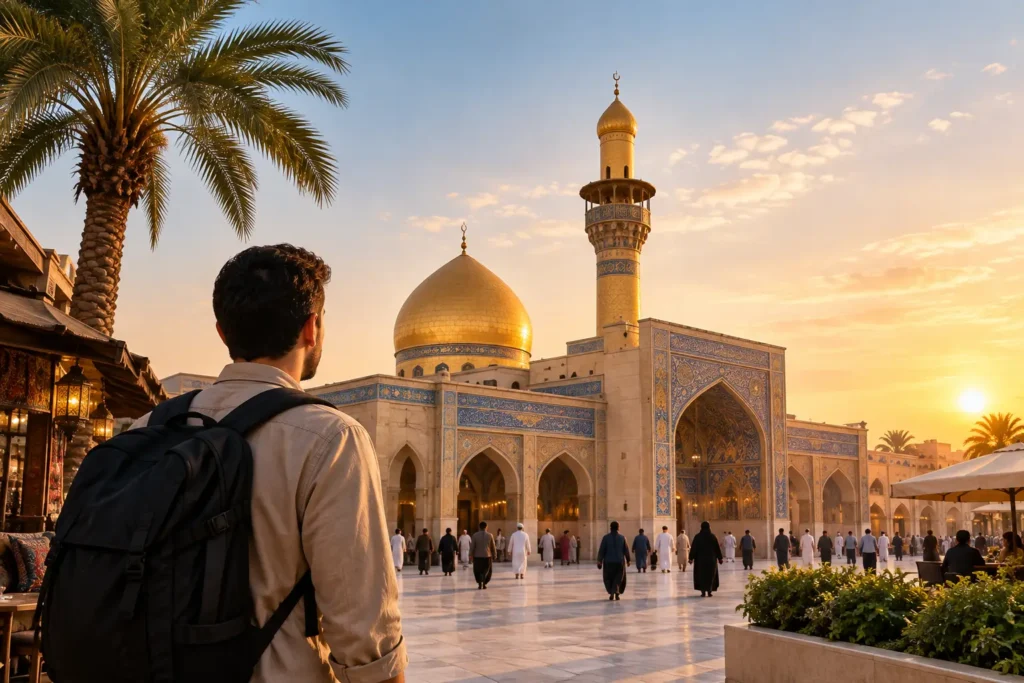
Kufa Mosque does not ask visitors to rush. Its wide courtyard, prayer halls and quiet devotional spaces invite a slower kind of travel: one shaped by respect, reflection and an awareness of the people praying around you. For travellers wondering how to visit Kufa Mosque, the essential preparation is straightforward – arrive dressed modestly, allow time to absorb the site, and follow the guidance of mosque staff and local worshippers.
Located in the historic city of Kufa, a short journey from Najaf, the mosque is one of Iraq’s most meaningful religious and historical destinations. It welcomes pilgrims throughout the year, while also offering culturally curious visitors a close encounter with the living spiritual heritage of southern Iraq.
Why Kufa Mosque Matters
Kufa was an important early Islamic city, and its mosque holds a central place in the memory of Muslim communities, particularly for Shia pilgrims. Imam Ali ibn Abi Talib, the fourth Caliph and first Imam in Shia Islam, is closely associated with Kufa. The mosque’s mihrab marks the traditional place where he was struck while praying, making it a deeply emotional point of devotion for many visitors.
Within the wider mosque complex, visitors may also encounter places traditionally associated with revered figures including the prophets Adam, Noah, Abraham and Idris. These associations are held with profound reverence. You do not need to know every detail before arriving, but approaching them with patience and humility will make the visit more meaningful.
For many Iraqis, Kufa Mosque is not simply a monument from the past. It is a place of prayer, remembrance, family visits and religious learning. This living character is precisely what makes it so distinctive. You are entering an active sacred space, not a museum.
Planning How to Visit Kufa Mosque
Most international visitors stay in Najaf, where there is a broader choice of accommodation and easy access to the city’s major religious sites. From central Najaf, Kufa Mosque is usually a short road journey, often around 20 to 30 minutes depending on traffic, your departure point and the time of day.
A taxi arranged by your hotel, a trusted local driver or a knowledgeable guide is often the simplest choice for first-time visitors. If you are travelling independently, agree the fare before setting off and keep the mosque’s name written in Arabic: مسجد الكوفة. This can be helpful when speaking with drivers.
Allow at least one to two hours at the mosque. A brief stop is possible, but it can feel hurried, particularly if you would like to pray, observe the architecture, visit the devotional points within the complex or simply sit in the courtyard. Pairing Kufa Mosque with nearby sites in Kufa can make for a rewarding half-day excursion from Najaf.
Choose your time thoughtfully
The mosque can be especially busy around daily prayer times, on Fridays, during Ramadan, and during major religious commemorations. These periods carry a powerful atmosphere, but they are not always ideal for travellers hoping to move slowly or take photographs.
A morning visit or an earlier afternoon visit on a non-Friday day is often more relaxed. That said, timing depends on what you want from the experience. Pilgrims may prefer the energy of a busy prayer period, while heritage travellers and photographers may appreciate quieter intervals. Always place worshippers’ comfort ahead of your schedule.
Before leaving Najaf, ask your accommodation host or local contact whether there are any special events, access changes or particularly busy days expected. Practical local knowledge is often more useful than a fixed online itinerary.
Dress and Behaviour Inside the Mosque
Modest clothing is essential. Women should wear loose, non-transparent clothing that covers the arms and legs, along with a headscarf. Men should wear long trousers and a modest shirt. Avoid shorts, sleeveless tops, tight clothing and garments with prominent slogans. Comfortable shoes are useful, as you may be asked to remove them before entering certain prayer areas.
At the entrance, follow any security and bag-check procedures calmly. Requirements can change according to the time of year and the number of visitors. Staff are there to protect a place that receives large numbers of worshippers, so a courteous approach goes a long way.
Once inside, keep your voice low and silence your mobile phone. Walk around people who are praying rather than crossing directly in front of them. If you are unsure whether a specific area is open to visitors, ask a member of staff or follow the lead of your guide. Small gestures of awareness are noticed and appreciated.
Non-Muslim visitors should be especially attentive to local guidance at the entrance and within prayer spaces. Kufa Mosque can be an enriching visit for people of many backgrounds, but access and appropriate conduct should always be confirmed on the day rather than assumed.
Photography with care
Photography may be permitted in some areas, but this is a place where permission matters more than getting the shot. Look for posted instructions and ask staff before photographing interiors, security points, worshippers or close-up devotional moments. Never photograph someone praying without their clear consent.
If you are travelling as a content creator or journalist, consider taking wider architectural photographs and exterior images rather than directing cameras towards individuals. The most respectful images of Kufa often capture its scale, light, tiled details and atmosphere without intruding on private acts of worship.
What to Look For During Your Visit
The mosque’s scale can be surprising, particularly for visitors expecting a compact historic structure. Take a moment in the courtyard before moving through the complex. Notice how pilgrims and local families use the space: some come to pray, others to read, rest or guide relatives through the site.
The mihrab associated with Imam Ali is the emotional centre for many visitors. You may see people standing quietly, offering prayers or pausing in contemplation. Give this area space. Even if you are not participating in religious rituals, a few minutes of respectful stillness can communicate more than any guidebook explanation.
Architectural details reward close attention too. Look at the calligraphy, tilework, arches and changing patterns of light across the prayer spaces. Kufa Mosque has undergone restoration and expansion over time, so its character is not frozen in one historical period. It reflects Iraq’s continuing care for sites that remain central to faith and community life.
If you have a guide, ask them to explain the different maqams and traditional associations found in the complex. A good guide will give context without treating sacred tradition as a spectacle. If you are visiting independently, resist the urge to see everything quickly. Choose a few places to understand properly.
Practical Details for Visitors from Abroad
Bring a small amount of Iraqi dinar for water, a snack, transport or a voluntary contribution where appropriate. Keep valuables secure and travel light, especially on busier days. A reusable water bottle is useful in warmer months, although it is best not to eat or drink in prayer areas.
Najaf’s summers can be intensely hot. In warmer weather, plan outdoor walking for earlier in the day, carry water and choose breathable modest clothing. During cooler months, evenings can feel surprisingly fresh, so an extra layer may be welcome.
For international travellers, entry requirements for Iraq depend on nationality and can change. Check current official visa guidance well before booking flights, and make sure your passport has the required validity. If your trip includes Najaf, Kufa, Karbala or other pilgrimage cities, build flexibility into your itinerary: crowd levels and local religious calendars can shape journey times.
Women travelling alone, couples, families and solo heritage travellers can all visit with confidence when they plan transport carefully, dress appropriately and stay aware of the setting. Iraq’s strongest travel experiences often come through human interaction, and a respectful greeting, patience and openness to local advice can turn a practical visit into a memorable encounter.
A Simple Kufa Mosque Visit Checklist
Before you leave Najaf, make sure you have:
- modest clothing and a headscarf if needed;
- cash in Iraqi dinar and a charged mobile phone;
- a transport plan for both the outward and return journey;
- enough time to visit without rushing around prayer times.
Kufa Mosque offers something increasingly rare in travel: the chance to stand inside a place where history, faith and everyday community life are still inseparable. Arrive prepared, listen more than you speak, and let the rhythm of the mosque set the pace of your visit.