
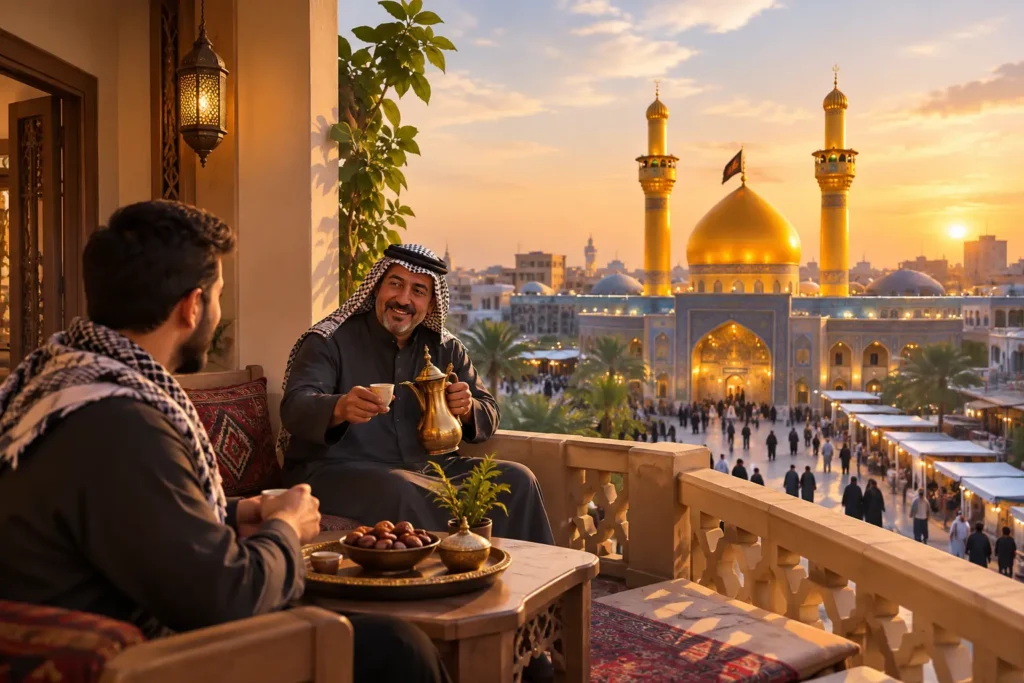
Najaf guesthouses offer something many visitors value more than a polished lobby: a close, human connection to one of Iraq’s most spiritually significant cities. For pilgrims visiting the Shrine of Imam Ali, diaspora travellers returning with family, and curious visitors seeking a deeper understanding of Iraqi culture, a guesthouse can make the stay feel personal, grounded and well placed for the rhythm of the city.
Najaf is not a destination to rush through. Its old streets, religious heritage, scholarly tradition and generous welcome reward travellers who allow time for reflection. Choosing accommodation carefully helps create that time, particularly during busy religious periods when location, transport and a quiet place to rest matter as much as the room itself.
What to expect from Najaf guesthouses
A guesthouse in Najaf is usually a smaller, more locally run accommodation option than a large hotel. It may be a family-operated property, a simple residence adapted for visitors, or a modest lodging house designed around the needs of pilgrims. Standards vary considerably, so it is best to think of the category as a style of stay rather than a promise of identical facilities.
The strongest reason to choose one is often hospitality. Hosts may offer practical local knowledge, help arrange a driver, recommend a suitable time to visit an important site, or simply make sure guests feel at ease over tea and conversation. These gestures are part of the experience, not an added extra.
There are trade-offs. Some guesthouses have fewer services than established hotels, and English may be limited. Room sizes, lift access, Wi-Fi reliability, private bathrooms and payment arrangements can differ from one property to the next. Travellers who need step-free access, a dedicated work space, international card payment or a particular room layout should confirm these details before committing.
Choosing the right area for your stay
Your best location depends on why you are visiting Najaf and how you prefer to travel. Staying near the shrine district puts you close to the city’s spiritual centre, where the day begins early and visitors gather throughout the year. This can be especially valuable for pilgrims who wish to make repeated visits on foot, avoid unnecessary journeys, or return easily for a rest between prayers.
Staying close to the shrine
Guesthouses near the shrine can offer remarkable convenience and an immediate sense of place. The surrounding streets are full of devotional life, small shops and places to eat, and the atmosphere is meaningful for visitors who have travelled a long way for ziyarat.
It is also the busiest part of the city. During major occasions, roads may be managed differently, walking routes can be more practical than driving, and sound levels may be higher than in quieter districts. Ask whether a property is reached directly by car, how far it is on foot from your intended destination, and whether staff can assist with luggage.
Choosing a quieter base
A guesthouse slightly beyond the central religious quarter may suit travellers who want more space, a calmer evening or easier vehicle access. It can also work well for families, visitors combining Najaf with Kufa or other nearby heritage sites, and travellers who prefer to begin their day with a pre-arranged driver.
Distance is not the only consideration. A room ten minutes farther away can be the better choice if it has dependable air conditioning, a peaceful setting, clear communication from the host and transport that fits your plans. In Najaf, a thoughtful base is often more useful than the closest available address.
Comfort, facilities and honest questions to ask
Before booking, establish what the stay actually includes. A clear conversation protects both traveller and host from assumptions, particularly when the property is independently managed. Ask whether the room is private, whether the bathroom is en suite, and whether hot water and air conditioning are available at the time of your visit.
It is sensible to confirm bedding arrangements, especially for families or groups travelling together. If breakfast is offered, ask what time it is served and whether an early departure can be accommodated. Visitors arriving late should confirm check-in procedures in advance rather than expecting a reception desk to operate like one at a large hotel.
Four questions are particularly useful when comparing options:
- Is the quoted price per room or per person, and what is included?
- Can payment be made in the preferred method, and when is it due?
- Is there reliable contact with the host before arrival, ideally by phone or messaging?
- Can the property arrange, recommend or explain local transport from the airport or bus station?
Photos are helpful, but recent guest feedback and direct answers matter more. Look for a realistic description of the room and facilities rather than overly broad promises. Stay In Iraq encourages travellers to treat accommodation planning as part of understanding the destination: local knowledge and clear expectations make a more rewarding stay possible.
Booking around pilgrimage dates
Najaf welcomes visitors throughout the year, but demand rises sharply around important religious observances and weekends. During these periods, rooms can fill early, travel times within the city may change, and a guesthouse that feels perfectly placed on a normal day may require more walking than expected.
Book as early as practical if your dates are fixed. When travelling during a busy period, confirm the reservation shortly before departure and keep the property’s contact details available offline. Share your expected arrival time, especially if you are relying on a driver or arriving from another Iraqi city.
Flexibility is equally valuable. If the central area is fully booked, consider whether a quieter location with a dependable transport plan could serve you better. For some visitors, particularly those staying more than one night, a comfortable room outside the busiest streets offers a more restorative experience without taking them away from Najaf’s spiritual life.
International travellers should also check current entry requirements through official sources before finalising any non-refundable arrangements. Accommodation hosts can often help with local logistics, but they should not be treated as a substitute for formal visa or travel documentation advice.
Staying with respect and ease
Najaf’s religious importance shapes the character of the city, and visitors are warmly received when they approach it with consideration. Modest dress is appropriate, particularly near holy sites. Plan clothing that is comfortable for walking, respectful in sacred settings and suitable for the season, as temperatures can influence how much time you spend outdoors.
A guesthouse is often closer to local family life than an international hotel. Small courtesies go a long way: ask before photographing people or private spaces, keep noise low late at night, and be clear about the needs of children, elderly relatives or group members. If you are uncertain about a custom, asking your host politely is usually the best response.
For non-Muslim visitors, Najaf can still be an exceptionally meaningful cultural destination. Respectful observation, appropriate conduct and openness to learning allow visitors to appreciate the city’s living traditions without treating them as a backdrop. The aim is not simply to see a place of importance, but to understand why it matters to millions of people.
Let your guesthouse shape a slower itinerary
The most memorable stays in Najaf often leave room for unplanned moments. Begin with a visit to the shrine at a time that suits your purpose, then return to rest rather than trying to fill every hour. Allow time for the old city’s streets, for a meal recommended by a host, and for the quieter conversations that reveal the warmth of Iraqi hospitality.
If you are continuing to Kufa, visiting Wadi Al-Salam Cemetery or travelling onwards through southern Iraq, speak to your host about timing rather than relying only on a map. Local perspective can clarify when to leave, where to meet a driver and how to organise the day with less pressure.
Choose a Najaf guesthouse that gives you the comfort to pause, listen and return to the city with fresh attention. That is often where a pilgrimage or cultural visit becomes more than an itinerary: it becomes a genuine encounter with Najaf and the people who welcome you there.