Baghdad makes its strongest impression in the details – the call to prayer moving across the skyline, the slow curve of the Tigris at sunset, the smell of grilled fish near the water, and the sudden appearance of Abbasid brickwork between modern streets. For travellers searching for the best places in Baghdad, the city offers far more than a checklist of landmarks. It offers layers of memory, scholarship, spirituality and everyday warmth that reward patient, curious travel.
This is not a city best approached in a rush. Some visitors come for Islamic heritage, some for intellectual history, and some simply to understand one of the Arab world’s most storied capitals through its streets, cafés and riverbanks. The places below are among Baghdad’s most meaningful stops, but the real experience often lies in how they connect to one another.
Best places in Baghdad for first-time visitors
A good first encounter with Baghdad should balance heritage, local life and practical ease. That usually means combining a museum or historic quarter with a riverside walk and at least one market or café area. The city is broad, and traffic can shape your day, so it helps to group places by area rather than trying to cross Baghdad repeatedly.
Al-Mutanabbi Street
If one street captures Baghdad’s intellectual soul, it is Al-Mutanabbi Street. Named after the celebrated classical Arab poet, this is where booksellers, publishers, readers and thinkers have gathered for generations. On Fridays especially, the atmosphere becomes more vivid, with stalls, conversation and a sense that literature here is still part of public life rather than something tucked away in academic corners.
For international visitors, Al-Mutanabbi is one of the best places in Baghdad because it feels both historic and alive. You may not read every title on display, but the experience still lands. This is where Baghdad shows its confidence as a city of ideas. Nearby cafés deepen that impression, offering the chance to sit, observe and absorb the rhythm of the quarter.
The Iraqi Museum
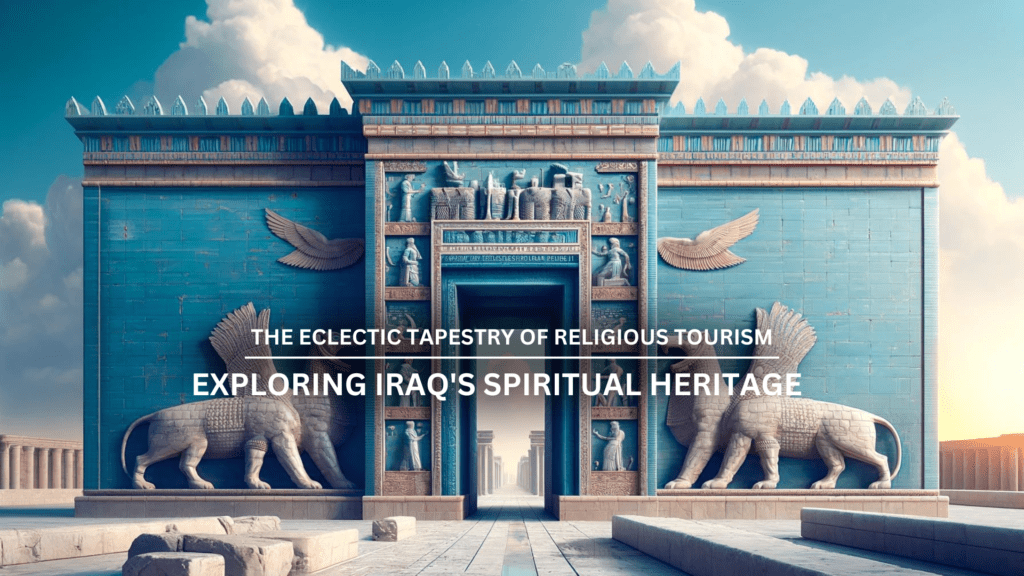
To understand Baghdad within the longer story of Iraq, the Iraqi Museum is essential. Its collections connect the capital to Mesopotamia’s deep past, from Sumerian and Assyrian civilisations to later Islamic eras. For heritage travellers, this is not just a museum visit. It is a grounding experience that gives context to almost everything else you will see in the country.
The museum rewards time and attention. Some travellers prefer highly interactive institutions, and this is not always that kind of experience. What it offers instead is gravity. Artefacts here speak to the scale of Iraq’s civilisational importance, and seeing them in Baghdad adds a sense of continuity between ancient history and modern urban life.
Al-Mustansiriya Madrasa
Set near the historic core of the city, Al-Mustansiriya Madrasa is one of Baghdad’s most important surviving Abbasid landmarks. Founded in the thirteenth century, it reflects the city’s historic role as a centre of learning, law and religious scholarship. The brickwork, arches and proportions carry a quiet authority that does not need embellishment.
This is a place for travellers who value cultural depth over spectacle. It may not have the scale of a major palace complex, yet it often leaves a stronger impression because it feels so closely tied to Baghdad’s identity. Standing here, it becomes easier to imagine the city as a seat of scholarship that influenced the wider Islamic world.
Historic and cultural places that reveal Baghdad’s character
Baghdad is often best understood through neighbourhoods and institutions rather than isolated monuments. Its historic spaces carry meaning because people still gather around them, pray in them, read in them and return to them.
Qushla and the riverfront area
Qushla, with its Ottoman-era clock tower and riverside setting, offers one of the most atmospheric windows into old Baghdad. The area has become a cultural gathering point, particularly during public events and weekend visits, when families, students and local visitors bring energy to the space. The architecture is part of the appeal, but so is the feeling of civic life unfolding around it.
Its location near the Tigris gives it extra value for first-time visitors. Baghdad’s river is not just scenery. It is one of the city’s organising features, a constant presence in its history and daily imagination. Spending time around Qushla helps travellers connect architecture, public space and the river in one walkable experience.
The Abbasid Palace
The so-called Abbasid Palace remains one of Baghdad’s most evocative historic sites. Whether used strictly as a palace or for broader official functions in its earlier life, the building stands as a rare architectural reminder of medieval Baghdad’s refinement. Its decorative brickwork and geometric details are especially rewarding for photographers and architecture-minded travellers.
This is not the kind of site that overwhelms by size. Its appeal is subtler. If you are expecting grand restoration or museum-style interpretation throughout, you may find it understated. If, however, you appreciate historical texture and architectural continuity, it is one of the city’s most worthwhile stops.
Traditional cafés in historic Baghdad
Some of the best places in Baghdad are not monumental at all. Traditional cafés, especially those connected to the older quarters, offer a different kind of cultural access. They reveal Baghdad as a lived city where conversation, poetry, politics, memory and hospitality still share the same table.
For many visitors, these cafés become the moments they remember most clearly. Tea arrives, people talk, the pace slows, and the city feels more personal. It helps to go with a local guide or informed host when possible, especially if you want to understand the history of a particular café and the role such places have played in Baghdad’s cultural life.
Spiritual landmarks and meaningful visits
Baghdad is also a city of deep religious significance. For many travellers, spiritual sites are not add-ons but central reasons for visiting. Even for non-religious visitors, approaching these places with respect offers a fuller understanding of Baghdad’s emotional and cultural landscape.
Al-Kadhimiya Mosque
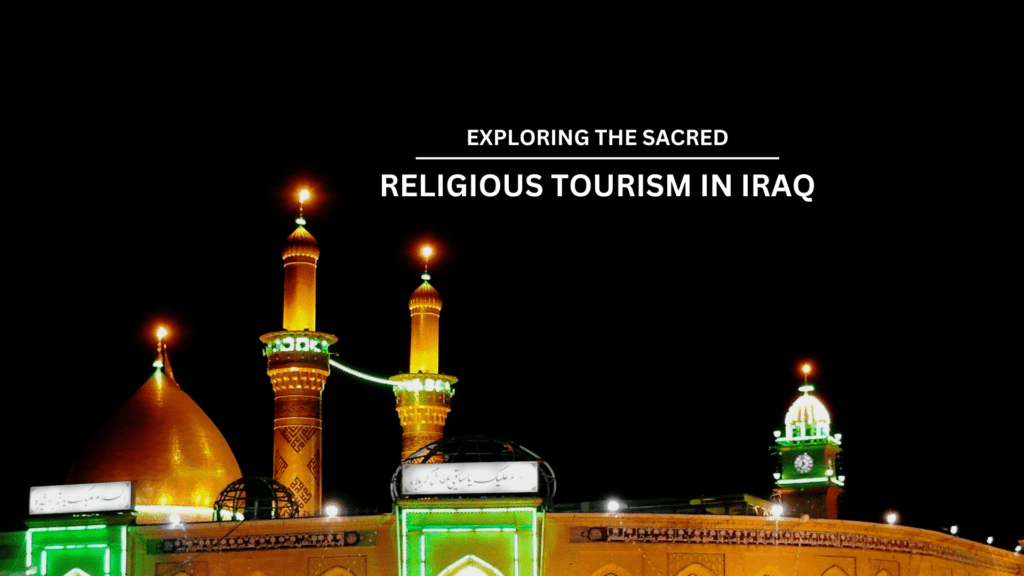
Al-Kadhimiya Mosque is one of the most important religious landmarks in Baghdad and a major place of visitation for pilgrims. Its golden domes and intricate design make a powerful visual impression, but the deeper significance lies in its atmosphere of devotion and reverence.
Visitors should dress modestly and be attentive to local etiquette. The experience here depends on timing. At quieter moments, the architecture and stillness stand out. During periods of pilgrimage or religious commemoration, the site feels more intense and communal. Both experiences are meaningful, but they are different, so expectations should be set accordingly.
Abu Hanifa Mosque
In the Adhamiya district, Abu Hanifa Mosque carries major importance in Sunni Islamic heritage. Named for Imam Abu Hanifa, the influential scholar and jurist, the mosque attracts both worshippers and those interested in Baghdad’s long religious and intellectual history.
The surrounding area also adds to the visit. A mosque in Baghdad is rarely just a building. It exists within a living neighbourhood shaped by routine, family life and local commerce. For travellers seeking a more rounded sense of the city, that context matters as much as the monument itself.
Everyday Baghdad: markets, food and the Tigris
A city becomes memorable when major sites give way to ordinary pleasures. Baghdad does this particularly well. Between its formal landmarks, make room for places where the city breathes most naturally.
Shorja Market
Shorja Market is one of Baghdad’s oldest and busiest commercial areas, and it offers an entirely different energy from the city’s scholarly and religious sites. Here, movement, trade and texture take over. Spices, household goods, fabrics and daily commerce create a vivid picture of Baghdad as a working capital rather than a museum of past glory.
It can feel intense, especially for first-time visitors unused to crowded traditional markets. That is part of the appeal, but it also means timing and pace matter. Going with someone who knows the area can make the visit more comfortable and more informative.
The Tigris riverbanks and Masgouf experience
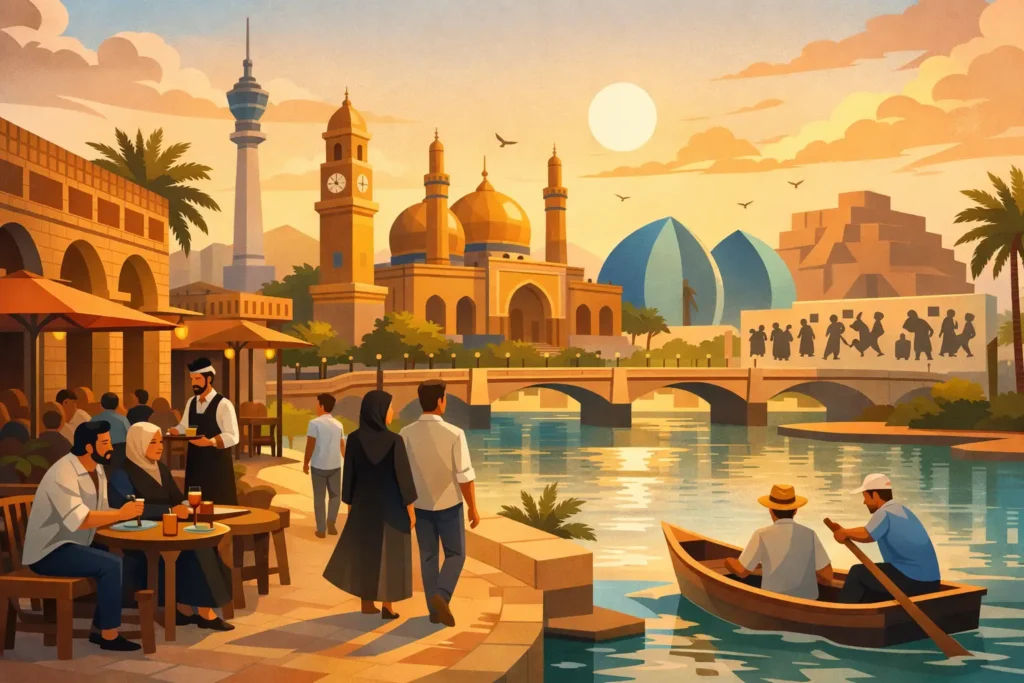
No visit to Baghdad feels complete without time by the Tigris. The river softens the city and gives it one of its most recognisable moods, particularly in the late afternoon and evening. Depending on where you go, you may find family promenades, local cafés or restaurants serving masgouf, Baghdad’s famous grilled fish.
Masgouf is more than a meal. It is a social ritual tied closely to place, especially when eaten near the water. For travellers trying to understand the city’s hospitality, this is one of the most accessible and enjoyable entry points. It is relaxed, convivial and unmistakably Baghdadi.
Baghdadi neighbourhood walks
Some of the most rewarding hours in Baghdad come from simply moving through its neighbourhoods with purpose and sensitivity. Streets lined with palms, modest shops, local bakeries, school runs and evening gatherings all reveal the city beyond its headline sites. This is where Baghdad feels least performative and most itself.
That said, neighbourhood exploration works best with local insight. Baghdad is large, and not every area is equally practical for every traveller. It depends on your interests, your timing and whether you are visiting independently or with support. A well-planned city guide or trusted local recommendation can make all the difference.
Baghdad does not ask to be consumed quickly. It asks to be read carefully – through bookshelves, brickwork, prayer spaces, market lanes and river light. Give it that attention, and the city returns something generous: a fuller, more human picture of Iraq than many travellers expect before they arrive.