
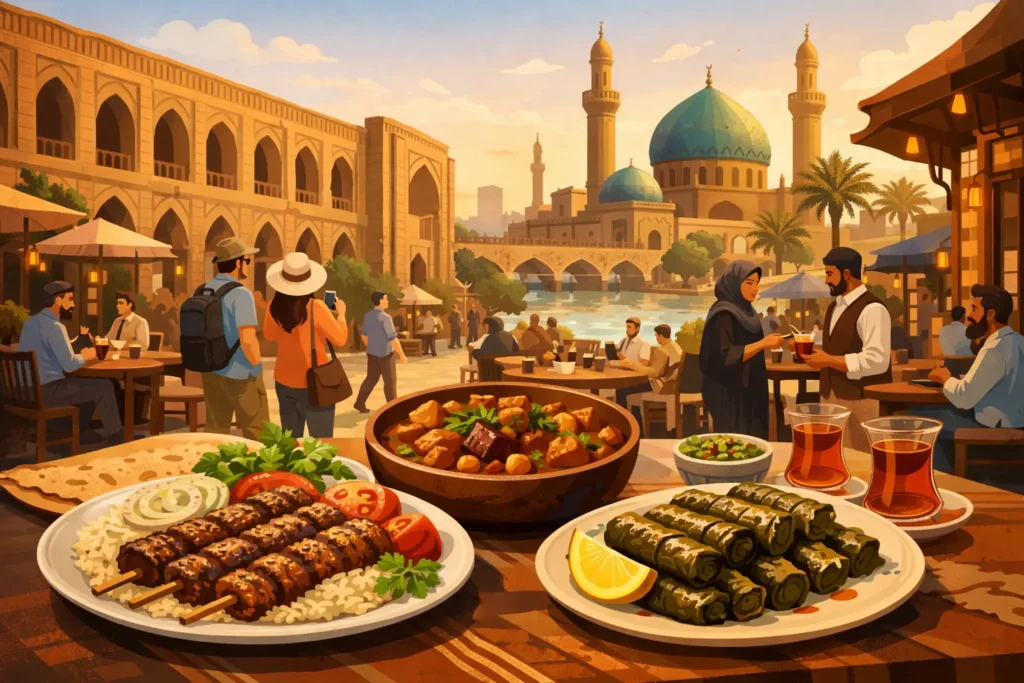
The first truly memorable Iraqi meal is rarely only about what is on the plate. It may be a river fish grilled over an open fire in Baghdad, a shared tray of fragrant rice in Najaf, or tea and warm bread offered before you have had time to ask for it. This Iraqi food guide is designed for travellers who want to understand the country through its kitchens, markets and generous table culture – with enough practical context to order confidently.
Iraqi cuisine reflects the country’s geography and long history: the fertile plains between the Tigris and Euphrates, date-growing regions in the south, mountain communities in Kurdistan, and centuries of movement between cities and trading routes. There is no single Iraqi menu. Recipes, spice levels and preferred ingredients change from one household and region to another. What remains consistent is the importance of hospitality. Food is often shared, portions can be abundant, and a simple invitation to eat is frequently an invitation to connect.
Iraqi Food Guide: The Dishes to Look For
Masgouf: Baghdad’s signature river meal
Masgouf is one of Iraq’s best-known dishes and a compelling reason to plan an unhurried evening beside the Tigris in Baghdad. Fresh carp is butterflied, seasoned simply, then slow-grilled upright around a wood fire. The method allows the fish to absorb smoke while staying tender, usually finished with ingredients such as tamarind, tomato, onion and herbs.
It is commonly served with flatbread, fresh salad and pickles, and is best approached as a shared meal rather than a quick lunch. Choose a busy, well-regarded restaurant where fish is prepared to order and clearly cooked through. The waiting time is part of the experience: conversations lengthen, tea arrives, and the city’s riverfront rhythm takes over.
Quzi: A celebratory centrepiece
Quzi, sometimes written as qoozi, is associated with generosity and gatherings. It typically brings together slow-cooked lamb, seasoned rice, nuts and raisins, with variations that may include stuffed vegetables or bread. The sweet notes of dried fruit sit alongside savoury meat and warming spices, creating a dish that feels festive without being overly complicated.
You may find quzi in traditional restaurants, at family celebrations or on special occasion menus. It can be rich, so it suits a long lunch or a group meal. For many visitors, it offers a clear introduction to the Iraqi pleasure of serving a table that is meant to be shared.
Dolma: Small parcels with a big regional identity
Iraqi dolma is often more generous and more layered than travellers expect. Grape leaves may be joined by stuffed onions, peppers, tomatoes, aubergines and courgettes, all filled with rice, herbs and sometimes minced meat. The vegetables are arranged closely in a pot and cooked slowly, allowing their flavours to mingle.
Recipes vary considerably. Some are tangier with tamarind or pomegranate notes; others lean towards a deeper, spiced filling. In Iraqi homes, dolma is a labour of care, which is precisely why it is such a meaningful dish to seek out. Order it when you have time to eat slowly and appreciate the different textures on the plate.
Kubba: Comfort food in many forms
Kubba is a family of dishes rather than one fixed recipe. The familiar version is a crisp shell of bulgur or rice filled with minced meat, onions and spices, but Iraqi kitchens produce many interpretations. Kubba may be fried, baked, simmered in broth or served in a tangy soup.
Kubba halab, often shaped into small ovals, is a popular introduction for first-time visitors. Kubba mosul can be strikingly large and flat, while other regional styles use rice dough and rich fillings. Ask what style is local to the restaurant or city you are visiting. It is an easy conversation starter and a useful reminder that Iraqi food is deeply regional.
Tashreeb, bamia and the pleasure of a good stew
For everyday warmth, look for tashreeb: bread softened in a richly flavoured broth, often accompanied by lamb, chicken, chickpeas or vegetables. It is humble, filling and especially satisfying in cooler weather. The bread is not an afterthought here; it carries the sauce and turns a stew into a complete meal.
Bamia, an okra stew usually cooked with tomato and served with rice, is another household favourite. Its flavour depends on patient cooking and a balance of acidity, spice and tenderness. Travellers who only search for grilled meat can miss these dishes, yet stews often reveal the quiet skill of Iraqi home-style cooking.
Iraqi biryani and tepsi baytinjan
Iraqi biryani is distinct from the better-known South Asian versions. It is usually a colourful rice dish with vermicelli, peas, carrots, raisins, nuts and meat or chicken. The result is aromatic and gently sweet-savoury, often served at celebrations or as part of a substantial lunch.
Tepsi baytinjan is another dish worth recognising on a menu. This baked aubergine tray may include potatoes, tomatoes, peppers and minced meat beneath a tomato-based sauce. It is comforting, practical and particularly rewarding for travellers keen to try dishes built around vegetables as much as meat.
Breakfast, Bread and the Iraqi Sweet Tooth
Morning in Iraq can begin with warm samoon, the distinctive sesame-topped bread shaped like a small canoe. Its crisp exterior and soft centre make it ideal with cheese, eggs, beans or jam. Bakeries are part of the daily landscape, and buying bread fresh is one of the simplest ways to experience the everyday city.
For a more indulgent breakfast, try qaymar with honey or date syrup. This thick, clotted dairy treat is especially associated with Baghdad and is often eaten with bread. It is rich, so sharing a portion is sensible, particularly if a full day of sightseeing lies ahead.
Dates deserve more than a passing mention. Iraq has a long date-growing heritage, and varieties differ in size, softness and sweetness. They may appear at breakfast, alongside coffee, in desserts or as a thoughtful gift. Kleicha, a traditional filled biscuit, is another essential taste. Often flavoured with dates, walnuts or a gently spiced filling, it is closely associated with Eid and family hospitality but can be enjoyed throughout the year.
Tea is equally central. Iraqi chai is generally strong, sweet and served in small glasses. Accepting a glass when offered is a small but meaningful sign of openness, although it is perfectly polite to request less sugar. Coffee is also widely available, especially in hotels and modern cafés, but tea remains the more universal companion to conversation.
How to Eat Well and Respectfully in Iraq
The best meals are not always found in the most polished dining rooms. A busy local restaurant with families at the tables, a trusted hotel recommendation or a market stall with a clear turnover of freshly prepared food can all lead to excellent experiences. For first-time visitors, asking a local host, guide or accommodation team what they personally order is often more useful than relying on an unfamiliar menu description.
Meals may arrive as shared plates, particularly when dining with Iraqi friends or family. Follow the lead of your hosts, take modest first portions and allow time for the meal. Using the right hand for eating shared food is customary in many settings. If cutlery is offered, use it comfortably; courtesy matters more than performing a rule perfectly.
Vegetarian travellers can eat well, but should plan with care. Rice, breads, salads, beans, aubergine dishes, dolma and some stews can be suitable, yet stocks and fillings may contain meat. Be clear about your needs when ordering, ideally with help from a local Arabic or Kurdish speaker depending on the region. Vegans may need more advance planning because dairy, ghee and meat stock are common in traditional cooking.
As with travel anywhere, choose food that is freshly cooked and served hot, drink sealed bottled water where recommended, and use established venues when trying meat or fish dishes. Street food can be excellent, but busy stalls with visible preparation and local customers are usually the wisest choice. During Ramadan, restaurant hours and daytime service can vary, while evenings become especially lively and food-centred.
Let the Table Shape Your Journey
A food-focused route through Iraq can give each city a different character. In Baghdad, make time for masgouf and tea by the river. In the shrine cities of Najaf and Karbala, look for generous rice dishes, sweets and the welcoming rhythm of shared meals around visits of spiritual significance. In Basra, dates and Gulf-influenced flavours add another dimension. Across Iraqi Kurdistan, breads, grilled meats, yoghurt-based dishes and mountain produce bring yet more variety.
Do not try to tick every dish off a list. Choose one local speciality, visit a bakery early, accept tea when it feels appropriate, and leave room for the meal you did not plan. Iraq is often understood through its ancient sites and sacred places, but its food offers another kind of access: direct, generous and human. When planning where to stay, staying close to neighbourhoods with active restaurants and markets can turn dinner into one of the most lasting parts of the journey.