A few streets can change the rhythm of a pilgrimage. In both cities, staying close to the shrines means waking to an atmosphere of devotion, walking rather than relying on transport, and keeping the day flexible around prayer and visits. Yet Najaf versus Karbala accommodation is not simply a question of which city has the better hotel. It is about choosing the pace, purpose and practical shape of your stay.
Najaf and Karbala are among Iraq’s most spiritually significant destinations, welcoming pilgrims, diaspora visitors and culturally curious travellers throughout the year. Both offer warm hospitality and accommodation ranging from simple guesthouses to polished hotels. Their differences become clearer when you consider where you want to spend your time, who you are travelling with and whether your visit falls during a major religious occasion.
Najaf versus Karbala accommodation: the central difference
Najaf often suits travellers seeking a more contained, reflective base. The city centres on the Imam Ali Shrine, with many hotels and guesthouses within walking distance of the old city and its pilgrimage routes. A central stay can make short, repeated shrine visits easy, particularly for visitors who prefer to return to their room for rest between prayers or during the hotter parts of the day.
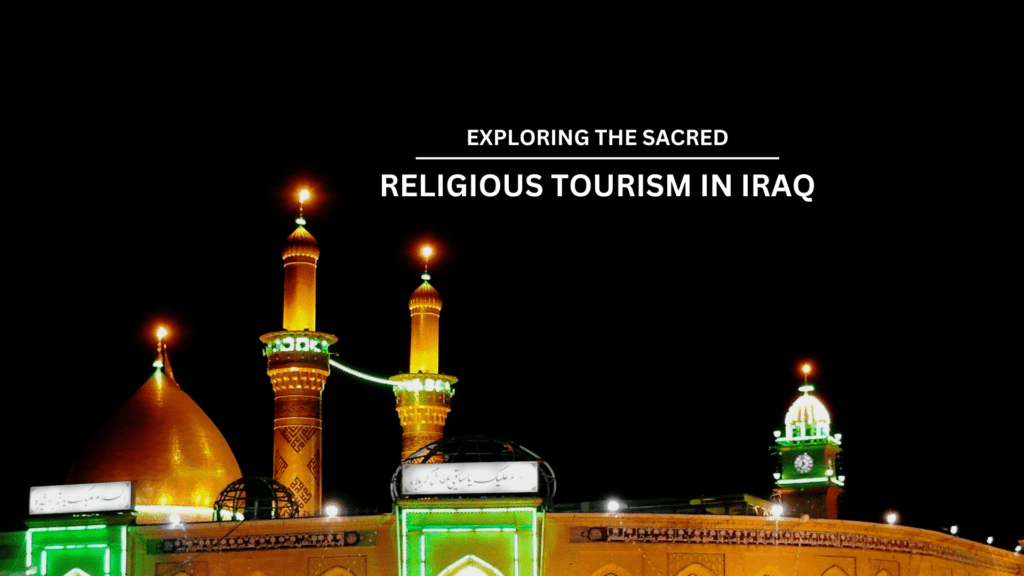
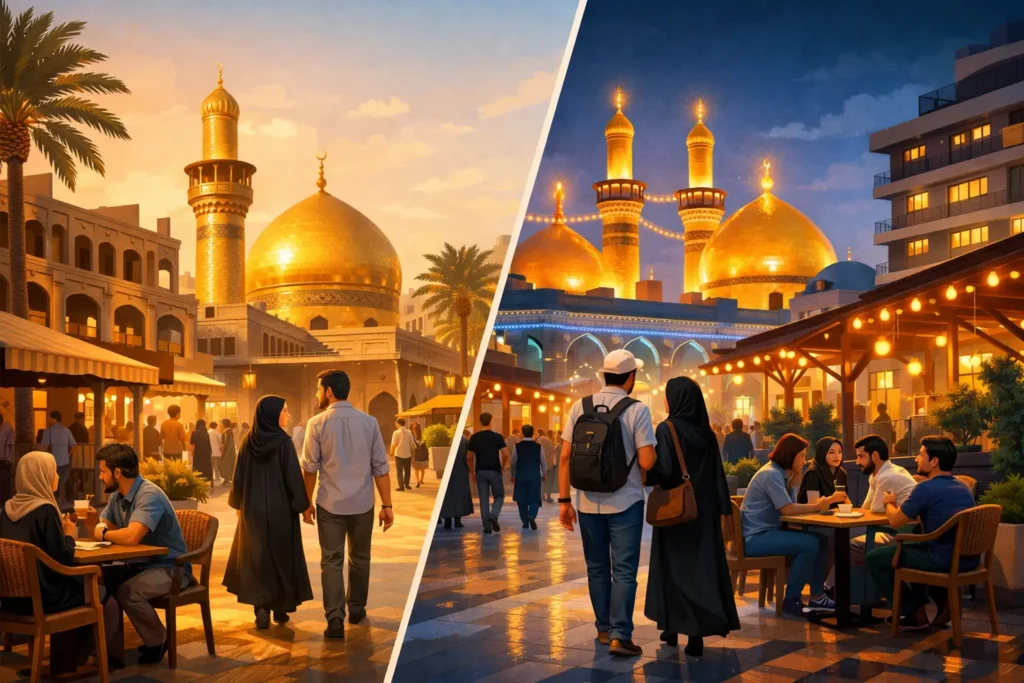
Karbala has a more expansive pilgrimage landscape. The Imam Hussein Shrine and Al-Abbas Shrine form the emotional heart of the city, connected by a broad pedestrian route that is especially memorable after dark. Accommodation near this central area places visitors close to both shrines, but the city’s scale and visitor numbers can make location more consequential. A hotel that looks nearby on a map may still involve a longer walk through busy streets or temporary pedestrian arrangements.
Neither choice is automatically better. Najaf can feel more straightforward for a first stay focused on one shrine and the surrounding religious heritage. Karbala may be the stronger choice for travellers who want to spend several unhurried days immersed in the rituals, architecture and human energy around two major shrine complexes.
Location matters more than hotel stars
In either city, a well-located modest hotel can be more useful than a higher-category property on the outskirts. During a pilgrimage visit, proximity affects more than sightseeing. It shapes your ability to rest, manage luggage, attend prayers, travel with older relatives and move comfortably at busy times.
When assessing accommodation in Najaf, ask whether the property is genuinely walkable to the Imam Ali Shrine and whether the route is easy to follow. The streets nearest the shrine may be lively late into the evening, which many visitors value, but light sleepers may prefer a room away from the busiest frontage. It is also worth considering access to transport if you plan to visit Wadi Al-Salam cemetery, Kufa or other sites beyond the immediate centre.
In Karbala, clarify which shrine district you will be closest to. Hotels around the central shrine area offer powerful immediacy, particularly for travellers attending early or late visits. Properties a little farther out can provide more space and a calmer return at the end of the day, though this may mean arranging a taxi or accepting a longer walk. For families, that trade-off can be worthwhile.
Room descriptions do not always communicate the practical details international visitors need. Before booking, check the room occupancy, lift access, breakfast timing, air conditioning, private bathroom arrangements and whether staff can assist with transport or local orientation. These are ordinary travel questions, but they matter greatly after a long journey or a full day on foot.
The best fit for different types of traveller
Pilgrims whose main intention is regular shrine visitation often benefit from staying central in whichever city they are visiting. In Najaf, a short walk to the Imam Ali Shrine makes it easier to maintain a gentle, personal schedule. In Karbala, central accommodation helps visitors experience both shrine precincts without turning each visit into a transport decision.
Families and multigenerational groups may prefer a hotel with larger rooms, a dependable lift and a less congested approach, even if it sits beyond the closest streets. The shortest distance is not always the easiest route for pushchairs, limited mobility or tired children. Ask directly about room configuration rather than assuming a family room will suit everyone.
Independent heritage travellers may enjoy dividing their nights between the two cities. Najaf provides access to a city of scholarship, pilgrimage and deeply rooted urban history, while Karbala offers a distinct spiritual atmosphere and an exceptionally meaningful public realm around its shrines. Two or three nights in each city allows the experience to breathe, rather than treating either destination as a rushed stop.
For diaspora visitors, accommodation can also be about reunion. A central hotel may be ideal for a tightly planned pilgrimage, while a quieter property with easier vehicle access can work better when relatives are visiting, meals are shared or day trips are part of the schedule.
Price, availability and major pilgrimage dates
The largest accommodation difference between Najaf and Karbala often appears in the calendar, not in the buildings themselves. Demand rises sharply around major religious observances, particularly in Karbala during Arbaeen and Ashura. Rooms close to the shrines can be booked far in advance, and available options may change quickly as travel plans develop.
At these times, travellers should prioritise confirmed arrangements, realistic arrival times and a clear understanding of how close vehicles can reach the property. Walking routes, access points and local movement patterns may differ from ordinary days. Booking early is sensible, but confirmation is just as important: retain the property’s contact details, confirm the arrival date shortly before travel and share your expected arrival time if it may be late.
Outside peak periods, both cities can offer better choice and a more relaxed pace. This may appeal to first-time international visitors who want time for conversation, photography where appropriate, local food and reflective visits without the pressure of the busiest dates. It can also make it easier to compare room types rather than taking the first available option.
Price should be considered alongside reliability and location. A lower rate farther from the centre may appear attractive, but daily taxis, longer walks and reduced flexibility can narrow the saving. Conversely, paying extra for a central room is most worthwhile when your itinerary revolves around multiple shrine visits each day.
Comfort, customs and respectful stays
Hotels in Najaf and Karbala serve visitors from Iraq and around the world, and hospitality is often personal. A polite greeting, patience at reception and clear communication about your needs will go a long way. If you are unfamiliar with local customs, observe the tone of shared spaces, dress modestly and remember that these are living holy cities rather than museum settings.
Breakfast arrangements vary. Some properties provide a simple morning meal, while others may have limited service or serve food at particular hours. Travellers with dietary needs, young children or medication schedules should ask in advance rather than leave it to arrival day. Carrying water and a few familiar snacks is a practical habit, especially when moving between hotels or arriving during a busy period.
International visitors should not expect every property to operate like a large global chain. That is not a disadvantage, but it does mean that direct, specific questions are valuable. Ask about payment methods, passport registration requirements, check-in times and whether the reception can arrange a trusted local driver. Platforms such as Stay In Iraq can help travellers begin their search with the wider journey in mind, rather than viewing a room as an isolated booking.
Should you stay in Najaf, Karbala or both?
Choose Najaf if your visit is centred on the Imam Ali Shrine, if you value a compact pilgrimage base, or if you want to pair shrine time with Kufa and the surrounding religious heritage. Choose Karbala if the Imam Hussein and Al-Abbas Shrines are the focus of your journey, or if you want to experience the city’s distinctive devotional atmosphere over several days.
Stay in both when time allows. The road between the two cities connects two places that are often planned together, but their character should not be compressed into a single overnight decision. Separate stays give you quieter mornings, more flexibility and the chance to experience each city on its own terms.
The right accommodation is the one that leaves room for what brought you to Iraq: prayer, heritage, family connection or the simple privilege of being present in two of the country’s most cherished cities. Book with your daily rhythm in mind, and the practical details will support the meaning of the journey.