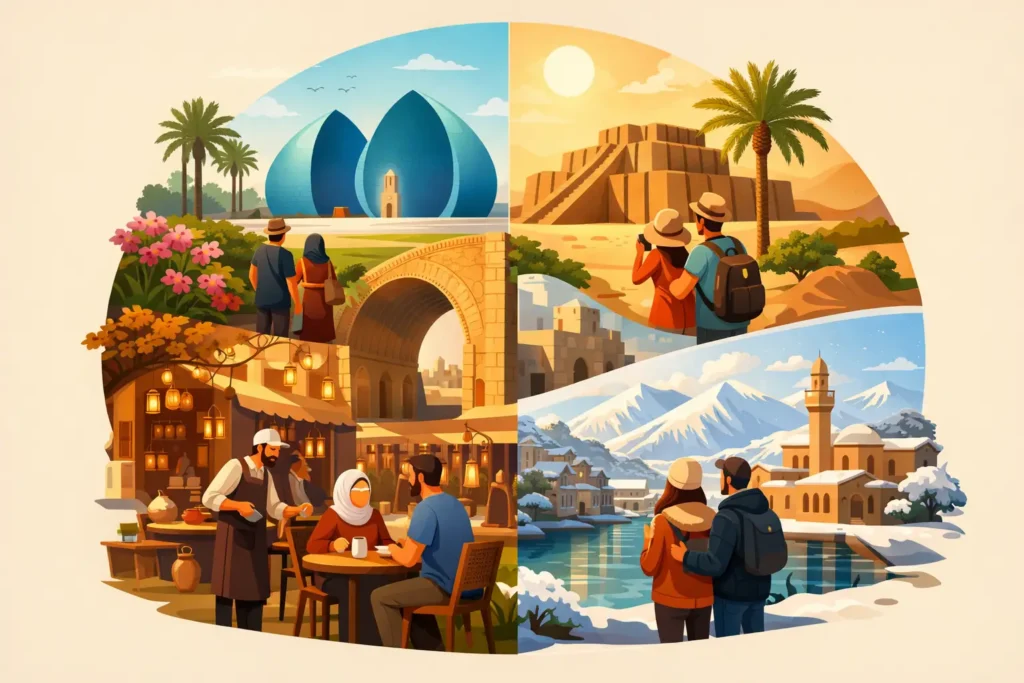
A spring afternoon in Baghdad, a cool evening in Erbil, the golden light over the marshes in the south – timing shapes your experience of Iraq more than many first-time visitors expect. If you are wondering about the best time to visit Iraq, the short answer is spring and autumn. The better answer is that it depends on where you are going, what you want to experience, and how comfortable you are with heat, crowds, and religious travel seasons.
Iraq is not one single travel environment. Its climate shifts between the mountains of the north, the plains around Baghdad, the shrine cities of Najaf and Karbala, and the deep south near Basra. That is why the smartest way to plan is not simply by month, but by season and purpose.
Best time to visit Iraq for most travellers
For most international visitors, the most comfortable months are March to May and October to November. During these periods, temperatures are generally more manageable, cities are easier to explore on foot, and day trips to archaeological and religious sites feel far less demanding.
Spring is especially appealing. Landscapes are greener, the weather is pleasant in many parts of the country, and historical sites are more enjoyable when you are not dealing with peak summer heat. This is often the season that gives first-time visitors the most balanced introduction to Iraq – practical for sightseeing, rewarding for photography, and comfortable for moving between cities.
Autumn is another strong choice, particularly for travellers who want warm days without the intensity of midsummer. By October, many areas become much easier to explore, and urban travel feels less tiring. If your trip includes Baghdad, Babylon, Samarra, Najaf, Karbala or Basra, autumn can be a very sensible window.
Iraq by season
Spring in Iraq – March to May
Spring is widely considered the best season for general travel in Iraq. Days are usually mild to warm, depending on the region, and evenings can still feel fresh, particularly in the north. This is the season for travellers who want to combine heritage, culture and multiple cities in one itinerary.
Baghdad is more comfortable for walking through historic quarters, visiting museums, and spending time in cafés or along the Tigris. In the north, places such as Erbil and Sulaymaniyah can feel especially inviting, with softer weather and clearer conditions for excursions. In the south, archaeological sites and marsh areas are still far more manageable than they are in summer.
The trade-off is that spring is no secret. It is one of the most popular times for travel, so accommodation in key cities can be busier, especially around major holidays or pilgrimage dates.
Summer in Iraq – June to August
Summer is the most challenging season for many visitors, especially in central and southern Iraq. Temperatures can become extremely high, and daytime sightseeing is often limited by the heat rather than by distance or transport.
That does not mean summer travel is impossible. It simply requires a different pace. Early mornings and evenings become the best times for activity, while midday is better reserved for rest, indoor visits, or shorter transfers. Travellers visiting family, returning as part of the diaspora, or focusing on specific city stays may still find summer workable with careful planning.
Northern Iraq is generally the most forgiving region during this period. Cities such as Erbil and mountain areas nearby can offer a more comfortable experience than Baghdad or Basra, although warm conditions still apply. If you must travel in summer, building your itinerary around the north is often the wisest approach.
Autumn in Iraq – September to November
Autumn brings relief after summer and is one of the best times to visit Iraq if you want warmth without exhaustion. September can still be hot, particularly in the south, but by October and November many destinations become much easier to enjoy.
This season works well for travellers interested in both cities and heritage sites. It is also a good time for slower, more reflective journeys – the kind where you want to sit with history rather than rush through it. Shrine cities, old markets, riverside areas and major landmarks all become more appealing when the weather starts to settle.
For photographers, autumn often brings clear light and a softer atmosphere than the height of summer. For first-time visitors, it offers much of spring’s convenience with a slightly calmer rhythm in some destinations.
Winter in Iraq – December to February
Winter can be a very good time to visit Iraq if you prefer cooler weather and do not mind occasional rain or colder evenings. In Baghdad, Najaf and Karbala, daytime temperatures are often comfortable for walking. In the north, however, winter can be much colder, and mountain areas may experience snow.
This season suits travellers who prioritise urban exploration, religious visits, museums, and cultural immersion over long hot-weather excursions. It can also be an excellent time for those who dislike heat entirely. The main compromise is that some landscapes are less vibrant, and weather in the north may affect flexibility.
For many international travellers, winter is underrated. Iraq’s cities can feel especially welcoming during the cooler months, and there is something distinctive about experiencing the country at a more measured pace.
The best time to visit Iraq depends on your travel style
For heritage and archaeology
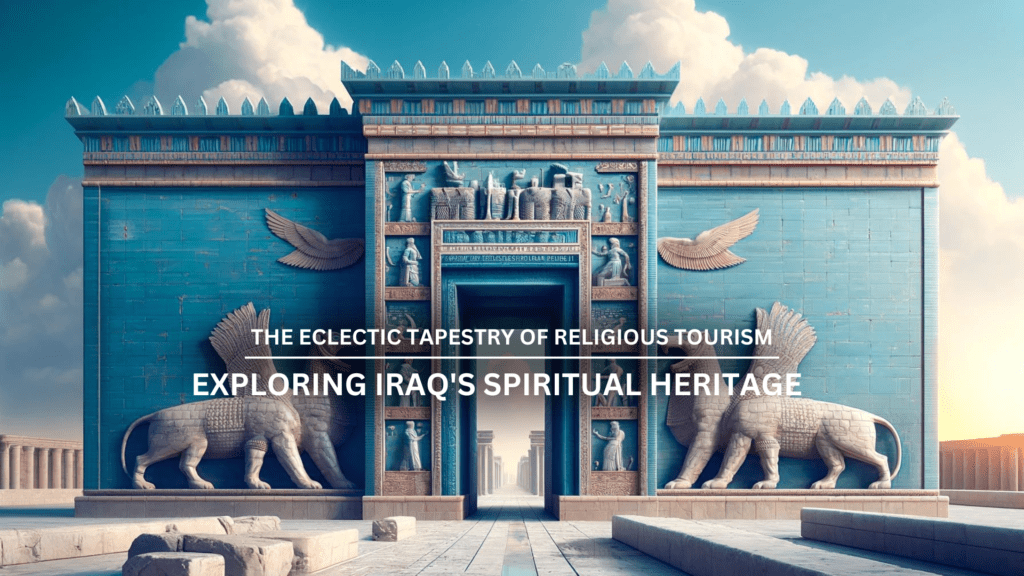
If your priority is Babylon, Ur, Samarra, Ctesiphon, old Baghdad and other historic sites, aim for spring or autumn. These months let you spend longer outdoors without the heat cutting the day short. Archaeological travel in Iraq is deeply rewarding, but it is far better when the weather allows you to slow down and absorb what you are seeing.
For religious travel and pilgrimage
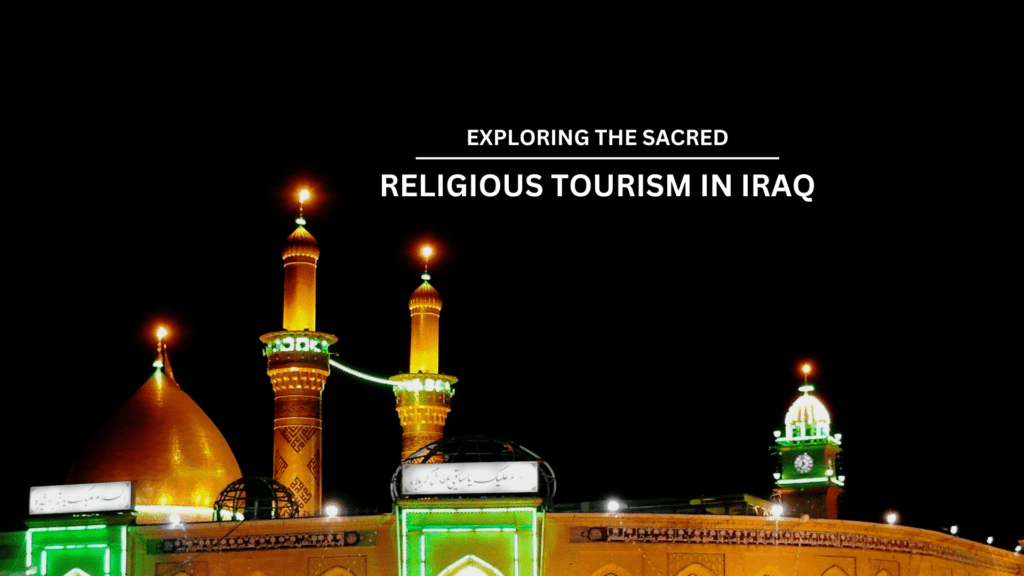
Iraq welcomes visitors year-round to its important spiritual centres, particularly Najaf, Karbala, Kadhimain and Samarra. For many pilgrims, dates are shaped by the Islamic calendar rather than weather. That means the best time may be linked to specific religious observances, even if conditions are warmer or crowds are heavier.
If comfort and easier logistics matter more than travelling during a major occasion, cooler months are often preferable. If the purpose of your journey is spiritual, the timing may be non-negotiable – and that is perfectly valid. In those cases, planning accommodation and transport early becomes even more important.
For nature and the north
The northern regions are often best in spring and early autumn. Spring brings greener landscapes and excellent conditions for scenic drives and mountain views. Autumn is also pleasant, with clear days and fewer weather extremes. Winter can be beautiful in the north, but it is better suited to travellers prepared for colder conditions and changing road access in some areas.
For budget and flexibility
Peak comfort usually comes with higher demand. If you are looking for better availability or potentially lower rates, shoulder periods within autumn and winter may offer more flexibility. Summer can also present value in some places, but the savings only make sense if you are genuinely comfortable travelling in high heat.
Month-by-month guidance at a glance
March, April and May are excellent for most itineraries. June, July and August are best approached carefully, especially outside the north. September begins to improve, while October and November are strong all-round months. December, January and February can be very good for cooler city travel and religious visits, with the north requiring a little more preparation.
Practical timing tips for first-time visitors
One of the biggest mistakes travellers make is trying to do too much in the hotter months. Iraq rewards slower travel. Distances, traffic, prayer times, local rhythms and weather all shape the day. A realistic itinerary is almost always a better one.
If this is your first visit, spring is usually the easiest starting point. You will have more freedom to explore on foot, more comfortable overland travel, and a gentler introduction to the country’s variety. If spring is not possible, October and November are excellent alternatives.
It is also worth checking whether your travel dates overlap with major religious events or public holidays. These periods can be extraordinary to witness, but they also affect accommodation demand, transport flow and the pace of movement in key cities. For some travellers, that energy is the entire reason to come. For others, a quieter week may be preferable.
For travellers using Stay In Iraq to plan accommodation and routes, seasonality matters because the right base can make a big difference. In warmer months, being centrally located and reducing daily transfer times is not just convenient – it improves the whole trip.
So when should you go?
If you want the simplest answer, choose spring or autumn. If you want the most accurate answer, match the season to the Iraq you want to experience – ancient sites in softer light, sacred cities during meaningful moments, mountain landscapes in bloom, or urban culture in the cooler months.
Iraq is not a destination to rush, and the right season gives you the space to experience what makes it special: depth, welcome, memory, and the feeling that every city has another story waiting just beyond the next street.