
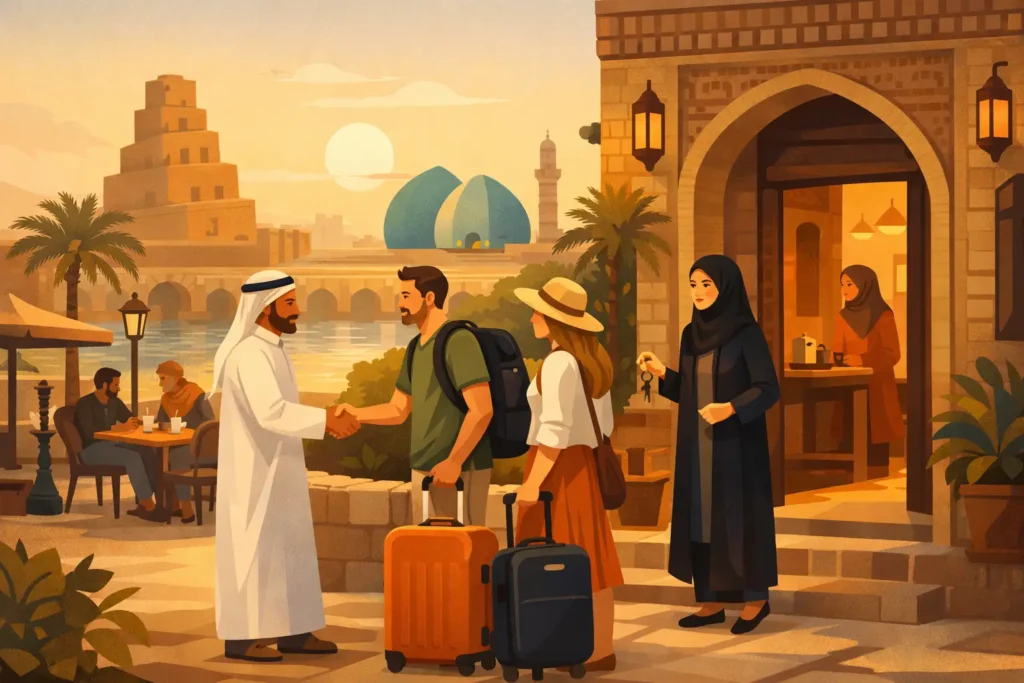
A spare room in Najaf, a family house near Erbil’s old quarter, or a well-kept flat in Baghdad can offer something a standard hotel rarely can: a genuine introduction to Iraqi life. For many visitors, the most memorable part of a journey is not only the shrine, museum or archaeological site they came to see, but the welcome they receive around a shared table or from a host who knows the neighbourhood well. If you are considering how to rent your home to travellers, the opportunity begins with that welcome, then succeeds through careful preparation.
Hosting is not simply about handing over keys. It is about creating a stay that feels clear, comfortable and respectful for guests who may be visiting Iraq for the first time, returning to family roots, or travelling for pilgrimage and heritage.
Start with the kind of stay you can genuinely offer
Before photographing a room or setting a nightly rate, decide what type of host you want to be. Some homeowners are happiest renting an entire property and giving guests independence. Others prefer a private room in a lived-in home, where conversation, tea and local guidance are part of the experience. Both can be valuable, provided the description matches reality.
Think honestly about the location. A calm residential street may suit a family, a diaspora visitor or a traveller seeking a slower connection with the city. A home close to a religious site, transport route or historic centre may be especially useful for pilgrims and independent explorers. Do not assume every guest wants the same thing. A photographer may value light, character and access to neighbourhood life; a family may prioritise space, quiet and practical facilities.
Be precise about what is private and what is shared. State whether guests have their own bathroom, entrance, kitchen access, parking space, outdoor area or lounge. If family members live in the home, say so warmly and clearly. Honest expectations prevent awkwardness and build the trust on which good hosting depends.
Prepare your home for comfort, not perfection
A beautiful listing does not need to look like a luxury hotel. It does need to feel clean, functional and thoughtfully prepared. Travellers are usually more forgiving of modest interiors than they are of unclear information, unreliable basics or a space that does not resemble its photographs.
Begin with the foundations: fresh bedding, clean towels, working locks, good lighting, dependable hot water where available, cooling or heating suited to the season, and reliable internet if you offer it. Check plug sockets, taps, appliances and bathroom fittings yourself. A small repair handled before arrival is far easier than trying to solve it while guests are tired from a long journey.
Make the space easy to understand. Label anything that may confuse a first-time visitor, such as a water heater, air-conditioning remote, gate lock or washing machine. Leave simple instructions in clear English, and add Arabic or Kurdish where helpful for your expected guests. If Wi-Fi is available, display the network name and password somewhere guests can find without needing to ask.
A few practical touches create immediate reassurance: drinking water on arrival, basic soap and toilet paper, a bin in the bedroom and bathroom, spare blankets, and a small place to store luggage. If you provide a kitchen, stock only what you can reliably maintain. Tea, coffee, cups, plates and a kettle can be more useful than an elaborate but poorly supplied kitchen.
Put safety and privacy first
Every guest should be able to settle in with confidence. Fit secure locks where appropriate, test smoke or fire safety equipment if installed, keep emergency contact details available and make sure exits are clear. Explain any house rules that protect the home and its residents, including rules around smoking, visitors, noise or use of shared areas.
Privacy matters just as much. Do not enter a guest’s room or private rental without prior agreement except in a genuine emergency. For international travellers, respectful boundaries are a visible sign of professional hosting. For hosts, clear rules also protect family life and reduce misunderstandings.
How to rent your home legally and responsibly
The rules for short-term accommodation can differ by city, governorate, building type and ownership arrangement. Before accepting bookings, check the permissions, registration requirements, tax obligations and building rules that apply to your property. If you rent rather than own the home, review your tenancy agreement and obtain the landlord’s written approval where required.
It is also wise to understand any guest registration or identification procedures relevant to your area. Requirements can change, so confirm details with the appropriate local authorities or a qualified local adviser rather than relying on old online advice. This is not bureaucracy for its own sake. It helps you host transparently and gives visitors confidence that their stay has been arranged responsibly.
Keep straightforward records of bookings, payments, guest communications and household expenses. Even if you start with occasional stays, organised records will make it easier to assess whether hosting is worthwhile and to meet any financial obligations correctly.
Create a listing that gives travellers confidence
For a visitor planning an unfamiliar destination, uncertainty is often the biggest barrier. Your listing should answer practical questions before they become messages: Where is the home? How will guests arrive? What is nearby? What will the room and bathroom actually look like?
Use recent, well-lit photographs taken in daylight. Show the bedroom, bathroom, entrance, main living areas offered to guests and any particularly useful feature, such as a courtyard, balcony, desk or view. Avoid filters that change the colour or scale of the space. A truthful photograph earns more than a glamorous one that disappoints on arrival.
Write with useful detail rather than broad promises. Instead of calling an area “perfectly located”, explain that it is a short drive from a shrine, near a known landmark, or within reach of a taxi route. Mention stairs, uneven access, limited parking, shared facilities or a lively street if these may affect someone’s stay. The right guest will appreciate the clarity.
You can also share a little of what makes the stay personal. Perhaps your family has lived in the neighbourhood for generations, you enjoy recommending local breakfast spots, or the home is close to a place of spiritual or historical significance. This context helps travellers see Iraq as it is: a country of distinct cities, communities and generous human connections.
Set a fair rate and clear booking terms
A fair price reflects more than the number of beds. Consider location, season, local demand, property condition, cleaning, utilities, internet, furnishings and the time you spend communicating with guests. Compare homes of a similar size and standard in your area, but do not copy a price without considering what is included.
Starting with a competitive rate can help a new host gain early bookings and feedback. Raising it gradually may make sense once you have a record of reliable stays. Equally, do not price so low that you cannot maintain cleanliness, respond promptly or replace essentials. A sustainable hosting rate supports a better guest experience.
Be clear about the total price, payment timing, cancellation terms, check-in hours and any additional charges before a guest commits. If a security deposit is appropriate, explain why, how it is handled and when it is returned. Transparent terms protect both sides and reduce uncomfortable conversations later.
Make arrival calm and communication easy
An excellent stay often begins before the guest arrives. Send practical arrival information a few days ahead: the address or landmark, the best contact number, check-in arrangements, what to do if they arrive late and any advice about reaching the home from the airport, station or city centre. Where directions are complex, a landmark-based explanation is often more helpful than an address alone.
Ask a few relevant questions without becoming intrusive. Their arrival time, group size, dietary needs, mobility considerations and reason for travel can help you prepare. A pilgrim may appreciate guidance on early transport; a heritage traveller may want help planning a day around museums or ancient sites. Offer what you know, but do not overpromise services you cannot provide.
On arrival, give guests a short orientation. Show them how locks, lights, Wi-Fi, water and air conditioning work. Point out nearby essentials such as a pharmacy, grocery shop, cash point or taxi pick-up point. If your home has cultural or household customs you would like guests to observe, explain them with warmth and directness. Respect is easier when expectations are shared kindly.
Let hospitality be practical as well as personal
Iraqi hospitality is often expressed through generosity, conversation and food. Those qualities can make a stay deeply meaningful, but good hosting also means reading the guest. Some will welcome tea and local stories; others may be tired, private or working remotely. Offer, do not pressure.
A small local guide written in your own voice can be one of the most valuable things you provide. Include a few trusted places to eat, useful transport notes, nearby cultural sites and basic etiquette suggestions. Keep recommendations current and personal. This kind of guidance can turn a convenient room into a memorable base for discovering a city.
If you choose to list through a platform such as Stay In Iraq, treat your profile as a promise. Reply promptly, keep your calendar accurate and update photos or descriptions when something changes. A dependable host helps make travel across Iraq feel more straightforward for every guest who follows.
The strongest homes are rarely those with the most expensive furnishings. They are the ones where travellers can rest easily, understand the arrangements and feel welcomed with dignity. Prepare well, communicate plainly and let the character of your home and community do the rest.