Babylon is not a museum piece behind glass. It is a vast archaeological landscape where ancient foundations, processional routes and later reconstructions sit beneath the open Iraqi sky. For travellers wondering how to visit Babylon, the experience is most rewarding when it is planned as part of a wider journey through central Iraq, with time to understand both the site and the living communities around it.
Located near Hillah in Babil Governorate, roughly 85 kilometres south of Baghdad, Babylon is one of the world’s most recognisable ancient names. Yet standing here feels very different from reading about it. The scale of the site, the dry earth underfoot and the quiet presence of the Euphrates region give the visit a human dimension that no textbook can reproduce.
Why Babylon deserves more than a quick stop
Babylon was once among the great cities of the ancient world, associated with kings, scholars, trade, architecture and the development of urban civilisation. Its name is closely linked to Nebuchadnezzar II, the Ishtar Gate, the Processional Way and the famed Hanging Gardens, although the exact location and form of the gardens remain debated by historians.
Today, Babylon is a UNESCO World Heritage Site. Visitors encounter archaeological remains alongside reconstructed elements from different periods of modern Iraqi history. This mixture can be surprising, particularly for travellers expecting an untouched ruin. It is better understood as part of Babylon’s complex story: a site shaped by millennia of use, rediscovery, preservation efforts and national cultural memory.
Come with curiosity rather than a checklist. The most meaningful visit is not about proving that every legendary detail can still be seen. It is about recognising that this was once a real city of immense influence, and that Iraq continues to care for and interpret its heritage for future generations.
Plan how to visit Babylon from Baghdad or Najaf
Babylon is easiest to reach by private car, pre-arranged driver or a guided itinerary. Most international visitors base themselves in Baghdad, where the journey generally takes around one and a half to two hours depending on traffic, road conditions and stops. Hillah is much closer, while Najaf can also work well for travellers combining religious heritage with Iraq’s ancient sites.
Public transport may be possible for confident, Arabic-speaking travellers, but it is not usually the most straightforward choice for a first visit. A driver or local guide brings practical advantages: easier navigation, flexibility around opening arrangements and valuable context once you arrive. It also allows you to pair Babylon with nearby destinations without rushing back before the day is done.
If you are building a central Iraq itinerary, consider staying in Baghdad for a few nights and making Babylon a full-day excursion. Travellers with more time may prefer an overnight stay in Hillah or Najaf, particularly if they want a slower pace and an early start. Accommodation availability and standards vary by city, so confirm your plans before travelling rather than assuming every location offers the same range of choices.
Check entry arrangements before you leave
Opening hours, entry procedures and photography rules can change, especially around public holidays, religious occasions or site management needs. Ask your hotel, local contact, guide or driver to confirm the current arrangements shortly before your visit. This is also the best way to check whether there are any areas temporarily closed for conservation work.
Do not rely on old online ticket prices or schedules. A little local confirmation makes the day far easier and helps you arrive prepared with the appropriate cash, identification and clothing.
Choose the right time of year and day
The most comfortable months for visiting Babylon are generally from October to April, when central Iraq’s temperatures are more manageable for walking outdoors. Spring brings especially pleasant light across the plains, while winter days can be cool and clear. Summer visits are still possible, but they require a more careful plan because midday heat can be intense.
In warmer months, arrive early in the morning. You will have softer light for photographs, more energy for exploring and a quieter atmosphere before the strongest heat. Bring water, a hat, sunscreen and comfortable closed shoes with a good grip. The terrain is uneven in places, dusty underfoot and not designed for high-fashion footwear.
Allow at least two hours on site, and longer if you are visiting with a guide or have a particular interest in archaeology. Babylon is best experienced at an unhurried pace. Pause at the Processional Way, look across the city’s footprint and give yourself time to imagine how people once moved through this extraordinary urban centre.
What you will see at Babylon
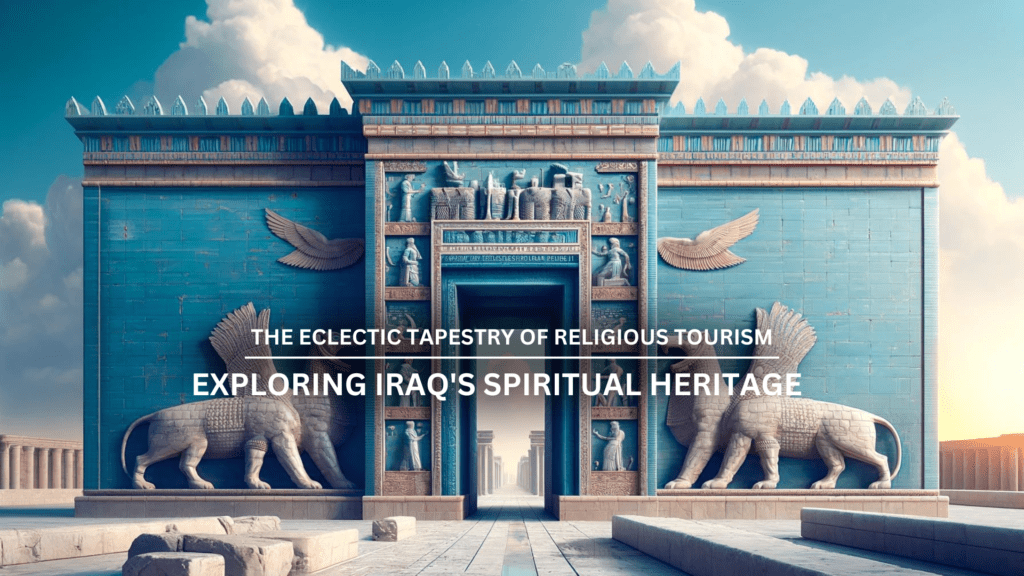
The archaeological site covers a broad area, so expectations matter. Many visitors arrive hoping to see the original Ishtar Gate in its famous blue-glazed form. The best-preserved original sections are held abroad, while Babylon itself offers the geographical and historical setting in which the gate, temples, palaces and streets belonged.
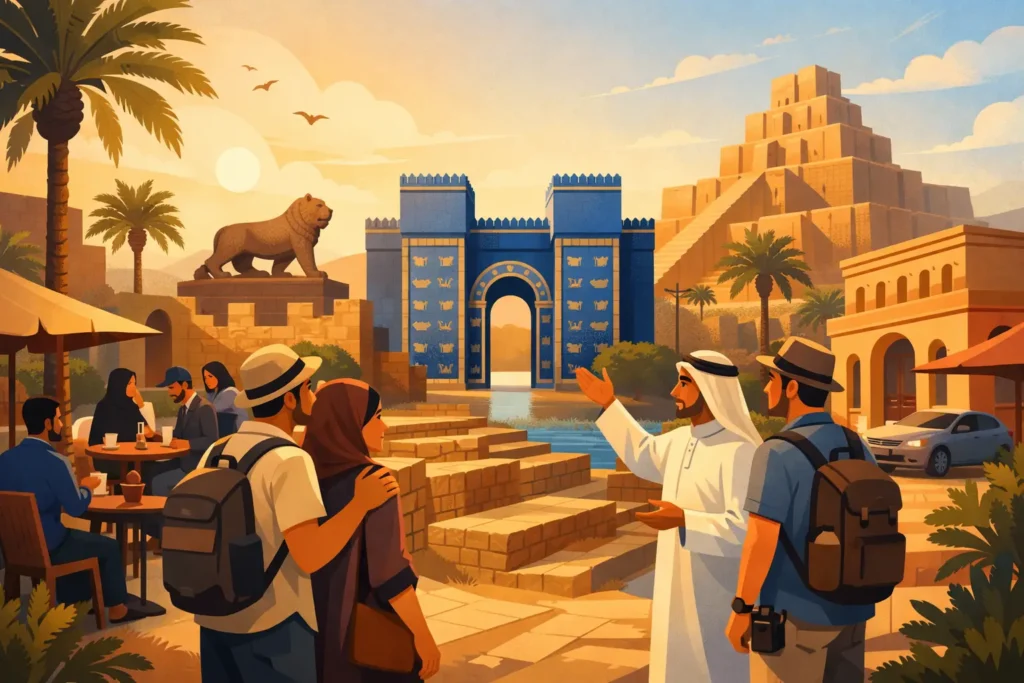
At the site, you may see the reconstructed Processional Way, sections associated with ancient city walls, the remains of palatial structures and the famous Lion of Babylon statue. Your guide may also point out areas connected to the Etemenanki, a temple tower often discussed in relation to later traditions of the Tower of Babel.
Some sections are visually striking; others require imagination. That is not a weakness. Archaeological travel often asks visitors to read a landscape rather than consume a finished display. A knowledgeable local guide can turn low brick foundations and open ground into a far richer encounter with the city that once stood there.
Keep the Hanging Gardens in perspective
The Hanging Gardens are one of antiquity’s most enduring mysteries. Ancient accounts describe a remarkable planted structure, but scholars continue to debate whether it stood in Babylon, existed in the form later imagined, or may have been associated with another ancient city.
Rather than treating the uncertainty as a disappointment, see it as part of Babylon’s fascination. The site invites questions about memory, legend and how the ancient world has been remembered across cultures.
Travel respectfully at a living heritage site
Babylon carries deep significance for Iraqis and for people around the world. Treat the site as a place of shared heritage, not simply a backdrop for content. Do not climb on fragile structures, remove stones or attempt to enter restricted areas. Even small actions can damage surfaces that have survived for centuries.
Dress modestly and practically. Lightweight clothing that covers shoulders and knees is a respectful and sensible choice in the heat. Ask permission before photographing local people, staff or families. If you are using a drone, assume permission is required and do not fly one without clear official approval.
A few words of Arabic are always welcomed, but warmth matters more than perfect pronunciation. A greeting, patience and genuine interest in local perspectives often lead to the conversations travellers remember long after the photographs have been edited.
Combine Babylon with nearby experiences
Babylon can be the centrepiece of a day rather than the only stop. Hillah offers a useful local base, while Baghdad provides museums, markets, riverside life and a strong introduction to contemporary Iraqi hospitality. Najaf and Karbala are within reach for visitors travelling for religious and cultural purposes, though each deserves respectful planning and sufficient time in its own right.
For a deeper ancient-Iraq journey, many travellers continue south towards sites linked to Sumerian civilisation. This requires additional travel time and a considered itinerary, but it reveals an important truth: Babylon is one chapter in a much larger Iraqi story. From the earliest cities to sacred shrines and thriving modern neighbourhoods, the country rewards travellers who resist the urge to rush.
Practical preparation before your journey
Confirm visa requirements directly with the relevant Iraqi authorities or an Iraqi diplomatic mission before booking non-refundable travel. Rules can depend on nationality, entry point and the nature of your visit. Make sure your passport has adequate validity and keep copies of key documents accessible while travelling.
It is wise to arrange reliable accommodation and onward transport in advance, particularly if Babylon is part of your first trip to Iraq. Carry some cash for smaller purchases and keep your daily plans flexible. In Iraq, local knowledge is often the difference between a merely efficient journey and a genuinely memorable one.
Stay In Iraq can help travellers begin that planning process by bringing destination guidance and accommodation discovery into one place. Whether you travel independently or with a guide, approach Babylon with patience, preparation and respect. The city has endured in the world’s imagination for thousands of years; seeing it in person is a rare chance to meet Iraq’s past where it still belongs.