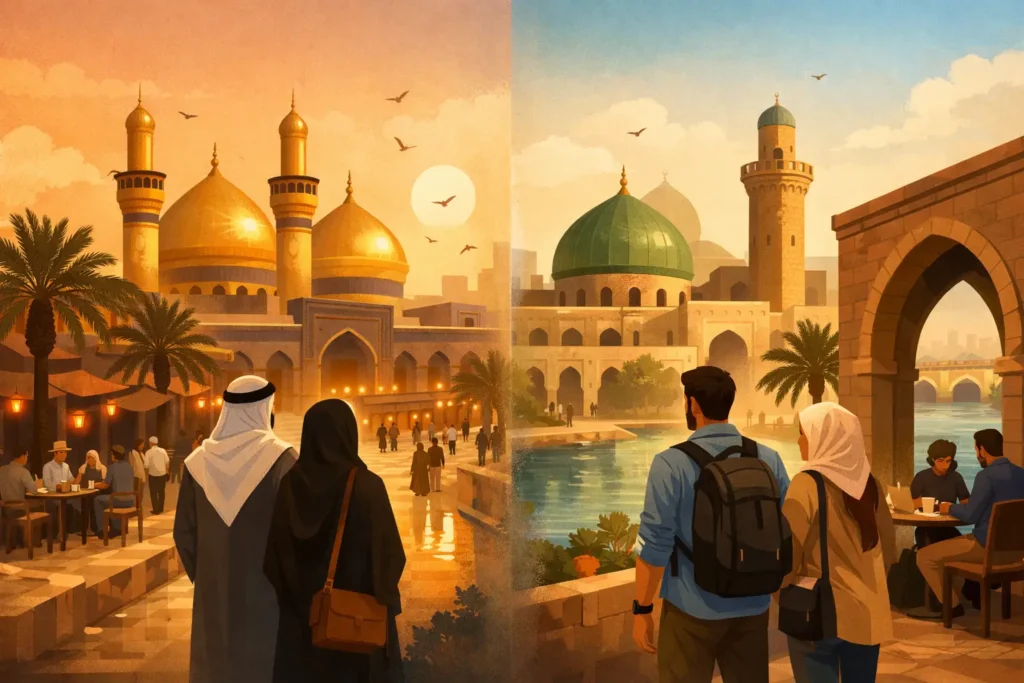
A Karbala or Kufa pilgrimage is not always a choice between two competing destinations. For many visitors, the two cities form one profound spiritual journey across Iraq: Karbala offers a direct encounter with the remembrance of Imam Husayn, while Kufa brings pilgrims closer to the life, leadership and legacy of Imam Ali. The right order depends on your time, purpose and pace, but understanding the character of each place makes the journey more meaningful from the moment you arrive.
Karbala or Kufa pilgrimage: the essential difference
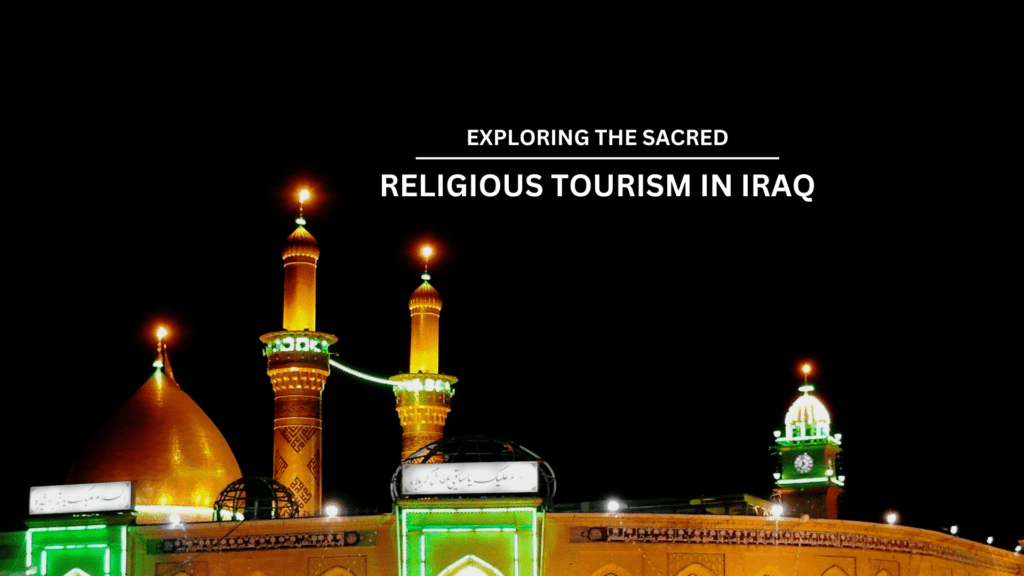
Karbala is centred on devotion, remembrance and the events of Ashura. Its most revered sites are the Shrine of Imam Husayn and the Shrine of al-Abbas, facing one another across the open space of Bayn al-Haramayn. The atmosphere is emotionally immediate. Families, scholars, first-time pilgrims and visitors from the Iraqi diaspora gather in a setting where prayer, recitation, service and quiet reflection flow through every hour of the day.
Kufa, near Najaf, has a different rhythm. It is a city of early Islamic history, learning and leadership, where the Grand Mosque of Kufa stands as one of the most significant religious sites in Iraq. Pilgrims come to pray in a mosque closely associated with Imam Ali and to reflect on a period that shaped Islamic thought and history. The experience is often more contemplative, with space to absorb the architecture, listen to guides and understand the historical connections between Kufa, Najaf and Karbala.
If your journey is focused on the sacrifice and memory of Karbala, begin in Karbala. If you want to place that visit within a wider historical and spiritual landscape, begin in Najaf and Kufa before continuing to Karbala. Neither approach is more correct. A pilgrimage is personal, and a well-planned itinerary leaves room for prayer rather than treating sacred places as stops to rush through.
Why Karbala is the heart of many pilgrim journeys
For Shia Muslims around the world, Karbala holds an exceptional place of love and mourning. The shrine complex is not simply a landmark to photograph. It is a living place of worship, where visitors may enter with a long-held prayer, a family memory or the desire to pay respects in person after years of spiritual connection from afar.
The Shrine of Imam Husayn is the central focus. Nearby, the Shrine of al-Abbas honours the loyalty and courage of Imam Husayn’s half-brother. Walking between the two shrines is an important part of the experience for many pilgrims, particularly at quieter times when the scale of the spaces and the devotion around them can be fully felt.
Karbala can be particularly powerful during major religious occasions, including Ashura, Arbaeen, Ramadan and the nights of significant Islamic commemorations. These periods also bring very large numbers of visitors. The shared hospitality is extraordinary: volunteers serve food and drinks, communities welcome travellers, and the city moves with a collective sense of care. Yet the practical trade-off is clear. Accommodation, transport and access to the busiest areas need more advance planning, and visitors should expect slower movement through the city.
Outside peak dates, Karbala can feel more manageable for first-time international visitors. You may have more time inside the shrine courtyards, a wider choice of rooms and a calmer setting for reflection. This is often the best option for travellers who want to combine their pilgrimage with visits to Najaf, Kufa or Baghdad.
Visiting with respect
Modest dress is expected in Karbala and Kufa. Visitors should wear loose, respectful clothing; women generally cover their hair within shrine and mosque areas. Shoes are removed before entering many prayer spaces, and photography may be restricted in particular sections. Follow signage, observe how worshippers move through the site and ask a local host or guide if you are unsure.
Pilgrims have different customs of prayer and visitation. The most respectful approach is to make space for others, avoid blocking entrances or prayer areas, and keep conversation low. Non-Muslim visitors who come with genuine respect are often received warmly, but should remember that these are active sacred spaces rather than museums.
What a pilgrimage to Kufa adds
Kufa is frequently visited alongside Najaf, whose Shrine of Imam Ali is among Iraq’s most important pilgrimage destinations. The short distance between the two makes them a natural pairing, whether you are arriving from Baghdad or travelling onwards to Karbala.
At the Grand Mosque of Kufa, visitors encounter a site layered with religious memory. It is associated with Imam Ali’s time in Kufa and contains places of prayer linked in Islamic tradition with several prophets and revered figures. For pilgrims, this creates a different kind of closeness: not only remembrance of a single event, but reflection on justice, knowledge, governance and faith lived in a community.
The mosque’s open courtyard and distinctive minarets make it memorable architecturally, but it is the atmosphere that stays with many travellers. A visit can be quiet and unhurried, particularly outside prayer times and major commemorations. Allow time to sit, pray or simply observe the ordinary rhythm of local worshippers arriving with their families.
Kufa also rewards travellers who want historical context. Its significance cannot be separated from Najaf and Karbala, and visiting all three reveals a connected geography of faith. Rather than seeing each city as a separate attraction, think of them as chapters in one journey.
A practical route for first-time visitors
For most international pilgrims, Najaf is the most convenient base for visiting Kufa, while Karbala deserves at least one overnight stay of its own. The journey between Najaf, Kufa and Karbala is commonly arranged by private car or pre-booked driver, especially for travellers who value flexibility and want help navigating arrival times, luggage and hotel check-in.
A balanced first itinerary might allow two nights in Najaf, including time for the Shrine of Imam Ali and the Grand Mosque of Kufa, followed by two nights in Karbala. This gives you the freedom to visit the shrines at different times of day, when the feeling can change dramatically between morning, evening and late night. Travellers with only one or two days should not try to see everything. Choose the place most connected to your purpose and return when you can stay longer.
Book accommodation close enough to the relevant shrine district to reduce unnecessary journeys, particularly during busy dates. In Karbala, a hotel within walking distance can make an enormous difference after long hours of worship or walking. In Najaf, staying near the old city and shrine area makes it easier to combine devotional visits with Kufa by car.
Travel arrangements in Iraq are best confirmed before departure. Check visa eligibility and entry requirements with the relevant Iraqi authorities or embassy, as rules can vary by nationality and may change. Carry cash in Iraqi dinar for smaller purchases, keep a local contact or hotel reception number saved, and agree fares before using informal taxis. A reputable local driver is especially helpful for families, older pilgrims and visitors travelling for the first time.
Choosing your timing carefully
The season shapes the experience as much as the route. Iraq’s summer heat can be intense, so early mornings and evenings are more comfortable for outdoor movement. Spring and late autumn often offer milder conditions for travellers who want to explore at a gentler pace.
Arbaeen is unlike any other time in Karbala. The pilgrimage expresses a remarkable culture of service, generosity and shared purpose, but it requires patience, physical preparation and early arrangements. It may be ideal for pilgrims seeking to join a vast collective act of remembrance. It may be less suitable for someone who needs quiet access, has limited mobility or is visiting Iraq primarily for historical sightseeing.
Whatever dates you choose, leave room for the unexpected human moments that make Iraq memorable: tea offered by a stranger, a conversation with a fellow pilgrim, or a local family helping you find the right entrance. Stay In Iraq encourages visitors to plan carefully, but not so tightly that they miss the warmth of the journey itself.
A pilgrimage to Karbala, Kufa or both is an invitation to travel with intention. Take the route that gives your prayers, questions and reflections the time they deserve.